

At one end, you have the cheap all-in-one players that are simple, small, and easy to buy. At the other end, you have turntables like the Fluance RT82 that feel much more serious, but also ask you to think about extra gear like phono preamps, amps, receivers, and speakers.
The Fluance RT81 sits right in the middle of that decision.
It is not the cheapest Fluance turntable. That would be the RT80. And it is not the best value for someone building a more serious setup. That is probably the RT82.
But the RT81 has a very specific job: it gives you the feel of a real turntable without making your first setup more complicated than it needs to be.
You get the wood plinth, the adjustable counterweight, the auto stop, and the built-in phono preamp. That means you can pair it with powered speakers much more easily and avoid the “wait, do I need a preamp?” spiral that hits a lot of beginners.
So the real question is not just whether the RT81 is good.
It is whether the RT81 is the right middle ground between a simpler all-in-one player and the more serious RT82.
Let’s break it down and see if this is truly the record player that has your name on it.
Table of Contents
In this guide, we’ll cover everything you need to know about the Fluance RT81, broken down into the following sections:
- High Level Overview: What is the Fluance RT81
- Build & Features of the Fluance RT81
- Comparing to Other Entry-Level Turntables
- Is the Fluance RT81 Right for you?
- Conclusion: Is It Worth It?
Affiliate Disclosure: We’re a small team of vinyl enthusiasts-if you get value from our insights, using our affiliate links (including Amazon Associates) helps us earn a commission and keep the lights on at no extra cost to you. Thank you for supporting Recordbuilds.com!
High Level Overview: What is the Fluance RT81?
The Fluance RT81 is one of those turntables that makes the most sense once you place it in context.
Put it next to a cheap all-in-one record player, and the difference is obvious. You get an adjustable counterweight, anti-skate, a replaceable cartridge, a solid MDF plinth, an aluminum platter, and a tonearm that feels much more intentional than the lightweight plastic arms found on cheaper players. That means the RT81 is not just a magic box that happens to spin records. It is a turntable you can actually set up, adjust, and build around.
But then move higher up the turntable spectrum, and the conversation starts to change. That is where people start talking about the “best signal path,” lower wow and flutter, better cartridges, external phono preamps, heavier platters, and long-term upgrade paths. And for a lot of people buying their first real record player, that is not the first question they are asking – rightfully so. Most beginners are not trying to build the perfect hi-fi chain on day one. They want something that sounds good, looks good, treats their records properly, and does not accidentally turn into a pile of extra parts they did not know they needed.
That is where the RT81 makes sense – it is a real turntable in the ways that matter, but it still makes one very beginner-friendly choice: it has a built-in phono preamp.
That just means your first setup can stay pretty simple. You can connect the RT81 directly to powered speakers. Something like this:

So, in short, the RT81 is for someone who wants to move past cheap record players without jumping straight into the more complicated side of vinyl setups.
It gives you a more serious turntable experience without making the setup feel overly serious.
The Real Cost of an RT81 Setup
Of course, we are just looking at the turntables for now, in reality you will need speakers to go with this.
Realistically this is what your total setup cost would come out to with the RT81
- Budget version: around $450-$500 (RT81 + basic phono preamp + budget powered speakers)
- Better beginner setup: around $600-$700 (RT81 + better powered speakers)
Don’t worry we have a super easy way to streamline this, ensure you pick the right components, and stay within your budget, just hang on until we get closer to the end…
Build & Features of the Fluance RT81
This is where we look at the actual specs of the RT81, which is the stuff the nerds will care about, but also the stuff that tells us what is actually important.
Because not every spec matters the same. Some of it is just nice to know. Some of it is more technical than most beginners need to worry about. But some of it tells you a lot about why the RT81 feels like a real step up from cheaper record players.
Here’s our thoughts on the real data.
| Price | $299.99 |
|---|---|
| Preamp | Built-in Texas Instruments phono preamp, switchable/defeatable |
| Cartridge | Audio-Technica AT95E Moving Magnet |
| Platter | Aluminum, 12 in / 1.22 lb |
| Stylus | Bonded elliptical diamond tip |
| Plinth | High-mass MDF wood plinth with isolation feet |
| Drive System | Belt drive with DC motor |
| Speed | 33 1/3 RPM and 45 RPM |
| Speed Variation | +/- 1.00% |
| Wow and Flutter | 0.2% |
| Auto Stop | Yes, defeatable |
| Tonearm Type | Static balanced, S-Type |
| Tonearm Material | Aluminum |
| Counterweight | Yes, adjustable / 3.53 oz |
| Anti-Skate | Yes, adjustable |
| Headshell | Detachable H-4 bayonet mount headshell |
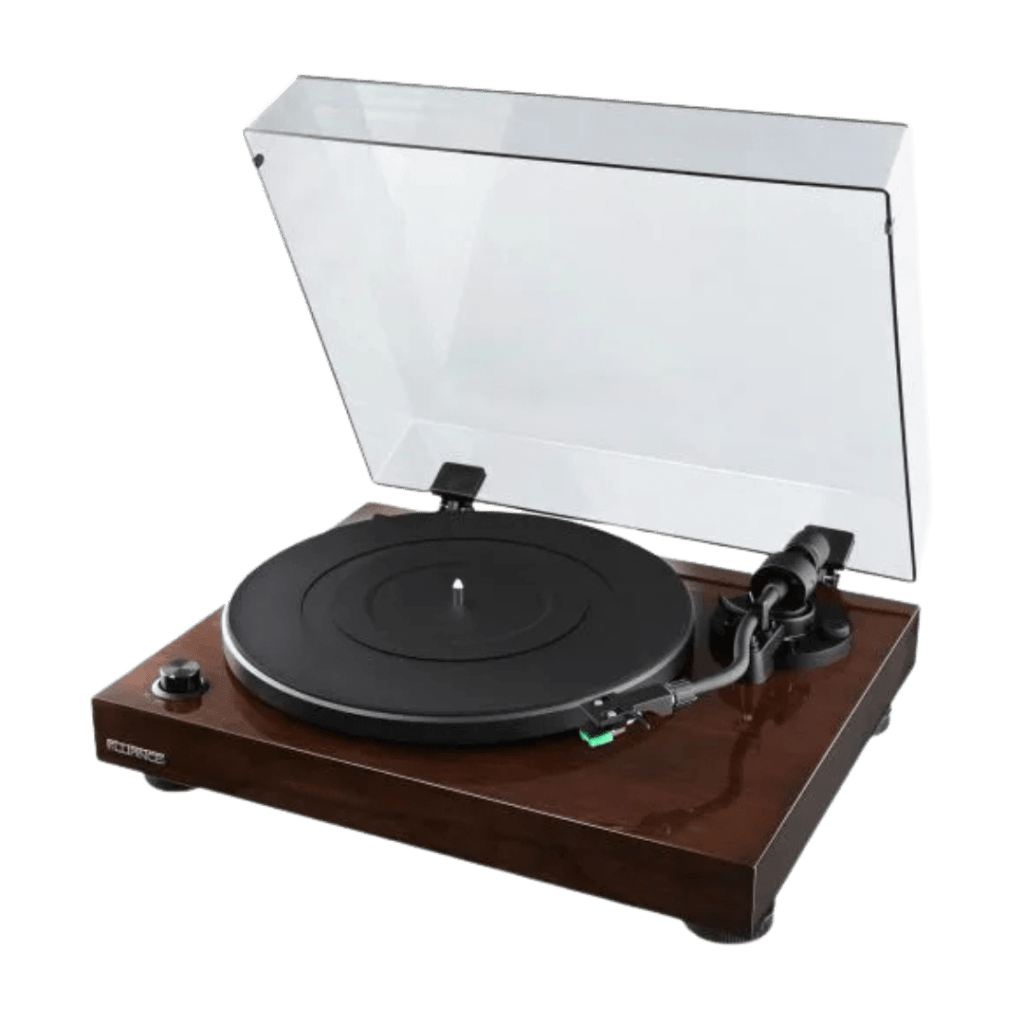
These are the things you should keep your eye on with pretty much any turntable you buy. Entry-level, mid-level, audiophile, whatever. The names and specs change, but the core stuff is usually the same: preamp, cartridge, plinth, platter, counterweight, and anti-skate.
And on the RT81, those pieces tell a pretty clear story.
The built-in preamp is the big convenience feature.
This is what makes the RT81 easier to build around than something like the RT82. You do not need to buy a separate phono preamp right away, which means one less box, one less cable path, and one less thing to figure out before you can actually listen to records.
The AT95E cartridge is a solid beginner cartridge.
I am not going to go over every good cartridge available, but this is definitely something to look out for on any turntable. The cartridge is the piece holding the stylus, which is the tiny needle that actually rides through the groove of your record. So yeah, it matters.
The ones you usually want to stay clear of are the super cheap ceramic cartridges with the red needles you see on a lot of cheap suitcase players. Those are the “red needles of death” people talk about, and they are usually a sign that the turntable is built more like a toy than a serious record player.
The AT95E is very different from that. It is a real moving magnet cartridge with an elliptical stylus, which means it can track the groove more accurately and pull more detail from your records.
The MDF plinth and aluminum platter help with stability.
This is the core build of your turntable. The plinth is basically the body, and the platter is the part your record sits on while it spins.
A red flag is when you do not really see a proper plinth or platter at all. That usually means you are looking at a cheaper plastic box where everything is fused together, which is not ideal if you care about stable playback.
The RT81 gives you a real MDF plinth and aluminum platter, which helps the turntable feel more planted and less flimsy.
The adjustable counterweight and anti-skate make it feel more serious.
This is not a total must for every single beginner. If you just want something simple to play records casually, you can survive without it. But if you want a pretty legit listening experience, better playback, and more control over how your stylus sits in the groove, this stuff matters a lot.
The counterweight helps set the tracking force, which is how much pressure the stylus puts on the record. Anti-skate helps keep the tonearm from pulling too hard toward the center of the record.
Together, they make the RT81 feel less like a basic beginner player and more like something you can actually dial in.
Comparison to Other Entry-Level Turntables
In the expansive land of first-turntable options, I would say the RT81 is probably toward the top end of that entry-level category.
It is one of the nicest turntables you can get before you start calling things mid-tier. There are some way cheaper options out there, especially under $100, and they might look tempting at first. But those savings usually come with trade-offs you do not want if you are really looking for a good long-term record player.
But at the same time, there are plenty of serviceable turntables in that $200-$300 range that are definitely worth considering. We will show you those. But let’s not bury the lead.
I would say the RT81 is the best option if you want the best “beginner” turntable. It has the audiophile-like features, the more authentic analog feel, and the build quality that is missing from some of the other options that still technically count as real first-turntable choices.
That does not mean every beginner needs the RT81. Some people should go cheaper. Some people should go simpler. Some people should probably jump up to the RT82.
But if what you want is the nicest first turntable before things start feeling more serious, the RT81 is right in that sweet spot.
The Gold Standard Entry-Level Turntable

Audio-Technica LP70x
The Audio-Technica LP70x is probably the most recommended first turntable, and for good reason.
The biggest difference is that the LP70x is automatic, meaning you click a button and the tonearm moves automatically. That is definitely convenient, but it is also a little less tactile than the RT81.
Both have a built-in preamp, and honestly, they are very similar even in price. I would say it mostly comes down to whether you want automatic or manual, and whether you like the wood MDF base of the RT81 or the more modern Audio-Technica design.
| Feature | Audio-Technica AT-LP70x | Fluance RT81 |
|---|---|---|
| Price | $279 on Amazon | $300 on Amazon |
| Turntable Type | Fully Automatic, Belt-Drive | Manual, Belt-Drive |
| Plinth Material | Plastic | High-Mass MDF Wood Plinth |
| Platter | Die-Cast Aluminum | Aluminum (1.22 lb) |
| Tonearm | J-Shaped, Fixed | S-Type Aluminum with Adjustable Counterweight & Anti-Skate |
| Cartridge | Audio-Technica AT-VM95C | Audio-Technica AT95E (Elliptical Diamond) |
| Preamp | Built-In, Switchable | Built-In, Switchable/Defeatable |
| Bluetooth | No | No |
The Step Below
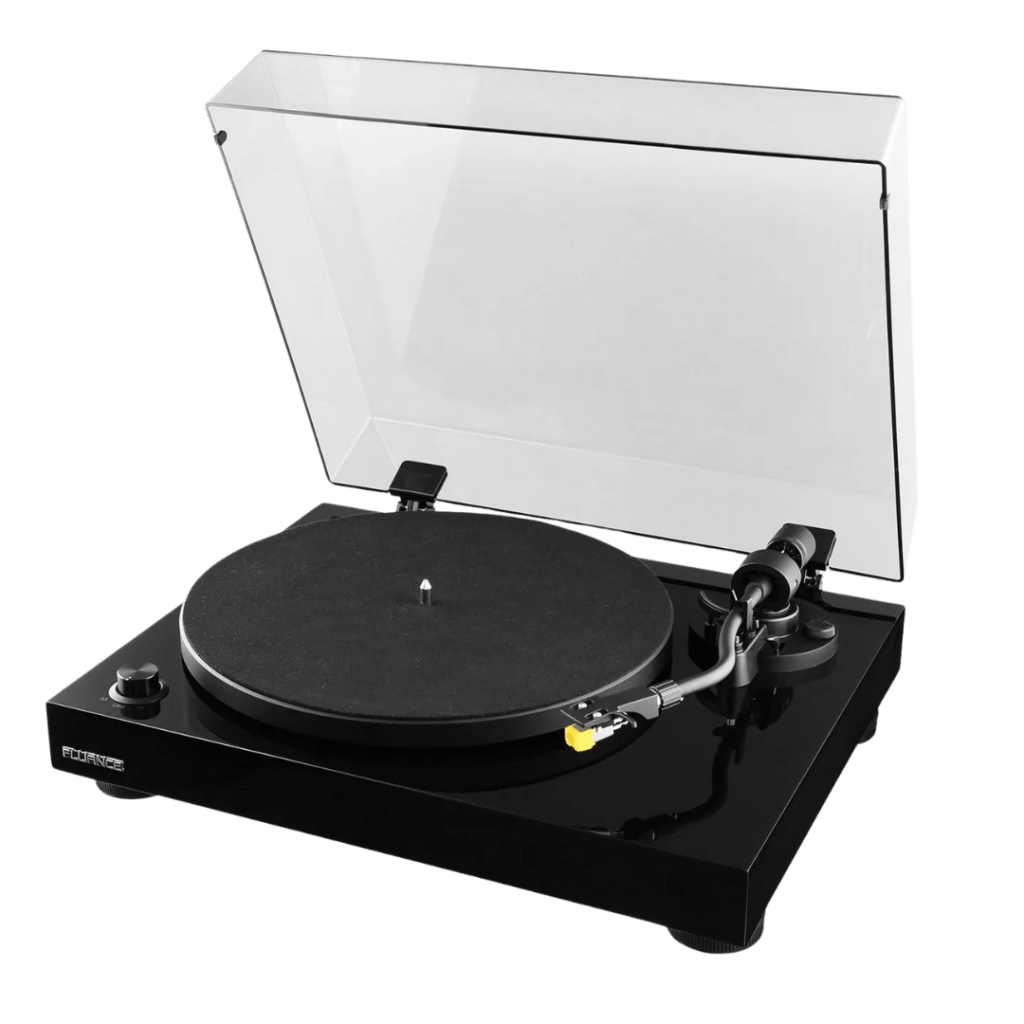
Fluance RT80
The RT80 and RT81 are honestly pretty similar, but the easiest way to think about it is that the RT81 is the more polished version of the RT80.
The big differences are the cartridge and the build.
The RT80 uses the Audio-Technica AT91, while the RT81 uses the Audio-Technica AT95E. That is probably the biggest upgrade here. This is not just some random spec difference. It can affect tracking, detail, and overall playback quality.
The RT81 also has the more substantial build. It uses a higher-mass MDF wood plinth, while the RT80 is more of the basic MDF cabinet / starter version.
| Feature | Fluance RT80 | Fluance RT81 |
|---|---|---|
| Price | $250 on Amazon | $300 on Amazon |
| Turntable Type | Manual, Belt-Drive | Manual, Belt-Drive |
| Plinth Material | MDF Cabinet / Wood Plinth | High-Mass MDF Wood Plinth |
| Platter | Aluminum | Aluminum (1.22 lb) |
| Tonearm | S-Type Aluminum with Adjustable Counterweight & Anti-Skate | S-Type Aluminum with Adjustable Counterweight & Anti-Skate |
| Cartridge | Audio-Technica AT91 | Audio-Technica AT95E (Elliptical Diamond) |
| Preamp | Built-In, Switchable | Built-In, Switchable/Defeatable |
| Bluetooth | No | No |
The Step Above
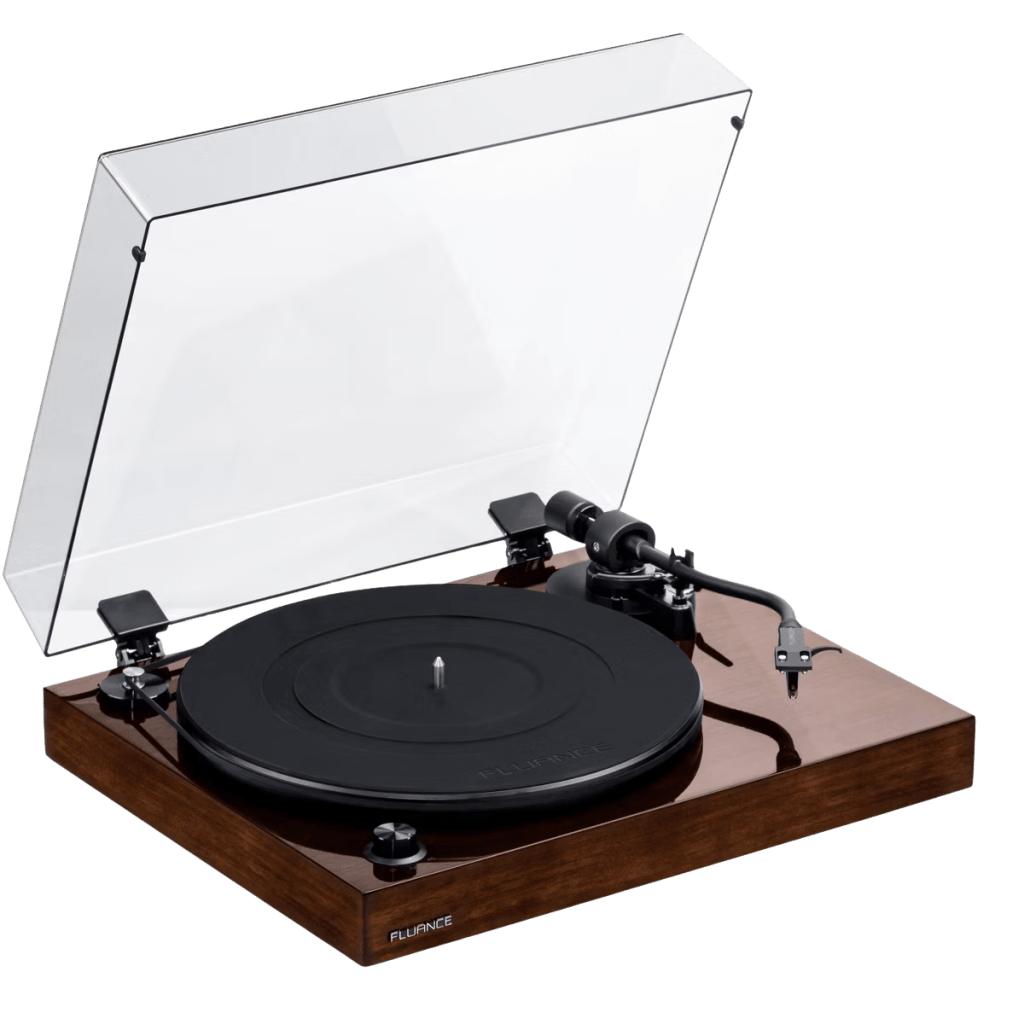
Fluance RT82
This is where you get a pretty substantial jump.
The RT81 and RT82 are still pretty similar on the surface, but for about $50 more, you do get a much more serious turntable. The OM10 cartridge is a big jump, the build is a bit stronger, and overall the RT82 feels more like the one you buy if you already know you want to take vinyl a little more seriously.
We also have a full review on this one, which may be the right move if you consider yourself more of a vinyl obsessive, gear-curious beginner, or someone who already knows they want to build a more serious setup over time.
| Feature | Fluance RT82 | Fluance RT81 |
|---|---|---|
| Price | $350 on Amazon | $300 on Amazon |
| Turntable Type | Manual, Belt-Drive | Manual, Belt-Drive |
| Plinth Material | MDF with real wood veneer | High-Mass MDF Wood Plinth |
| Platter | Precision Aluminum (≈1.22 lb) | Aluminum (1.22 lb) |
| Tonearm | S-shaped aluminum tonearm; adjustable counterweight & anti-skate | S-Type Aluminum with Adjustable Counterweight & Anti-Skate |
| Cartridge | Ortofon OM10 (Elliptical Diamond) | Audio-Technica AT95E (Elliptical Diamond) |
| Preamp | No (external required) | Built-In, Switchable/Defeatable |
| Bluetooth | No | No |
To recap:
- RT81: The sweet spot if you want the nicest “beginner” turntable before things start feeling more serious. Manual, tactile, wood MDF build, built-in preamp, adjustable counterweight, anti-skate, and a solid cartridge.
- AT-LP70x: Probably the easiest recommendation if you want something automatic. Very similar in price to the RT81, also has a built-in preamp, but feels less tactile and has a more modern, less “classic turntable” design.
- RT80: The cheaper Fluance starter. Pretty similar to the RT81 overall, but the RT81 gives you the better cartridge and more substantial build, which makes it feel more polished.
- RT82: The more serious step up. For about $50 more, you get the bigger performance jump with the Ortofon OM10 cartridge and stronger overall package, but you lose the built-in preamp, so setup gets more complex and probably more expensive.
| Feature | Fluance RT81 | Audio-Technica AT-LP70x | Fluance RT80 | Fluance RT82 |
|---|---|---|---|---|
| Price | $300 on Amazon | $279 on Amazon | $250 on Amazon | $350 on Amazon |
| Turntable Type | Manual, Belt-Drive | Fully Automatic, Belt-Drive | Manual, Belt-Drive | Manual, Belt-Drive |
| Plinth Material | High-Mass MDF Wood Plinth | Plastic | MDF Cabinet / Wood Plinth | MDF with Real Wood Veneer |
| Platter | Aluminum (1.22 lb) | Die-Cast Aluminum | Aluminum | Precision Aluminum (1.22 lb) |
| Tonearm | S-Type Aluminum with Adjustable Counterweight & Anti-Skate | J-Shaped, Fixed | S-Type Aluminum with Adjustable Counterweight & Anti-Skate | S-Shaped Aluminum with Adjustable Counterweight & Anti-Skate |
| Cartridge | Audio-Technica AT95E (Elliptical Diamond) | Audio-Technica AT-VM95C | Audio-Technica AT91 | Ortofon OM10 (Elliptical Diamond) |
| Preamp | Built-In, Switchable/Defeatable | Built-In, Switchable | Built-In, Switchable | No (External Required) |
| Bluetooth | No | No | No | No |
Is the Fluance RT81 Right for you?
To be honest, I would not recommend the RT81 for everyone. But there is a cool group of beginners wanting to get into vinyl where I think it is almost a perfect fit, because there are not many turntables like it in this price bracket.
The RT81 is perfect for the person moving past the cheap record player stage, but not necessarily the person who is ready to go full separate-preamp, receiver, passive-speaker rabbit hole on day one.
Now, in that camp, you have a few options. But the RT81 hits a real sweet spot. You get the adjustable counterweight and anti-skate that most turntables in the $200-$300 range do not have. You get the built-in preamp, which keeps setup simple. And you get the MDF plinth, which is perfect if you love that warm wood aesthetic.
If you just want something cheap and cheerful for a dorm room, background music, or pure convenience, the RT81 may be more than you need. Something simpler, smaller, or fully automatic might make more sense. Same thing if you really want Bluetooth or one-button operation. The RT81 is still manual, so you are cueing the tonearm yourself, flipping the record yourself, and getting a little more of that hands-on analog experience.
If you know you are going to build a full setup with a separate amp and passive speakers, or you want this to be part of a larger home audio system, you may want to consider something more like the RT82.
However, if you are looking for your first “real” record player, the RT81 makes a lot of sense. It is not the cheapest option, and it is not the most serious Fluance turntable either. The RT82 is probably the better long-term pick if you already know you want to build a more advanced setup. But the RT81 is the one that gives you a lot of that real-turntable feeling without making you go all in from the jump.
Conclusion: Is It Worth It?
For the right person, the RT81 is a grand slam. It hits a really useful sweet spot where it feels like a real turntable, but does not make your first setup more complicated than it needs to be.
That sturdy wood build, the audiophile-like features like adjustable counterweight and anti-skate, and the super legit cartridge make a killer pairing with the convenience of the built-in preamp and auto stop. It is a strong, and honestly more interesting, beginner package.
The other thing I do not want to discount: for your first turntable, this will be one of the more fun options.
You are not just pushing a button and walking away. You are cueing the tonearm, dropping the needle, flipping the record, and actually interacting with the music a bit more. That is part of the appeal.
Bottom line: if you want the cheapest possible record player, the RT81 is probably more than you need. And if you already know you want to build a more serious system, the RT82 may be the better move. But if you want a first turntable that feels substantial, looks great, sounds good, and keeps the setup approachable, the RT81 is one of the easiest recommendations in this price range.
If you want the best way to create your setup with the RT81, or even compare it against the LP70x, RT80, RT82, or any other solid beginner turntable, check out our Setup Builder.
It is a free tool that lets you build your vinyl setup from the top record players (including all the ones we mentioned), while we automatically check for compatibility and give you a score based on sound quality, ease of use, upgradability, etc. We also keep track of the latest sale prices and update the list based on the latest top-rated products. Check out a quick preview of how it works below:
Now, if I have overwhelmed you, do not run away yet. Because I know that was kind of a lot. And yes, some of the sticker shock is real. This is not always a cheap hobby.
But it can be much cheaper.
There are a ton of those all-in-one record players we talked about earlier, and some of them actually pass our sniff test. They can be genuinely great for the right person. The hard part is not deciding whether all-in-one record players are “good” or “bad.” It is figuring out which ones are cheaply made junk, and which ones are actually safe, simple, and worth considering. That is why we built our Record Player Guide.
Pick the features that mean the most to you, and we will help filter the options down to the ones that actually make sense for your budget, space, and how serious you want to get later.
Thanks for being here. We hope to see you around the Recordbuilds community, and if you have only landed here through a quick product review, we would definitely invite you to explore some of the more fun stuff we are building on the site too.