

When Pro-Ject announced their latest limited edition turntable, “The Dark Side of the Moon,” it immediately caught the eye of both audiophiles and Pink Floyd fans alike. Yet, as I dug deeper, I started questioning the appeal and practicality of this product from both a consumer and manufacturer perspective.
As one of the most anticipated, hyped-up product releases in the audiophile world in recent times, I initially felt the F.O.M.O. of these turntables selling like hotcakes. The turntable was making headlines across all music and audiophile journalism (not to mention blowing up on Reddit and Twitter), and it seemed like a surefire hit and bound for great success.
The story reminded me of another highly anticipated product release: The Tesla Cybertruck. Although not nearly possessing the influence or headline-grabbing antics of Elon Musk, this turntable achieved similar internet virality. However, while the Cybertruck seems to be hitting its stride (Forbes), I believe this outcome will not be repeated for the Dark Side of the Moon turntable. Here’s why:
Big Picture: What Is the Dark Side of the Moon Turntable?
The Dark Side of the Moon turntable is a limited edition, high-end product by Pro-Ject, one of the leading manufacturers in entry-to-mid-level turntables. The turntable’s design, inspired by Pink Floyd’s The Dark Side of the Moon, features the album’s iconic prism artwork as a sleek and minimalistic form of the turntable.
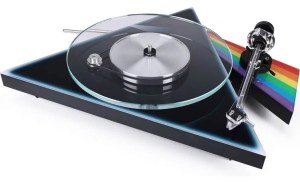
At first glance, it’s a beautiful tribute to a culturally significant album. However, this product raises a question: is it meant for serious vinyl listening, or is it merely an art piece for collectors?
Why is it Making Headlines?
It’s no surprise that this turntable caused a stir. With Pink Floyd’s status as one of the most influential bands in rock history and The Dark Side of the Moon considered one of the most iconic albums ever, the combination was a recipe to immediate internet virality. The coveted words, “limited edition” only adds to its allure, making it a must-have for superfans and collectors.
Also, credit where it’s due: the design is undeniably a bold move from the Pro-Ject engineering team. This is the first turntable of its kind that I’ve come across, and it’s rare to see innovation like this in the turntable world. That initial shock factor for audiophiles is real—when they first lay eyes on it, it sparks that primal, millennial urge to share it with fellow vinyl enthusiasts, making it inherently, great viral content.


A Closer Look at the Specs: Form Over Function?
From a design perspective, the Dark Side of the Moon turntable is stunning. It’s clean, stylish, and clearly intended to capture the imagination of collectors. But when we dig into the specs, the glamor starts to fade, and it becomes clear that this is more of an art piece than a high-performing turntable.
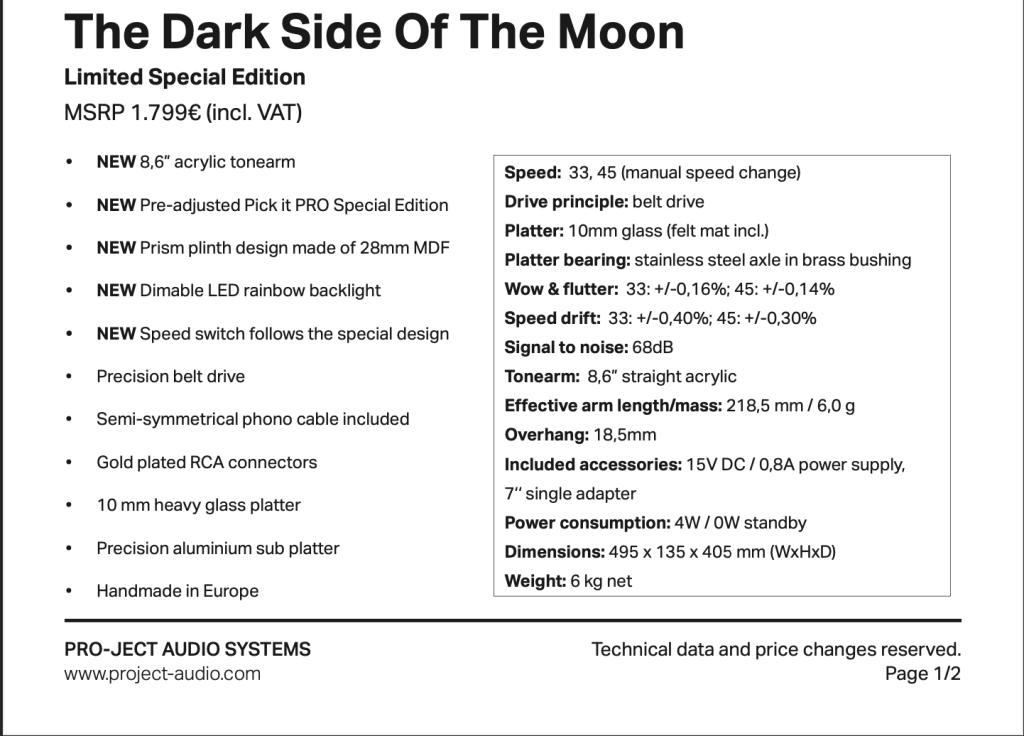
At $2000, you expect high performance, but the Dark Side of the Moon turntable doesn’t quite deliver in this department. Here’s what you get:
- Build Quality: The turntable features a sleek prism-shaped plinth made of 28mm MDF and a dimmable LED rainbow backlight. While aesthetically pleasing, these features don’t contribute to the sound quality.
- Acrylic Tonearm: The 8.6-inch acrylic tonearm is visually striking, but acrylic isn’t the ideal material for tonearms due to concerns over its rigidity and mass. Many audiophiles I know prefer carbon fiber for better precision and performance.
- Subplatter and Platter: The precision aluminum subplatter and 10mm heavy glass platter are decent upgrades over standard entry-level models. The turntable’s overall speed stability is also pretty decent with the wow and flutter sitting at +/-0.16% for 33 RPM.
- No Adjustable Features: The Dark Side of the Moon turntable lacks essential features like adjustable Vertical Tracking Angle (VTA) and anti-skate, limiting your ability to fine-tune it for high-end cartridges. While the Pick it PRO Special Edition cartridge comes pre-adjusted, this isn’t ideal for those seeking to maximize sound quality through customization.
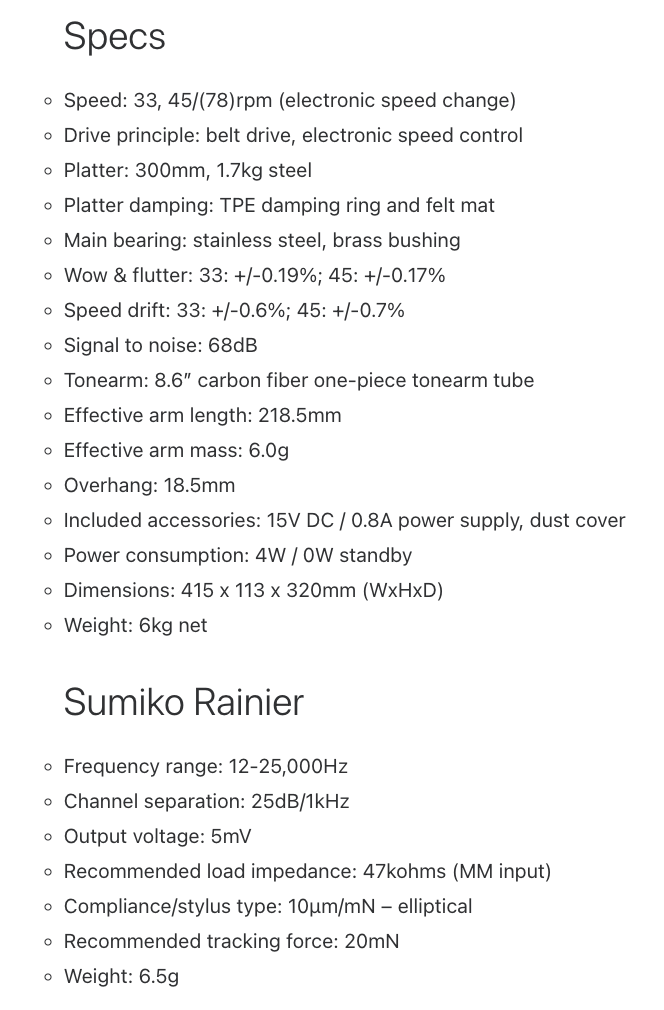
Now, let’s compare it to the Pro-Ject Debut Carbon Evo, the turntable feature in our mid level build, The Goldilocks Zone. Retailing at $599 this is an excellent choice for someone looking to graduate from their entry level turntable.
- Tonearm: Both models feature an 8.6-inch tonearm with 6.0g effective mass, but the Debut Carbon Evo has a carbon fiber tonearm (a material preferred by audiophiles for its rigidity and light weight), whereas the Dark Side edition features an acrylic tonearm.
- Platter: The Debut Carbon Evo has a 1.7kg steel platter with TPE damping for better vibration control, while the Dark Side turntable has a 10mm heavy glass platter. Both provide decent performance, but the Evo’s steel platter with TPE damping offers better isolation from vibrations.
- Speed Control: The Evo features electronic speed control for 33, 45, and even 78 RPM, while the Dark Side requires manual speed adjustment between 33 and 45 RPM.
- Cartridge: Both turntables come with high-quality, entry-level cartridges—Sumiko Rainier for the Debut Carbon Evo and the Pick it PRO Special Edition for the Dark Side edition. Though different models, they are comparable in terms of both performance and price.
- Adjustable Features: The Debut Carbon Evo includes adjustable height leveling feet, and its TPE-damped motor suspension reduces motor noise and improves isolation. The Dark Side edition lacks these features, limiting its performance potential.
- Wow & Flutter: The Debut Carbon Evo has identical wow and flutter performance (+/-0.19% for 33 RPM) compared to the Dark Side of the Moon turntable (+/-0.16% for 33 RPM). If you can hear this .03% difference, you’re lying
In essence, with the Debut Carbon Evo, you’re paying for solid performance and useful features at $599, while with the Dark Side of the Moon turntable, you’re paying an additional $1400 for the album-inspired aesthetics, LED backlighting, and other cosmetic upgrades. For those looking for high-end performance, the Debut Carbon Evo offers nearly everything the Dark Side turntable does—minus the Pink Floyd branding—for a fraction of the price.
So, Who is Really Buying This?
This comparison between the two turntables naturally raises the question: Who exactly is buying the Dark Side of the Moon turntable? There must have been some market research or initial data that pointed to a large potential audience: Here’s my best guess at what the Pro-Ject team pointed to on a chart in their Q1 2024 board meeting.
Pink Floyd Mega Fans Who Listen To Vinyl
For many Pink Floyd superfans who listen to vinyl, this turntable is the ultimate collector’s item. It’s not about specs or high-fidelity listening. 98% of the purchase is based on pulling the emotional strings that so many people have to one of the greatest bands of all time. For the superfan, the specs of the turntable barely matter. As long as it plays and represents something that hits so close to home, they need to have it. Perhaps, many fans will not even be using this as their main turntable, more of a showpiece that is proudly brandished in their listening room.
In short, The Dark Side of the Moon turntable serves as an emotional device signifying one’s relationship to a great band, not a serious tool for vinyl playback.
The Audiophile Equipment Collectors Crowd
The Audiophile Equipment Collectors crowd treats limited-edition gear like this as gold. For these high-end collectors, the value often goes beyond its practical use. Much like car enthusiasts who seek out rare models, audiophiles hunt for unique and rare pieces of equipment to add to their collections. For some, the Dark Side of the Moon turntable represents a long-term investment, with potential resale value that could increase over time—similar to how someone might trade stocks or rare artwork.
Others might purchase it as a showpiece, something that can draw attention in a store or be prominently displayed in a listening room. It could easily serve as a conversation starter, a centerpiece that invites people into their space. For these collectors, owning a rare, limited-edition turntable like this is a must-have for those who take pride in curating an exceptional collection of audiophile gear.
The True Intent: Marketing Genius
With all that being said, let’s get back to the premise of this discussion. The True Intent.
The brilliance of this product lies not in its performance specs, but in its marketing strategy.
When Pro-Ject announced their collaboration with Pink Floyd, they knew they were tapping into something far bigger than just a niche audiophile market. They were leveraging one of the most iconic albums in music history to appeal to a wide range of consumers—from audiophiles to casual Pink Floyd fans to everyday vinyl enthusiast that had never seen a turntable like this. This was not just a product launch; it was a statement that garnered attention across multiple industries.
In today’s world, visibility is everything. Pro-Ject’s collaboration with Pink Floyd generated a massive buzz across all forms of media—social networks, music blogs, and audiophile forums alike. The sheer volume of conversations and shares that this turntable ignited ensured that the Pro-Ject name stayed at the forefront of consumers’ minds. Even if people didn’t go out and buy this specific turntable, the name Pro-Ject is now embedded in any discussion about cool, higher-end turntables. In an era where attention is the new currency, that visibility and brand association is invaluable.
From a business standpoint, this is where Pro-Ject’s strategy shines. Even if the Dark Side of the Moon turntable doesn’t shatter sales records in the traditional sense, it has already done its job by increasing brand visibility and association. People will remember this product, talk about it, and associate Pro-Ject with creativity and innovation. It’s less about immediate profit and more about long-term brand building. Every mention of this turntable keeps Pro-Ject in the conversation, making it a prime example of how strategic limited edition products can enhance brand perception and attract a wider audience.
This move positions Pro-Ject as a brand that isn’t afraid to take risks and innovate in ways that are more aligned with pop culture than with audiophile purism. The turntable’s collectible nature and emotional appeal give Pro-Ject an edge that many other audio companies lack. In essence, the Dark Side of the Moon turntable is less about the hardware itself and more about solidifying Pro-Ject’s position as a trendsetter in both the music and audiophile spaces.
So, even if the turntable itself doesn’t break sales records, the impact it has on Pro-Ject’s brand recognition is priceless. This is marketing genius at its finest—a product that may not lead in terms of performance, but excels in making people pay attention. Well played Pro-Ject, well played.
The Metallica Turntable: Same Strategy, Different Band
This strategy also extends to Pro-Ject’s other recent limited edition release: the Metallica turntable. Much like the Dark Side of the Moon turntable, this model is heavily driven by branding, featuring a star-shaped base inspired by Metallica’s iconic logo.
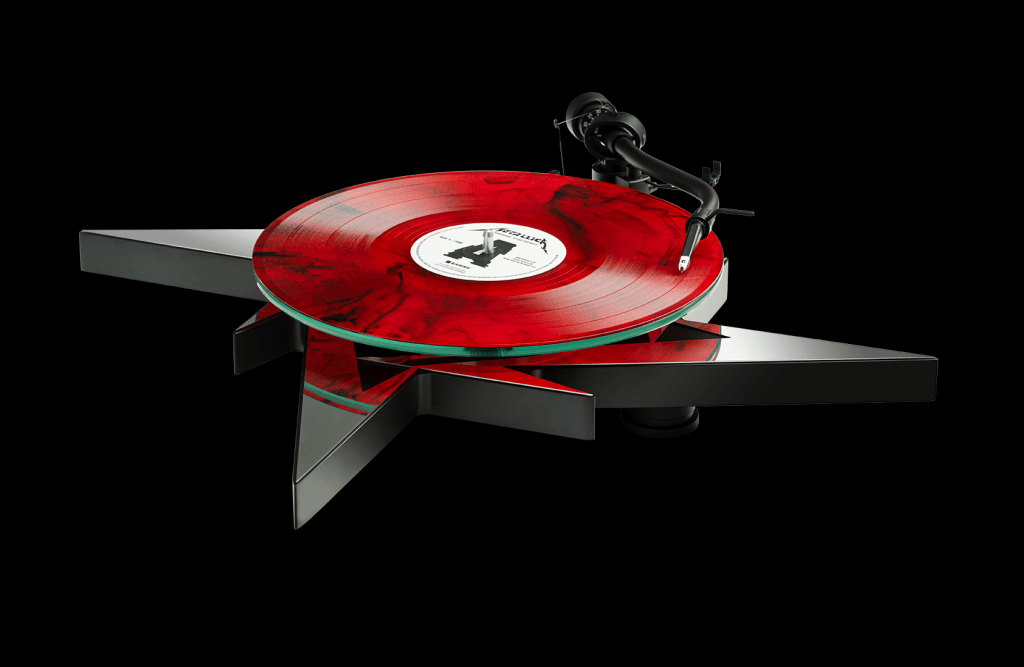
The Metallica turntable presents even more of a design gamble. While the triangular base of the Pink Floyd edition is unconventional but manageable, the jagged, star-shaped base of the Metallica version raises real concerns about balance and resonance. These aren’t just art pieces, after all—they need to function as high-fidelity turntables.
However, the Metallica model will likely find its way into the homes of Metallica superfans and collectors. The design may be sketchy for true audiophiles, but that’s not who the product is aimed at. It’s a statement piece, a display item for collectors, much like the Dark Side of the Moon turntable.
The Takeaway: A Product with Purpose Beyond Sales
While it’s easy to dismiss the Dark Side of the Moon and Metallica turntables as overpriced collector’s items, they serve a larger purpose beyond sales. These turntables reinforce the Pro-Ject brand and create cultural moments that go beyond their functional use.
For Pro-Ject, the goal is to make a statement, generate buzz, and raise brand awareness. Whether they win over serious audiophiles is secondary. The fact that these products have generated such widespread conversation shows that they’ve already succeeded in creating value for the brand.
If you are here because you are considering purchasing the Dark Side Of The Moon turntable, congratulations on having the money to spend. If I had to give an honest recommendation, I think this turntable is astounding. Would I practically ever buy it? Probably not. However, if this grabbed your inner audiophile’s attention like me, then you possess a level of appreciation and fondness towards this form of art. And in that case, go on, indulge, see what the hype is all about.