
Let me paint you a quick, bleak picture.
The year is 2007 – Height of the financial crisis. An epic collapse of small record stores (among other collapses) is in full swing. I mean talk about kicking someone while they are down – You have to remember many of these shops were already on the verge of closing their doors for good. This era was dominated by digital streaming services, steadily siphoning away the revenue of small, struggling indie stores for years.
With a once in a generation financial collapse and an industry trend going the wrong way, it seemed as if the days of crate-digging, in-store companionships, and discovering rare albums at your local shop were about to become relics of the past. Record stores were at risk of going the way of Blockbuster—extinct.
But then came Record Store Day, a saving grace that rekindled excitement around physical music formats and pulled customers back into stores. Its purpose was clear—to help these stores survive. Period. Through its promise of new, exclusive, and limited-edition releases, this annual event brought local record shops back from the brink. It was, in many ways, a lifeline.
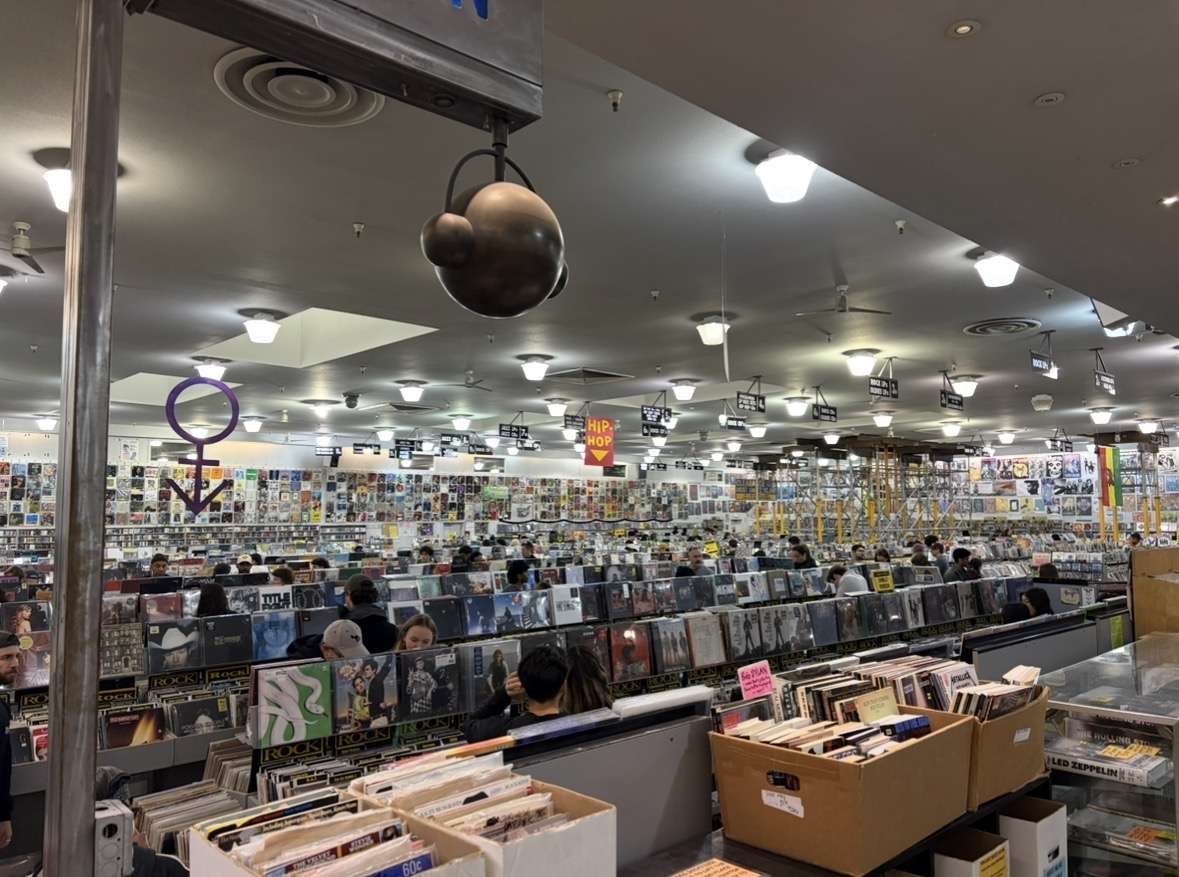
Suddenly, vinyl was cool again. The pendulum had swung back as people craved the tactile experience of flipping through records, the warm sound of vinyl, and the connection that came with visiting local record shops. Record Store Day, much like what people will claim with vinyl records, wasn’t just about the music; it was about the experience. Stores transformed into hubs for music lovers to gather, explore, and celebrate their shared passion. It wasn’t unusual for these shops to host live performances, meet-and-greets with artists, or even DJ sets, creating a lively atmosphere that pulled in people of all ages.
This phenomenon brought fans back to the physical world of music, where holding a record in your hand felt like an intimate, special experience. But like many good things, over time RSD has taken a turn. Let’s take a closer look to see what’s going on and what we can do about it.
Table of Contents
In this editorial, we’ll cover everything you need to know about the Record Store Day phenomenon, broken down into the following sections:
- When Is Record Store Day
- How Record Store Day Works
- Has Record Store Day Lost Its Way?
- Solutions for a Broken System
- Conclusion: Is Record Store Day Still Worth It?
When Is Record Store Day?
The flagship Record Store Day takes place in April each year. The 2024 event was held on April 20. But, there’s also Record Store Day Black Friday, a smaller offshoot that happens the day after Thanksgiving. The idea behind RSD Black Friday is to steer some of the holiday shopping energy away from big-box stores and into local, independently-owned record shops.
While the Black Friday event is smaller, it still features exclusive releases and special editions, much like the main event in April. It’s another way to celebrate local music culture and encourage shoppers to seek out unique finds rather than falling into the trap of mass-produced holiday deals.
How Record Store Day Works
For over 15 years, Record Store Day has been celebrated in cities across the U.S., from New York to Los Angeles to Charleston. Some places even recognize it as an official holiday. The event is built on a partnership between independent record shops, music labels, and artists, with exclusive releases as the main attraction.
The List
Each year, RSD organizers publish what’s known as “The List,” a collection of hundreds of exclusive releases from all music genres and eras. These releases come in various formats—everything from 7” singles to 12” LPs, box sets, picture discs, and colored vinyl. Some are special reissues, while others are brand new releases.
One thing to know about “The List”: not every record is created equal. Some releases are “RSD First,” meaning they’ll eventually be available to a wider audience, while others may never be pressed again. The List shows how many copies are available for each release, with quantities ranging from a few hundred to tens of thousands.
Here are the lists from 2024:
Once The List is published, record stores quickly decide how many copies they want to order. It’s a gamble—stores aren’t guaranteed to receive what they order, and they can’t return unsold stock. Pre-orders and holds are prohibited, so stores have to make decisions without knowing exactly what their customers will want. It’s not uncommon for a store to order 50 copies of a release and only get five, or to order 50 and get stuck paying for all of them when demand is low.
The Big Day
Record Store Day itself is a spectacle, for die-hard collectors and casual vinyl enthusiasts alike. For most customers, the day begins with lining up—early. Some people start queuing hours before the store even opens, and in more extreme cases, fans will camp out overnight, hoping to be first in line to grab the most sought-after releases.
When the doors finally open, it’s a mad dash to the shelves. Customers scramble to get their hands on the exclusive releases they’ve been eyeing since The List was first announced. Depending on the store and the popularity of certain releases, the stock can sell out within minutes. For those who miss out on their desired albums, it’s common to feel frustrated, especially knowing that some of those records will be flipped for exorbitant prices online just hours later.
The shopping experience itself varies from store to store. Some shops go all out, turning Record Store Day into a community event with live music, giveaways, and local food vendors to create a festival-like atmosphere. Others keep it more low-key, focusing solely on selling the records without the additional fanfare.
Regardless of how the store approaches the event, the day is undeniably hectic. Staff work tirelessly to manage the crowds, answer questions, and ensure that the event runs smoothly, even if it means juggling stock shortages or handling disappointed customers. The event is as much a test of logistics as it is a celebration of record stores.
The exclusivity of the day can sometimes feel bittersweet—while it’s great to score a rare release, it’s also a reminder of how competitive and fleeting the experience has become.
Has Record Store Day Lost Its Way?
Here’s the thing—while Record Store Day was initially met with excitement and nostalgia, it’s safe to say the event now gets mixed reviews across the vinyl community. Some people absolutely love it, while others have grown weary of what it’s become. We’ve taken a look at the general sentiment out there, and based on what we’ve seen and heard, we’ve got some thoughts. Let’s dive into the whole matter and see how RSD has evolved—maybe for better, but arguably, for worse.
So what happened?
In the early days, Record Store Day was a niche event. Vinyl was starting to make a comeback, and RSD gave collectors a reason to visit their local shops. The limited releases were creative, often featuring rare or unreleased tracks, and the event had an air of excitement for true music lovers.
But as vinyl’s popularity skyrocketed, the landscape shifted. Record pressing plants, once desperate for orders, suddenly became overwhelmed with demand. RSD became another thing clogging up the production lines, and indie artists found themselves waiting months to get their albums pressed because plants were busy producing “limited” RSD titles.
With vinyl’s resurgence, major labels saw an opportunity to cash in. Suddenly, RSD wasn’t just for indie artists and obscure releases. Big-name artists started dropping exclusive releases, attracting fans who might not have ever stepped foot in a record shop before. This, in itself, isn’t necessarily a bad thing—after all, it brings more people into the shops—but it has certainly annoyed longtime collectors and purists who miss the days when RSD felt more authentic.
The Shift to Artificial Scarcity
Over the years, what was once a genuine effort to support independent record stores has evolved into something else: artificial scarcity. Instead of focusing on innovative or exciting new releases, Record Store Day has become a vehicle for pumping out reissues, live albums, and “limited” editions that feel more like cash grabs than collectors’ items.
For every truly intriguing release, there are a dozen more that seem entirely unnecessary. Albums that have already been pressed countless times get another run, this time dressed up as “exclusive” with a new color or limited packaging. Even more frustrating are the endless live concert recordings from artists who’ve been retired or deceased for decades. Nostalgia sells, and record labels know it. They’ve learned that slapping an “exclusive” label on something — even if it’s not rare or unique — guarantees higher sales, often at inflated prices.
Even albums that were once easily found in used bins or online marketplaces are suddenly deemed “special” for Record Store Day, with price tags to match. Original pressings that were widely available are now replaced with “RSD exclusives,” which only fuels a cycle of manufactured demand. While some of these releases might hold value for newer collectors, longtime vinyl enthusiasts often see them as unnecessary clutter. The thrill of discovering something truly rare or meaningful has, in many cases, been replaced by an industry more interested in churning out reissues that are more about profit than passion.
The Changing Culture: Investors, Scalpers, and the Hype
The Record Store Day scene has come a long way from its humble beginnings. What used to be a cozy day celebrating local record shops has now become a chaotic spectacle that more closely resembles Black Friday. What was once a day for music lovers to gather and celebrate has morphed into something far more intense and, in many cases, frustrating for longtime vinyl collectors.
One of the biggest shifts has been the rise of investors and scalpers. These are the people who show up early, not because they’re passionate about vinyl, but because they see it as a quick way to make money. They scoop up the most sought-after releases, only to flip them online for two or three times the retail price. This practice has left a sour taste in the mouths of collectors who put in the time and effort to support their local shops, only to find that the record they were after is already up for sale on eBay at an absurd markup. It’s no longer about the music—it’s about turning a profit.
Then, there’s the hype frenzy. Social media influencers and hipsters have jumped on the bandwagon, turning Record Store Day into something that feels more like an trend than a celebration of vinyl culture. Don’t get me wrong, there’s nothing inherently bad about more people getting into vinyl. But when RSD turns into a frenzy of selfies, hashtags, and “look what I scored” posts, it starts to feel less like a community of music lovers and more like a manufactured, social media-fueled event designed to build hype rather than foster genuine appreciation for the music itself.
RSD Today: A Look at the Modern Reality
At the end of the day, many longtime collectors, and even some record stores, are less enthusiastic about Record Store Day, finding it more frustrating than fun. For a lot of these folks, skipping out on RSD has become a no-brainer. What started as a grassroots movement to support independent shops has morphed into a frenzy of hype-driven releases and price hikes.
Who really benefits? The scalpers and the mainstream crowd who are willing to overspend to show off on social media. Ultimately, they’re the ones walking away feeling like they secured the real win, while the original spirit of supporting local record stores seems to be fading into the background.
Solutions for a Broken System
So, how do we fix Record Store Day? There are a few potential solutions that in my opinion, could make the event more enjoyable for everyone involved, while still supporting local stores.
- Pre-Orders: Allowing people to pre-order exclusive items directly from independent record stores could cut down on the chaos. Fans would still have to pick up their records in person, keeping the spirit of RSD alive, but the pre-order system would make it easier for customers to get what they want. Fewer flippers, no excess inventory for stores, and fewer disappointed fans.
- Better Regulation: Right now, stores are forced to navigate the wild west of ordering without any real guarantees. If there were better guidelines on how records are allocated, stores would be able to make more informed decisions about how much stock to order, and customers wouldn’t be left wondering why they didn’t get their favorite release.
- Limited Pressing Runs with Purpose: Instead of releasing 20 different colors of the same album, labels should focus on making each RSD release truly special. Bring back the creativity of the early years with thoughtful releases that are actually limited and unique.
Of course, I’m no insider—I don’t know all the challenges or the complexities involved in managing such a large-scale event like Record Store Day. Massive disclaimer there! But from what I can gather, the growing wave of general negative sentiment seems to indicate that the market wants something a little different. Longtime collectors, dedicated record stores, and even casual fans are voicing their frustrations, and it feels like a shift is needed to bring back the original excitement that once made RSD so special.
Conclusion: Is Record Store Day Still Worth It?
Although much of this might sound somewhat negative, I don’t think Record Store Day is all bad—especially if your local store turns it into a true event with live music, giveaways, and a great community vibe. That’s where the magic of RSD still lives. But if you’re only in it for the records, skip the long lines and stress. Odds are, you’ll be able to find what you’re after on Discogs or eBay a few months later, often at or below retail price.