

Your speakers matter more than your turntable. Yeah, I said it.
And so does the top result on Reddit…and basically anyone who’s spent more than five minutes in a real vinyl setup.
They’re the final link — the part that takes those tiny needle vibrations and turns them into waves of sound you can feel in your chest. A good pair of speakers can make your favorite album sound like the band is right there with you. Bad ones? They make it sound like they’re playing in the next room through a wall. At that point, you might as well keep streaming it on Spotify.
The bad news is, shopping for speakers online sucks. It’s an avalanche of specs you don’t understand, reviews that contradict each other, and opinions from people who sound like they built NASA’s sound system.
Forget that. We’ve done the digging and after way too many hours of research, testing, and ear fatigue, landed on a short list we’d bet our own listening rooms on. You could spend weeks going down rabbit holes…or save yourself the headache and jump straight to answers in the back of the textbook. Let’s take a look at those answers…
Table of Contents
In this guide, we’ll cover everything you need to know about choosing the best speakers for your vinyl setup. If you’re feeling lost, we’ll guide you step-by-step. Or, if you just want the tried-and-true, click here for our top picks.
- What Type of Speakers Do I Need?
- Considerations for picking the best speakers for your vinyl setup
- Best Speakers for Vinyl (Every Setup Covered)
- Wrap-Up: Finding the Best Speakers for Vinyl Without the Guesswork
Affiliate Disclosure: We’re a small team of vinyl enthusiasts—if you get value from our insights, using our affiliate links (including Amazon Associates) helps us earn a commission and keep the lights on at no extra cost to you. Thank you for supporting Recordbuilds.com!
What Type of Speakers Do I Need?
There are really just two questions you need to ask yourself to get on the right path—and avoid the wrong gear.
Powered (Active) or Passive? and Speaker style. We will break this down
The real trick is knowing which path is right for you. So you don’t waste money (or end up with a setup that sounds like you’re eavesdropping on a concert from the fire escape).
1: Which Listener Are You?
The Casual Listener:
If you want something stylish that works right out of the box, without a headache or piles of cables, Powered (active) speakers are your best bet. They have a built-in amplifier, meaning you just plug your turntable (or preamp) straight in. It’s clean, easy, and hassle-free—perfect if you just want great sound fast.
Here’s how that looks with a simple vinyl setup (our aspiring audiophile’s den):

The Audiophile:
Love tweaking, upgrading, and perfecting your audio setup over time?
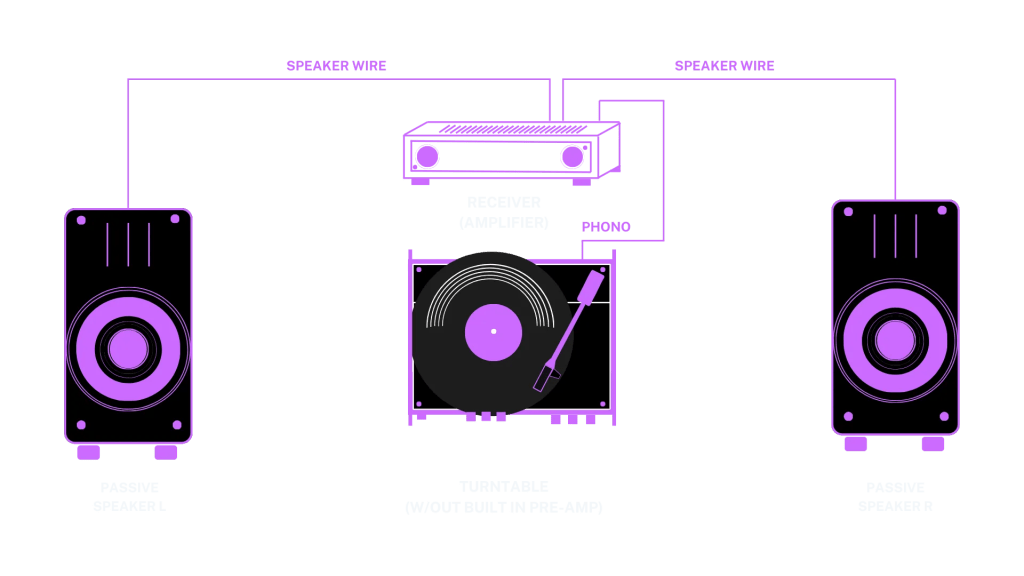
Passive speakers give you full control over your sound.
You’ll need an external amp, but that’s where the magic happens. It opens the door to better sound quality and more flexibility which results in much more customizable listening setup.
Here is how this would look conceptually:
Bottom line:
If you already have an amp, passive speakers make sense. If you’re new or prefer things simple, powered speakers are probably your ideal choice.
Remember, there’s no wrong answer here—just pick the speaker type that matches your listening personality and how you see your vinyl setup evolving over time.
2: Which Speaker Style Are You?
Every speaker fits into one of three camps-time to find yours.
Bookshelf Speakers:
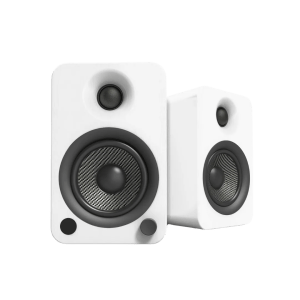


Compact, stylish, and great for smaller rooms or apartments. Easy to place anywhere, from actual bookshelves to desks or stands. Most bookshelf speakers come in powered or passive options, making them super flexible.
Floorstanding Speakers:
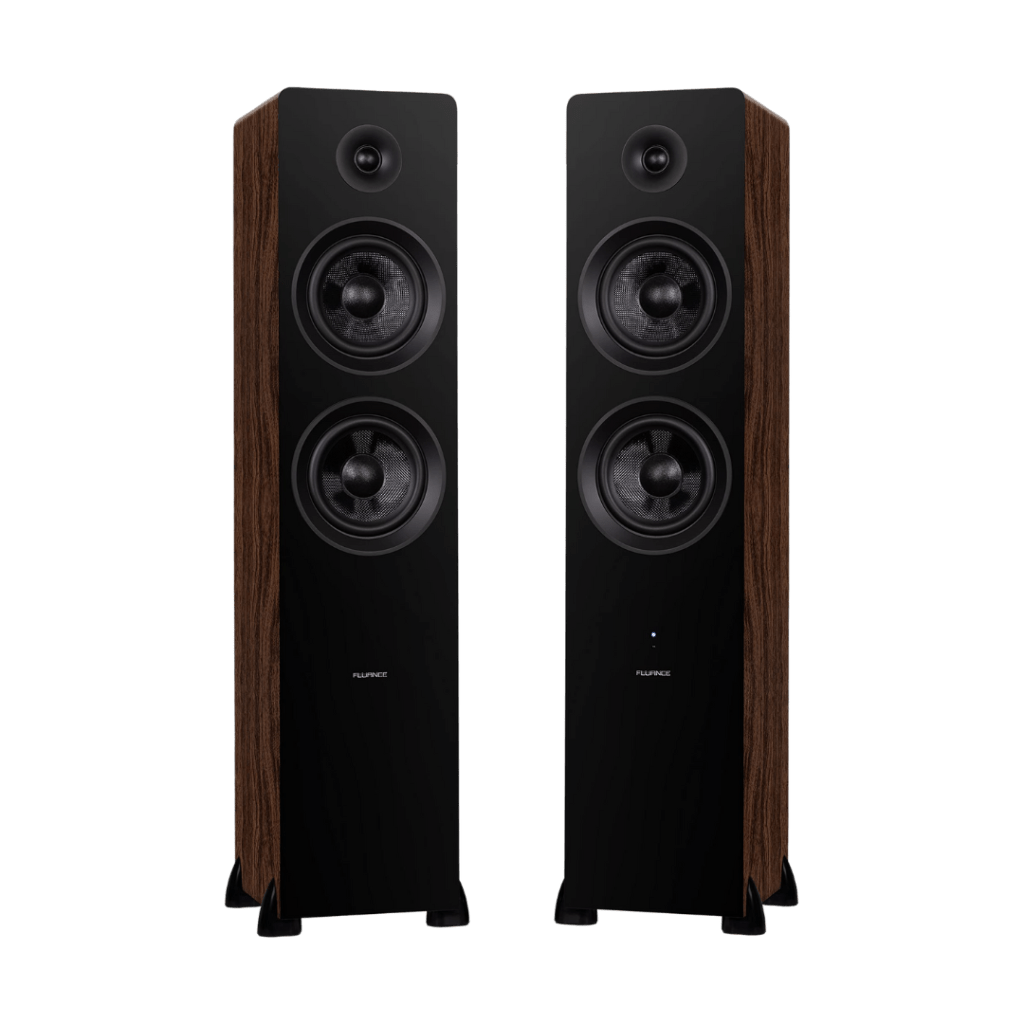

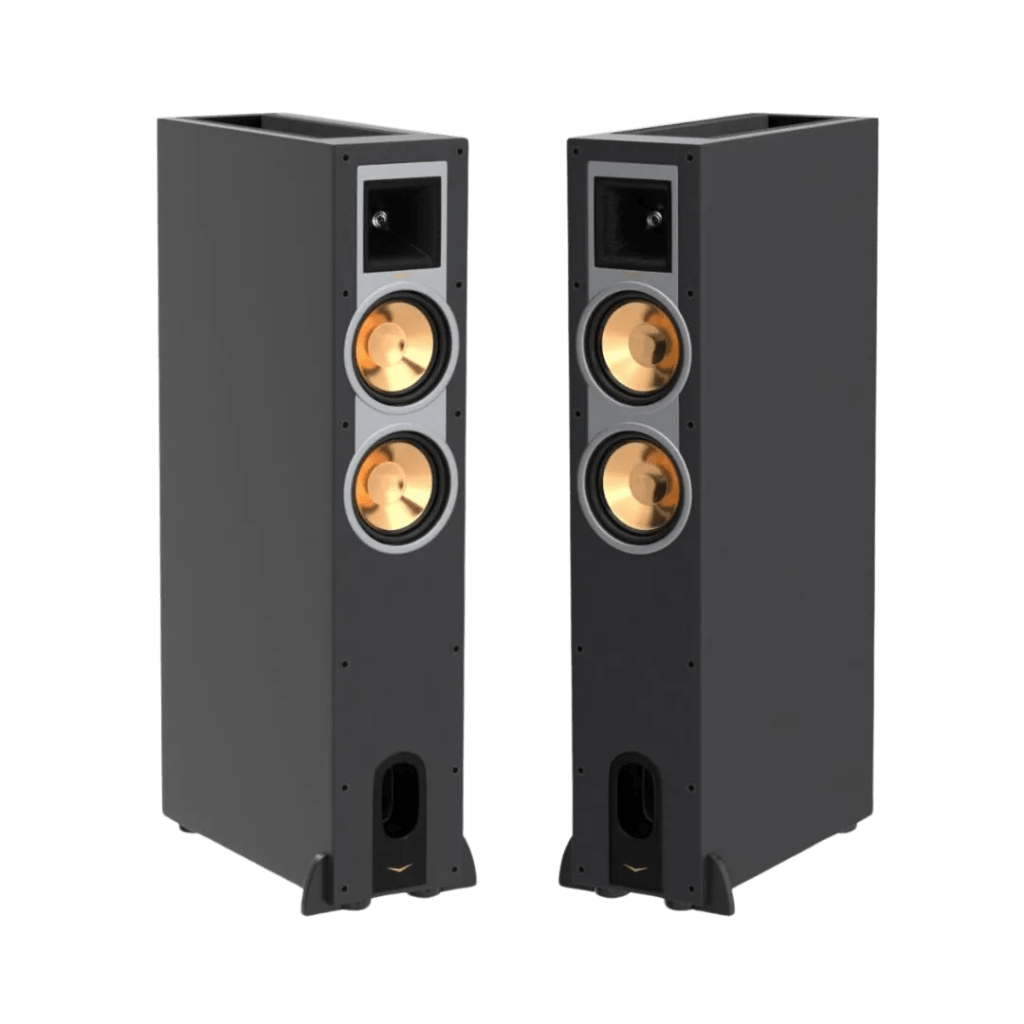
Larger, tower-like speakers designed for bigger rooms or dedicated listening spaces. They usually deliver fuller, deeper sound due to their larger cabinets. These are typically passive, needing an external amplifier. Great if you’re building a serious vinyl setup or home audio system.
Smart Speakers (Wireless/Bluetooth):


Convenient, wireless, and integrated with apps or voice control. They’re a practical choice if you want a casual setup or like streaming music digitally, too. Just know that smart speakers usually sacrifice some vinyl warmth and sound quality for convenience.
Bottom line:
- Bookshelf speakers are compact and versatile, ideal for smaller spaces.
- Floorstanding speakers deliver richer sound, perfect if you have the room and want a more immersive experience.
- Smart speakers offer unbeatable convenience and easy setup but sacrifice some traditional vinyl warmth.

Both bookshelf and floorstanding speakers come in powered (active) or passive versions, giving you the flexibility to choose between simplicity or upgrade potential. Smart speakers, however, are always powered and designed primarily for convenience.
| Feature | Bookshelf (Powered) | Bookshelf (Passive) | Floorstanding (Powered) | Floorstanding (Passive) | Smart Speakers |
|---|---|---|---|---|---|
| Best For | Small rooms, convenience-focused | Compact spaces, flexible setups | Medium-to-large rooms, simple setup | Larger rooms, ideal for upgrades | Wireless listening, convenience |
| Amplifier Needed? | No (built-in) | Yes (external) | No (built-in) | Yes (external) | No (built-in) |
| Upgrade Potential | Limited | High | Limited | Very High | Very Limited |
| Setup Difficulty | Very Easy (Plug-and-play) | Moderate (amp required) | Easy (Plug-and-play) | Moderate (amp required) | Easiest (wireless) |
Considerations for picking the best speakers for your vinyl setup
Before you hit “add to cart,” here are a few things worth thinking through. Your space, your habits, and your goals all play a role in what makes the right speaker for you—not just what the internet (including us) says is “best.”
Room Size & Placement
Bigger room? You’ll want speakers that can fill it—maybe even floorstanders. Smaller room or apartment? Compact bookshelf speakers are usually more than enough.
But here’s where the rubber meets the road: Speaker placement. Surprisingly makes a huge difference in how they sound in your ears – who would have thought.
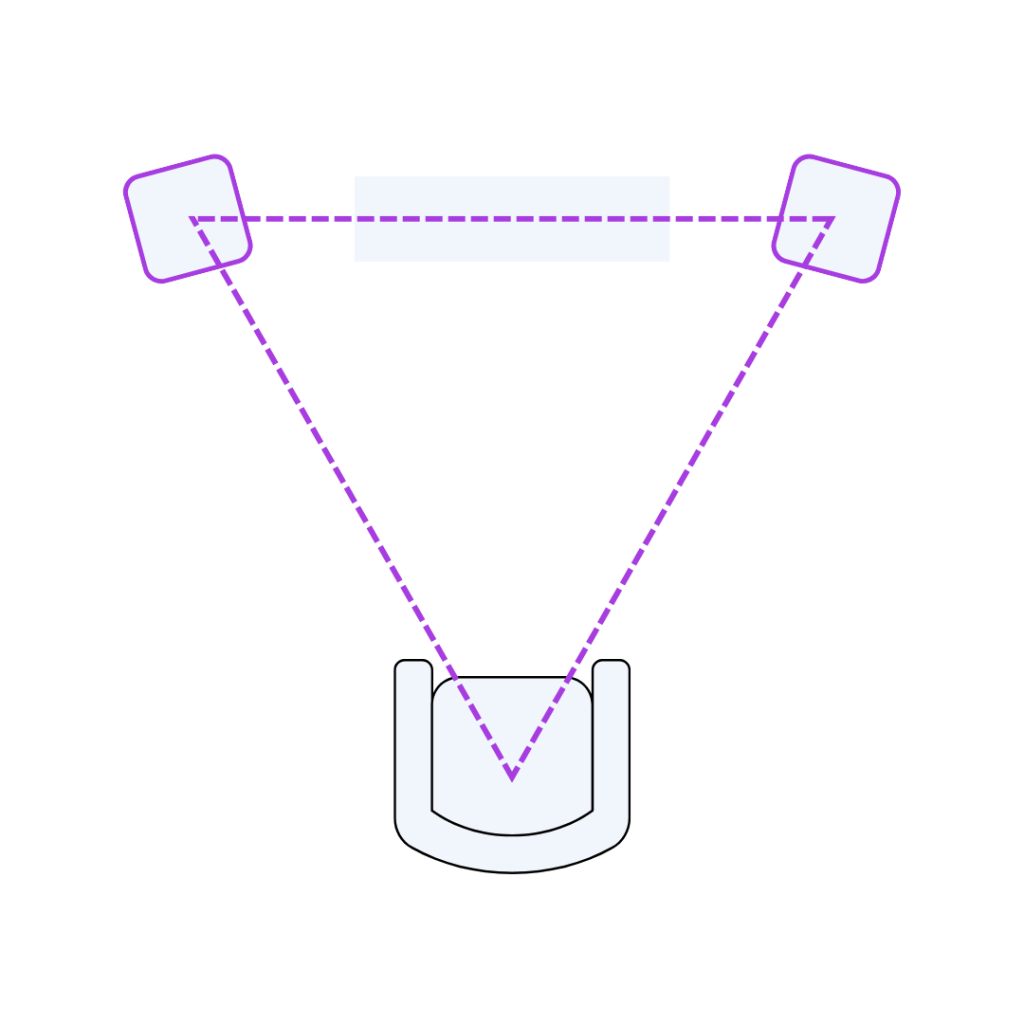
A Sweet Listening Spot:
- Generally, you will want to aim for an equilateral triangle between your two speakers and where you will be seated. Most rooms work well if the speakers are at least 4′ apart.
- Mind your distance to walls: Keep speakers at least 2–3 feet away from the rear and side walls to avoid muddy reflections and overly boomy bass.
- Need numbers? Here’s a good starting point: Bookshelf speakers—4 feet apart. Floorstanders—around 8 feet apart. Positioning that way helps fill your space without losing stereo balance.
Sound Signature Preferences
Everyone hears sound differently. Here’s a quick snapshot, based on what folks—and reviewers—say about some popular speakers (who knows might all be marketing jargon). Use it as a starting point, but remember: the final call is always yours.
- Edifiers: Warm, smooth, and mid-focused with clean, punchy bass and mellow highs.
- Kanto: Balanced with a touch of bass and treble—sounds engaging without overemphasis.
- Polk: Clear, full-bodied sound with solid mids and highs.
- Klipsch: live-concert-level sound”—powerful, emotional, and detailed
Connectivity & Simplicity
- Need Bluetooth or Wi-Fi streaming? Active (powered) speakers often include built-in wireless options. Passive speakers? Never—unless you add extra gear like a Bluetooth amp.
- Want to add a subwoofer or connect to a TV? Many powered speakers come loaded with inputs—RCA, optical, aux, HDMI ARC, and sub‑out—so you’re ready for whatever gear you add next.
- Prefer fewer components and cables? Powered speakers get rid of the need for an external amp. Just plug in and play.
- Want total control and upgrade flexibility? Passive speakers let you choose and upgrade the amp later—but that means more gear and careful matching to avoid damage.
- Looking for future-proofing and personalization? If you’re someone who switches sources or adds gear over time, active speakers strike a good balance for convenience—but passive setups offer that modular flexibility you will probably ultimately want.
Think ahead: What gear is in your rack right now? What might you add in the future? Get speakers that support those connections from the start, rather than scrambling for adapters later.
Budget & Signal Chain Priorities
If you’re trying to prioritize, most audiophiles will tell you: speakers are where your money matters most. They’re the final link in your signal chain—the thing actually moving air in your room. A killer speaker setup can elevate even modest source gear, while the reverse is less true.
What Are The Best Speakers for Vinyl? (Every Setup Covered)
Let’s get to the good part: the speaker picks. These are the ones we’d recommend to our friends—zero fluff, no paid placements just real performance. We combed through forums, read the reviews, and did the research so you don’t have to. You’re welcome.
Active Bookshelf Speakers
Edifier R1280T

Image source: Edifier
- Perfect For: Beginners looking for an easy and hassle-free introduction to vinyl.
- Sound Signature: Warm sound with great mids, ideal for smaller rooms
- Inputs: Dual RCA
The Edifier R1280T is pretty much the gold standard of beginner bookshelf speakers—and it’s been that way forever. Super affordable, surprisingly good sound, and reliable enough to earn thousands of glowing reviews. You’ll love them if you just want something easy, inexpensive, and trusted. Go with the R1280DBs ($30 more) if you want the added bluetooth functionality
Kanto YU4
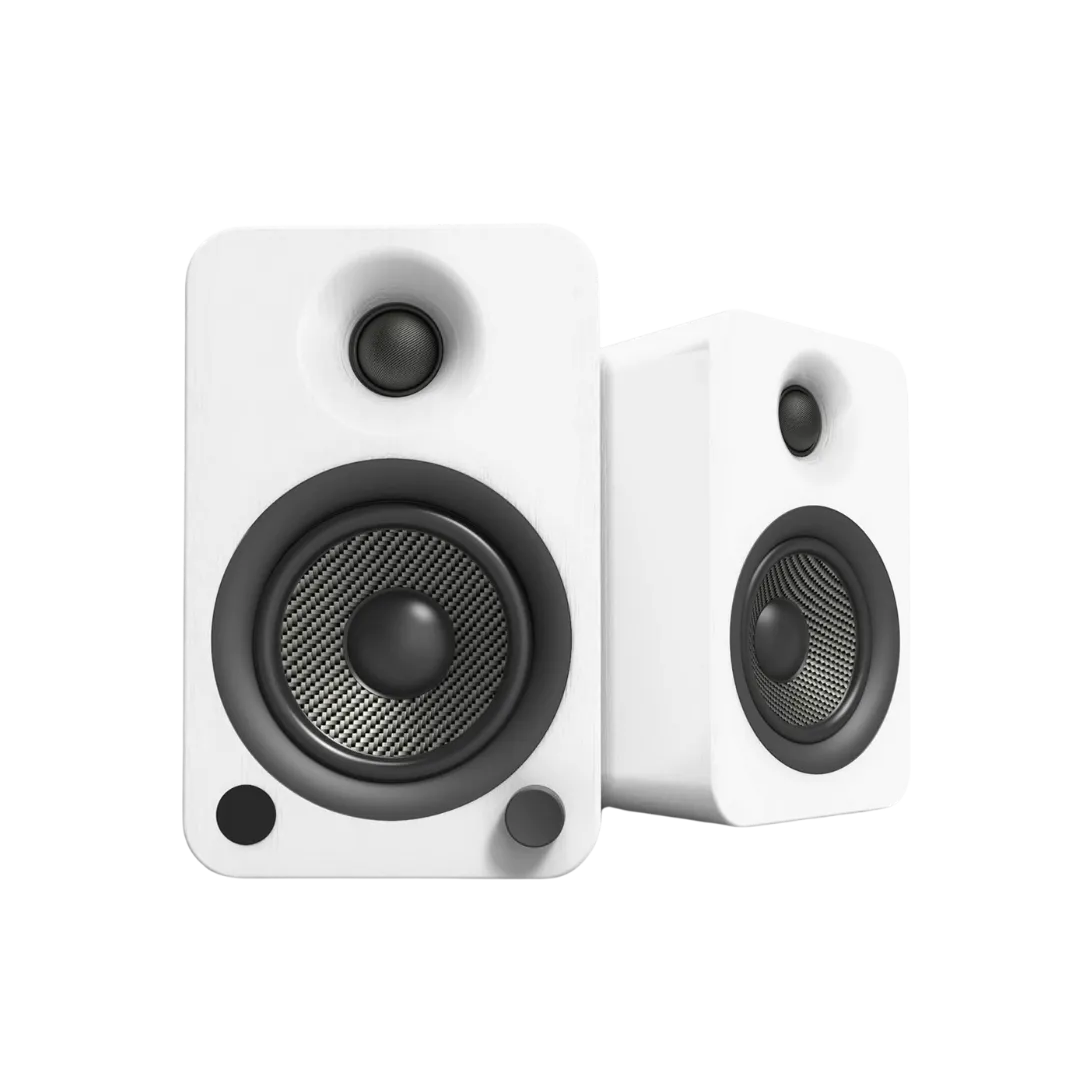
Image source: Kanto Audio
- Perfect For: Modern vinyl fans who want high-quality sound and versatility.
- Sound Signature: Punchy bass, detailed mids, crisp highs—rich, room-filling audio.
- Inputs: RCA, Optical, AUX (3.5mm), Bluetooth, Phono (built-in preamp)
The Kanto YU4 hits that sweet spot between audiophile-grade sound and super-easy setup. It’s got everything you need: switchable phono input (so no need for an external preamp), and enough inputs to connect basically anything you own. Looks amazing, sounds better, and is perfect if you care about style as much as sound. Want more bass? Easy—there’s a subwoofer output ready to go.
Klipsch The Fives

Image source: Klipsch
- Perfect For: Audiophiles-in-training who refuse to compromise—seriously powerful sound meets connectivity galore.
- Sound Signature: Bold, dynamic, detailed highs, deep, powerful bass.
- Inputs: RCA (with phono), Bluetooth (aptX HD), HDMI (ARC), Optical, USB (high-res audio), AUX (3.5mm), Subwoofer Out.
Klipsch The Fives are the speakers you buy when you’re ready to step up your vinyl setup (and everything else). They look and feel premium, from their walnut finish to their retro-style grilles. But it’s the sound and versatility that makes them worth every penny. HDMI, Bluetooth, optical, and vinyl-ready connections mean you can easily pair them with your TV, turntable, or pretty much anything else you’ve got. Expensive? Yeah. Worth it? Absolutely.
Passive Bookshelf Speakers
Klipsch R-51M
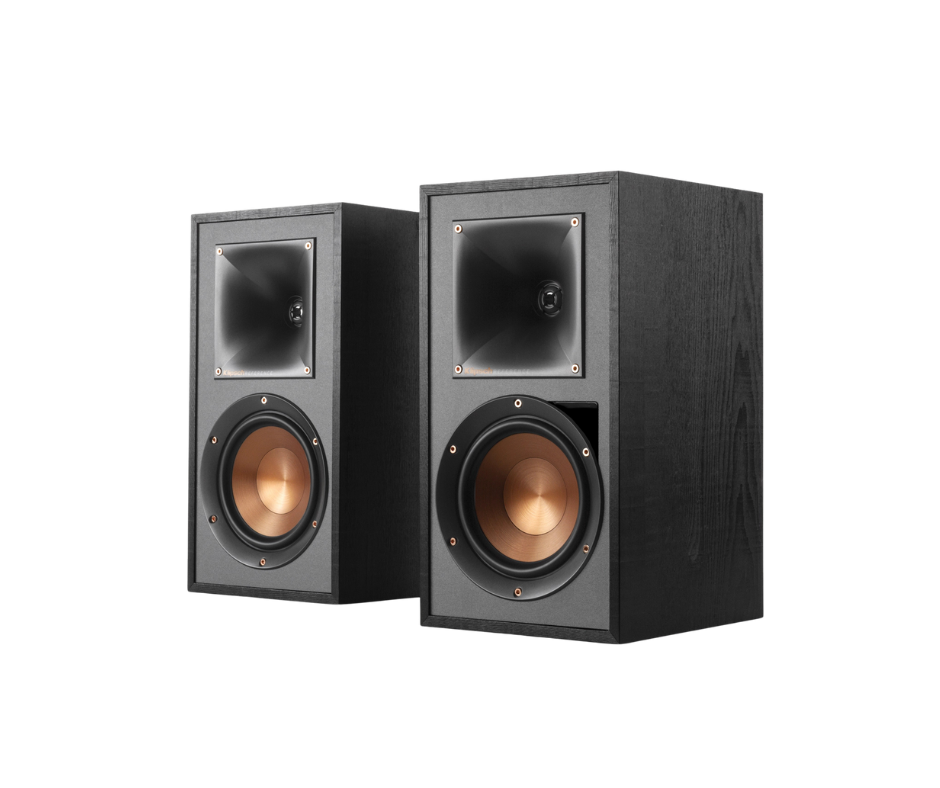
Image source: Klipsch
- Perfect For: Listeners who want bold, energetic sound and crisp detail.
- Sound Signature: Bright and lively. Strong mids, sharp highs, light on deep bass unless paired with a sub.
- Inputs: Passive (requires amplifier)
The R-51M brings that classic Klipsch bite—clear vocals, tight response, and a soundstage that cuts through. If you like a forward, live feel, these are it. Just don’t expect huge bass on their own. Pair with a sub and you’re golden. If you love the Klipsch look and sound – the PM are the powered alternative.
ELAC Debut 2.0 B6.2

Image source: ELAC
- Perfect For: Balanced listeners who want smooth detail without any harshness—great for most genres.
- Sound Signature: Neutral-leaning warm. Clear mids, tight bass, non-fatiguing highs.
- Inputs: Passive (requires amplifier)
The B6.2 nails that sweet spot—rich sound without trying too hard. They won’t shout at you, but they’ll absolutely impress with clean, honest detail. Big enough to fill a room, refined enough for close listening. Just a super solid all-rounder.
Wharfedale Denton 85

Image source: Wharfedale
- Perfect For: Vintage lovers who want warm, classic tone in a beautiful, retro box.
- Sound Signature: Warm and smooth. Rich mids, soft highs, bass that’s present but not boomy.
- Inputs: Passive (requires amplifier)
The Denton 85 is all about character. You get that 70s vibe—rich, relaxed, and super listenable. It’s not analytical, and that’s the point. These are speakers you can live with all day and never get tired of. Gorgeous, inside and out.
Active Floorstanding Speakers
Fluance Ai81
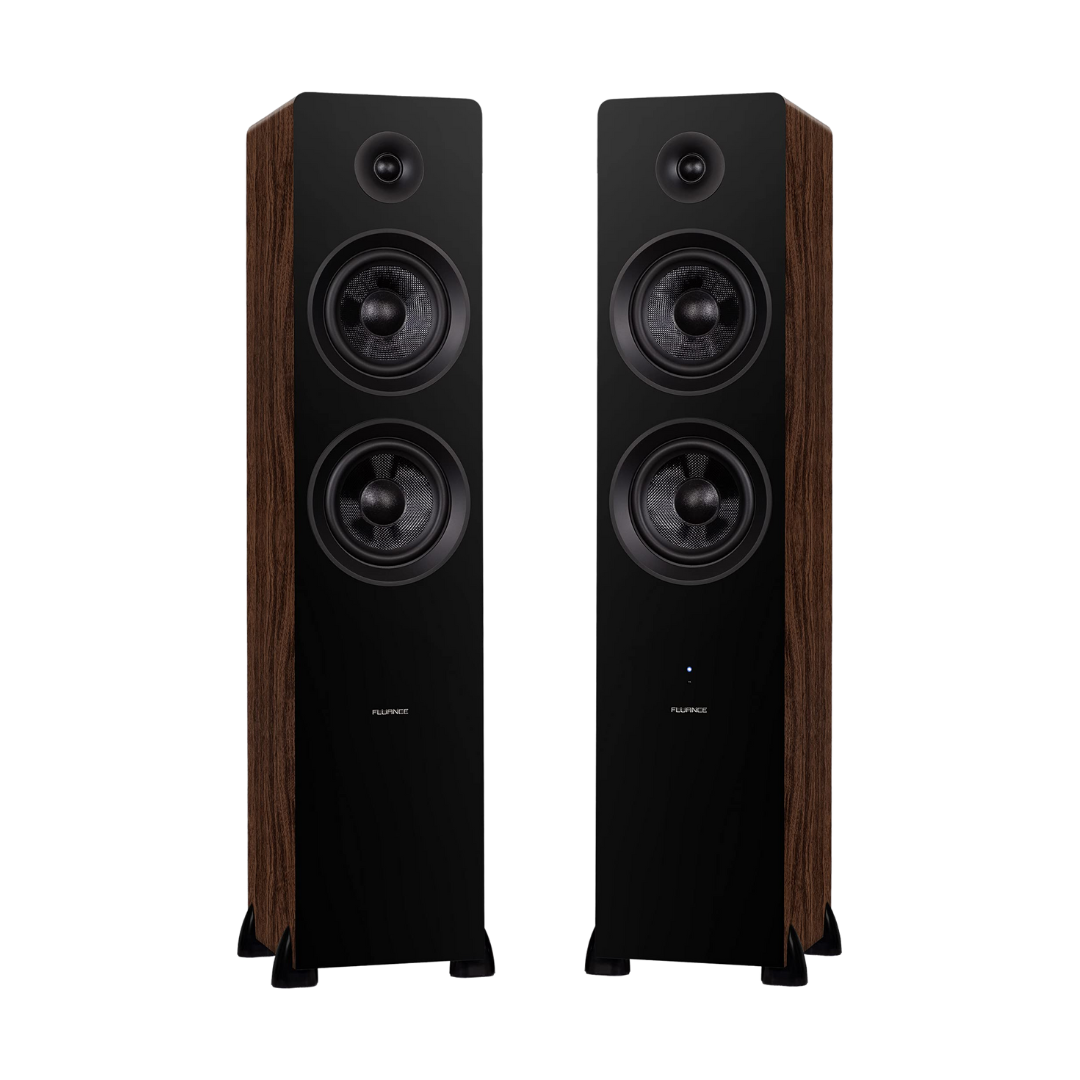
Image source: Fluance
- Perfect For: People who want full-size speakers with all-in-one convenience—ideal for vinyl setups without a receiver.
- Sound Signature: Neutral-leaning with a rich midrange and smooth highs. Impressive bass for the price, even better with a sub.
- Inputs: RCA, Optical, Bluetooth 5.0 (powered – no amp needed)
The Ai81 packs surprising power with built-in amplification, dual 6.5” drivers, and solid imaging. It’s a clean solution for vinyl, streaming, or TV audio—without the mess of extra gear. Just note: no built-in phono preamp, so pair with a turntable that has one.
Note: There aren’t many great budget options for powered floorstanding speakers, which is why this is the only one here. If you’re open to alternatives, a solid pair of powered bookshelf speakers on stands can offer similar performance with more flexibility.
Passive Floorstanding Speakers
Polk Audio T50

Image source: Polk
- Perfect For: Vinyl listeners who want big sound and a full-sized speaker presence without a huge price tag.
- Sound Signature: Warm and dynamic. Full mid-bass, smooth highs, and enough low-end to enjoy without a sub.
- Inputs: Passive (requires amplifier)
The Polk T50 punches above its price with dual woofers and a dedicated tweeter, offering great clarity and scale for vinyl setups. It’s especially well-suited for medium-sized rooms, and its ability to flex between music and home theater use adds long-term value.
KEF Q550
Image source: KEF
- Perfect For: Balanced listeners who want smooth detail and immersive sound—ideal for both music and home theater.
- Sound Signature: Neutral with a touch of warmth. Wide soundstage, crisp mids, non-fatiguing highs.
- Inputs: Passive (requires amplifier)
The Q550 blends KEF’s signature precision with room-filling ease. Thanks to the Uni-Q driver, you get consistent sound even off-axis—perfect for real-world rooms. It’s not a bass monster, but with a sub? You’re set. Solid pick for those who want clarity and class.
Smart Speakers
Sonos Era 300

Image source: Sonos
- Perfect For: Smart home listeners who want immersive spatial audio, multi-room control, and a clean, wireless aesthetic.
- Sound Signature: Spacious and three-dimensional. Expansive mids and highs, but less emphasis on deep stereo precision compared to traditional hi-fi gear.
- Inputs: USB-C Line-In (requires Sonos Line-In Adapter + 3.5mm aux cable); Bluetooth; WiFi (streaming)
The Era 300 is a beautifully designed smart speaker built for the future of spatial audio. With six drivers firing in multiple directions—including one up-firing tweeter—it excels at creating an enveloping soundstage and multi-room listening. It’s easy to set up, works flawlessly with voice assistants, and sounds fantastic with modern streamed content.
Note: While you can connect a turntable via line-in (with a phono preamp and the Sonos adapter), this setup feels more like a workaround than a priority. The Era 300 shines most when used wirelessly, as part of a broader Sonos system, or in surround sound applications. For vinyl lovers seeking classic two-channel fidelity and direct analog depth, there are better options. But if you’re invested in smart home tech and want a speaker that bridges music, movies, and multi-room control, the Era 300 is a stylish and forward-thinking choice.
| Model | Speaker Type | Bluetooth Option | Amplifier | Price |
|---|---|---|---|---|
| Edifier – R1280T | Powered Bookshelf | No | ✅ Built-in amp | $149 on Amazon |
| Kanto – YU4 | Powered Bookshelf | Yes | ✅ Built-in amp | $479 on Amazon |
| Klipsch – The Fives | Powered Bookshelf | Yes (aptX HD) | ✅ Built-in amp | $699 on Amazon |
| Klipsch – R-51M | Passive Bookshelf | No | ❌ Needs amp | $219 on Amazon |
| ELAC – Debut B6.2 | Passive Bookshelf | No | ❌ Needs amp | $379 on Amazon |
| Wharfedale – Denton 85 | Passive Bookshelf | No | ❌ Needs amp | $1,199 on Amazon |
| Fluance – Ai81 | Powered Floorstanding | Yes (5.0) | ✅ Built-in amp | $549 on Amazon |
| Polk – T50 | Passive Floorstanding | No | ❌ Needs amp | $498 on Amazon |
| KEF – Q550 | Passive Floorstanding | No | ❌ Needs amp | $990 on Amazon |
| Sonos – Era 300 | Smart Speaker | Yes | ✅ Built-in amp | $449 on Amazon |
Still deciding? Let’s make it easy.
Don’t just buy speakers. Build a holistic setup. Stop piecing together random gear from a dozen tabs. We built a tool that does that flawlessly.
Pick your turntable, pair it with the right speakers, and we’ll make sure every piece works perfectly together. One tool. Zero confusion.
Wrap-Up: Finding the Best Speakers for Vinyl Without the Guesswork
There’s no magic best speakers for vinyl—only the one that fits your space, taste, and goals.
Some people want the easy route—something they can unbox, plug in, and be spinning records before the shrink wrap hits the trash. Others love the long game—testing, tweaking, upgrading until they land on “that sound” they’ve been chasing for years.
Both paths are valid. Both can sound amazing. The trick is matching the gear to your space, your habits, and what you actually enjoy listening to.
That’s why we built the aforementioned Builder Tool. Instead of gambling on whether a turntable and a pair of speakers will actually work well together, you can just…pick them.
You’ll still get to make it yours. But you won’t waste weekends wondering if you should’ve bought the other thing. One tool. Zero confusion. And a setup you’ll actually be excited to drop the needle on. Best of luck to you all. Analog music is so important. Especially in today’s day and age.