
Here’s the funny thing about Bluetooth turntables.
We spend all this money collecting physical records, obsess over the sound of analog music, and then turn around and send the whole thing through Bluetooth.
Kind of defeats the purpose, doesn’t it?
Well, maybe.
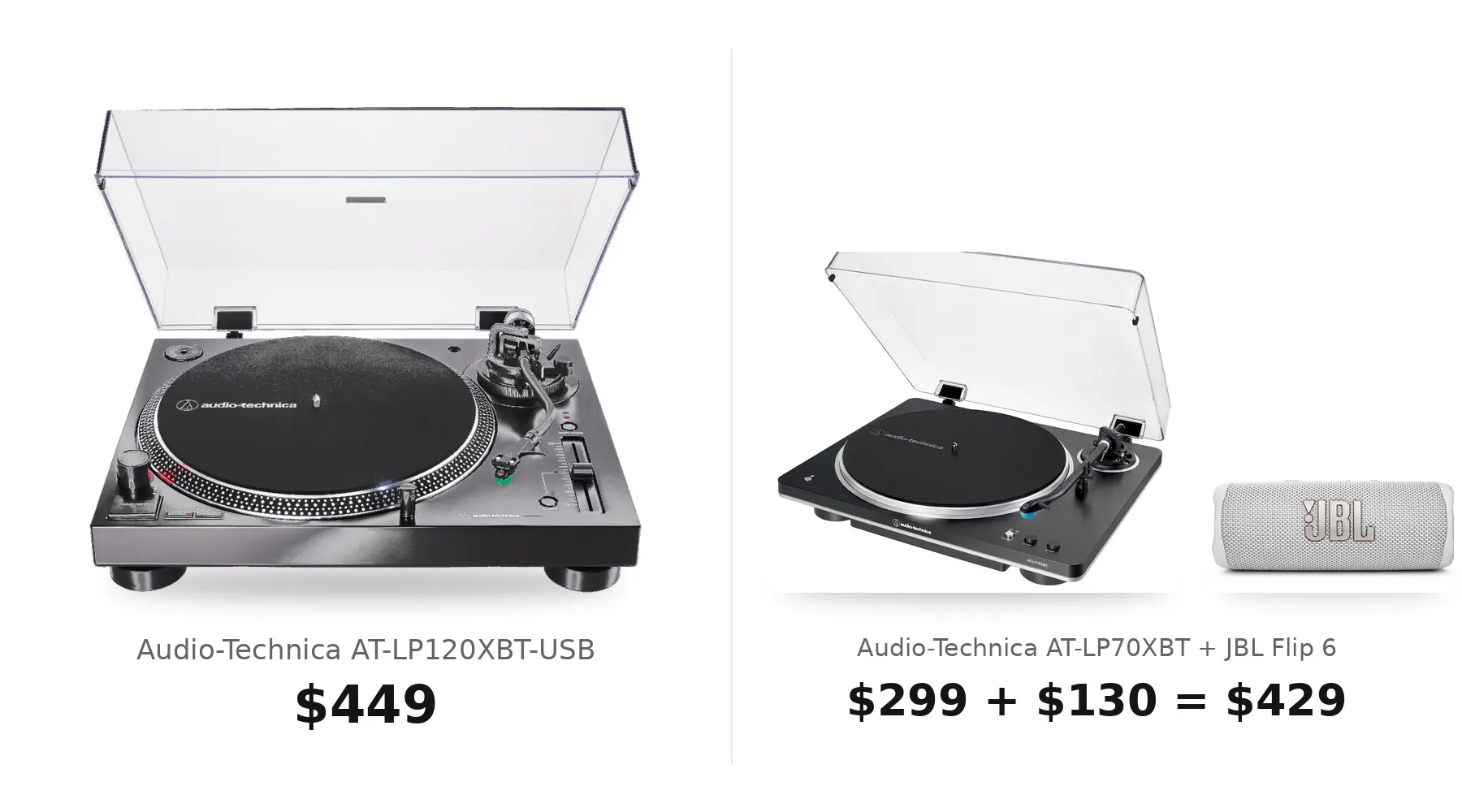
But here’s the thing. You might already have a perfectly good Bluetooth speaker sitting on your shelf. Or a nice pair of wireless headphones. Not only is Bluetooth convenient, but it might actually save you some money. You can get into vinyl without having to buy an amplifier, another set of speakers, or a bunch of extra equipment.
But there’s a trade-off.
So how much should you actually pay for Bluetooth? And at what point would that money be better spent on a nicer turntable?
That’s what I want to figure out.
We’ll look at what Bluetooth actually does to your music, what features are worth paying for, and which Bluetooth turntables I’d seriously consider buying.
Table of Contents
In this guide, we’ll cover the best bluetooth turntables on the market. If you’d rather skip straight to our top picks, click here.
- Does Bluetooth Defeat the Whole Point of Vinyl?
- What to Look for in a Bluetooth Turntable
- How Much Should You Actually Spend on a Bluetooth Turntable?
- The Best Bluetooth Turntables: Our Top Picks
- Conclusion: Are Bluetooth Turntables Worth It?
Affiliate Disclosure: We’re a small team of vinyl enthusiasts – if you get value from our insights, using our affiliate links (including Amazon Associates) helps us earn a commission and keep the lights on at no extra cost to you. Thank you for supporting Recordbuilds.com!
Does Bluetooth Defeat the Whole Point of Vinyl?
Here’s the truth about this question.
And it has to do with some nerdy science stuff about how sound actually works. I’ll keep it short.
When you play a record, the needle follows the grooves and the cartridge turns those vibrations into an analog electrical signal. But once Bluetooth gets involved, that signal gets converted into ones and zeros, compressed, and sent wirelessly to your speakers.
So yes, technically, you’re changing the original signal. Some information gets lost along the way.
If you really want to nerd out about this stuff, we wrote a whole article on WAV vs. MP3 that gets into the whole lossless versus lossy audio debate. Different technology, but a similar trade-off.
But does that mean Bluetooth sounds terrible?
Nope. And to be totally honest, I’d bet most people couldn’t even hear the difference in everyday listening.
Bluetooth has come a long way. A good wired connection will still give you more room to squeeze every last bit of sound quality out of your records, but a lot depends on the turntable, the Bluetooth connection, and probably most importantly, the speakers you’re using.
And there’s something else I think people forget. Not everyone buys vinyl purely for sound quality. There’s the collecting, the artwork, the physical experience of putting on a record, and that little ritual of sitting down and actually listening to an album. It’s not like bluetooth takes any of that away.
And if it means you can enjoy your records through speakers you already own, without spending another few hundred dollars on equipment, that’s a pretty good trade-off in my book.
My advice? Don’t get too hung up on keeping everything analog. Buy a good turntable first and a Bluetooth device second.
Because Bluetooth can make a good turntable more convenient. It can’t magically make a bad one sound good.
What to Look for in a Bluetooth Turntable
Here are three things I’d look for when shopping for a Bluetooth turntable.
This is where people get tripped up. You see the word Bluetooth on the box and think, great, just what I was looking for. But that little badge has very little to do with how good the turntable actually is. And it definitely doesn’t tell you whether it does the Bluetooth thing you think it does.
Ask me how I know.
1. Make Sure the Bluetooth Actually Goes Out
This is the first thing I’d check.
And honestly, I’ve gotten tripped up by this before, so it’s worth slowing down for a second.
Some turntables have Bluetooth input. That means you can stream music from your phone to the turntable. Fine, I guess. But if you’re here because you want to play records through your Bluetooth speaker or headphones, that’s not what you’re looking for. What you want is Bluetooth output.
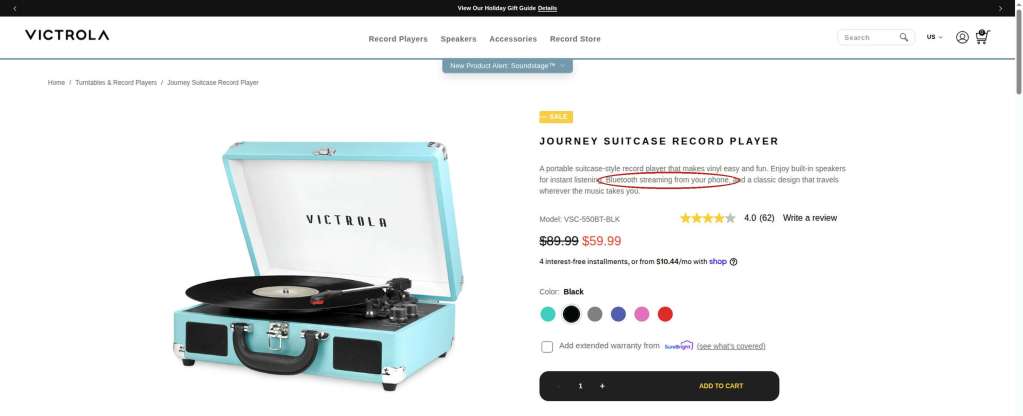
That’s the feature that sends the music from your turntable out to your wireless speaker or headphones.
And yes, you can get nerdier than that. You’ll see things like SBC, AAC, aptX. Those are just different Bluetooth codecs. Some are better than others. But I wouldn’t obsess over it unless your speaker or headphones support the same thing.
First question first: Does the turntable send audio out, or not?
2. Give Yourself a Wired Backup Plan
Bluetooth is convenient. Until it isn’t.
Maybe the pairing gets weird. Maybe the connection drops. Maybe one day you buy better speakers and decide you’d rather just plug the thing in. This is why I’d still want proper wired connections.
At minimum, I’d want RCA outputs. And ideally, a built-in phono preamp too. This gives you options.

You can plug straight into powered speakers. You can connect to an amp. You can use the turntable wirelessly today and wired tomorrow. That’s the kind of flexibility that makes a turntable last longer than your current setup.
And personally, I love anything that gives me an escape hatch. Especially in audio.
3. Then Worry About the Actual Turntable
And finally, the part people should probably care about the most. The turntable.
Because Bluetooth is nice. But remember this. If there is one takeaway from this article! ***It does not magically make a bad turntable good.
If the cartridge stinks, the tonearm is sloppy, or the thing can’t hold speed, I don’t really care how easy it is to pair with your speaker. I’d rather have a good turntable with Bluetooth than a Bluetooth turntable that’s bad at being a turntable.
So this is where I’d pay attention to the basics:
A good build (doesn’t feel like cheap plastics), tonearm, cartridge, and needle. This is the main stuff that actually affects how your records sound and how well the player tracks them. And if you have to choose between a better turntable and a fancier wireless spec sheet, I’d take the better turntable every time.
No image needed here. Because this point is simple: don’t let the Bluetooth distract you from buying a good record player.
How Much Should You Actually Spend on a Bluetooth Turntable?
Here’s the Bluetooth turntable money conundrum.
On one hand, you might save a few hundred bucks by using speakers you already own. On the other, manufacturers can charge you extra for Bluetooth in the first place. Because they do.
It’s a relatively easy feature for manufacturers to tack on, but they know people are willing to pay for the convenience. And sometimes they’ll squeeze a few more dollars out of you because of it.
So here’s the big question I want you to ask yourself: Are you actually saving money?
First, do you already have a decent pair of Bluetooth speakers or headphones? If so, great. You’re potentially getting an entire vinyl setup for the price of one turntable. Pretty hard to argue with that.
Personally, I think somewhere around $200 to $350 is a reasonable place to start. There are some perfectly respectable entry-level turntables in that range, and you don’t have to spend a fortune to get Bluetooth thrown in. But let’s say you’ve got $400 to spend.
You could put all of that toward a Bluetooth turntable, or buy a cheaper model and put the difference toward better speakers, a nicer cartridge, or something else that actually improves your listening experience.
And I’d seriously consider that second option, especially if you’re starting from scratch.
Because once you start spending more money, I want to see improvements to the actual turntable. Better tonearms, cartridges, build quality, speed stability. The stuff that matters whether you’re listening through Bluetooth or a wired connection.
Not just a fancier wireless feature. So my general rule? Pay for Bluetooth because it’s useful to you, not because it sounds like an upgrade. And if you’re spending $400 or $500 on a turntable, make sure you’re getting a $400 or $500 turntable. Not a $200 one with a fancy connection.
With that in mind, let’s look at a few I’d actually consider buying.
The Best Bluetooth Turntables: Our Top Picks
Yes, there’s a lot of Audio-Technica in here. I tried to mix things up, but they happen to make a lot of really good turntables at these prices.
But here’s something I should probably clarify first.
There’s a difference between a Bluetooth record player and a Bluetooth turntable. At least for the purposes of this list.
A Bluetooth record player is usually an all-in-one machine with speakers built right in. You can take it out of the box and start playing records without buying anything else.
A Bluetooth turntable, on the other hand, needs separate speakers or headphones. And depending on what you’re connecting it to, you might need some additional equipment. Example:
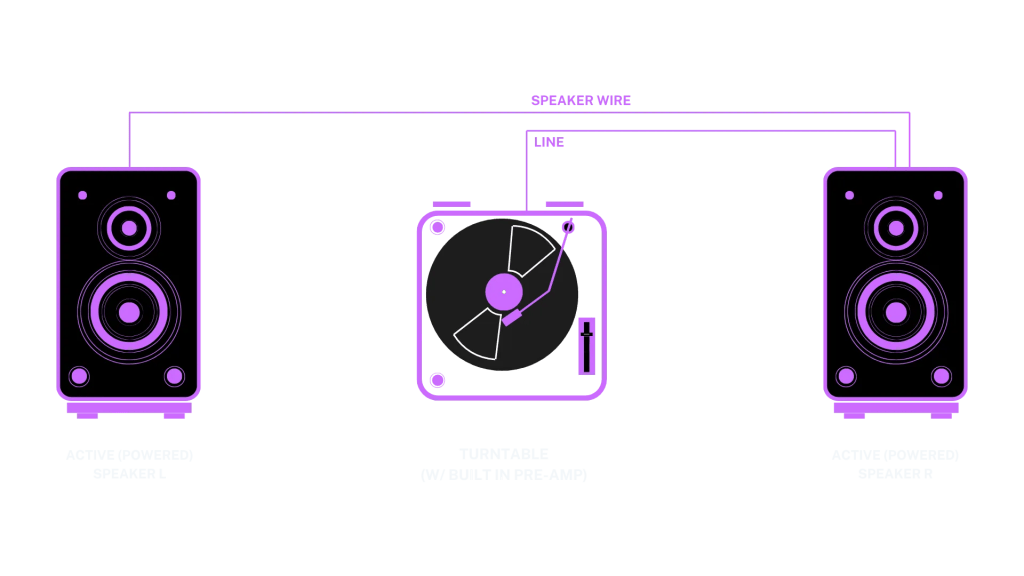
We’ve got both on this list.
And with the standalone turntables, there’s a little more to think about. Don’t worry, though. At the end, I’ll show you the best free tool for making sure you’re buying a setup that actually works together.
Now, let’s get into it.
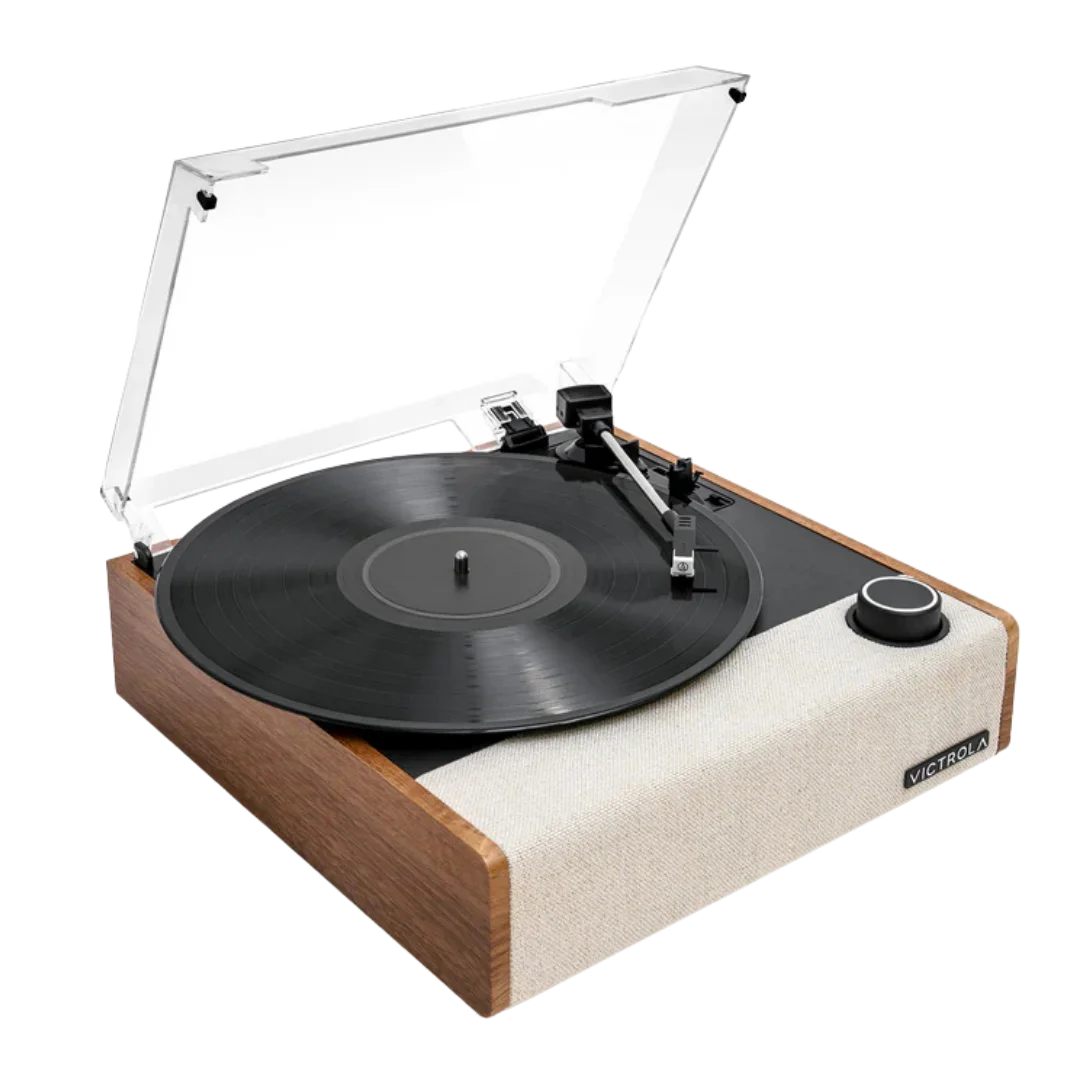
Victrola Eastwood II
- Perfect For: Anyone who wants the cheapest, simplest way to start playing records, with or without Bluetooth speakers.
- Turntable Type: All-in-One Record Player
For around $150, you get built-in speakers, Bluetooth input and output, and an Audio-Technica cartridge. Not bad.
You’re definitely making compromises in sound quality and construction, but if you want to start playing records without buying anything else, it’s a pretty inexpensive way in.
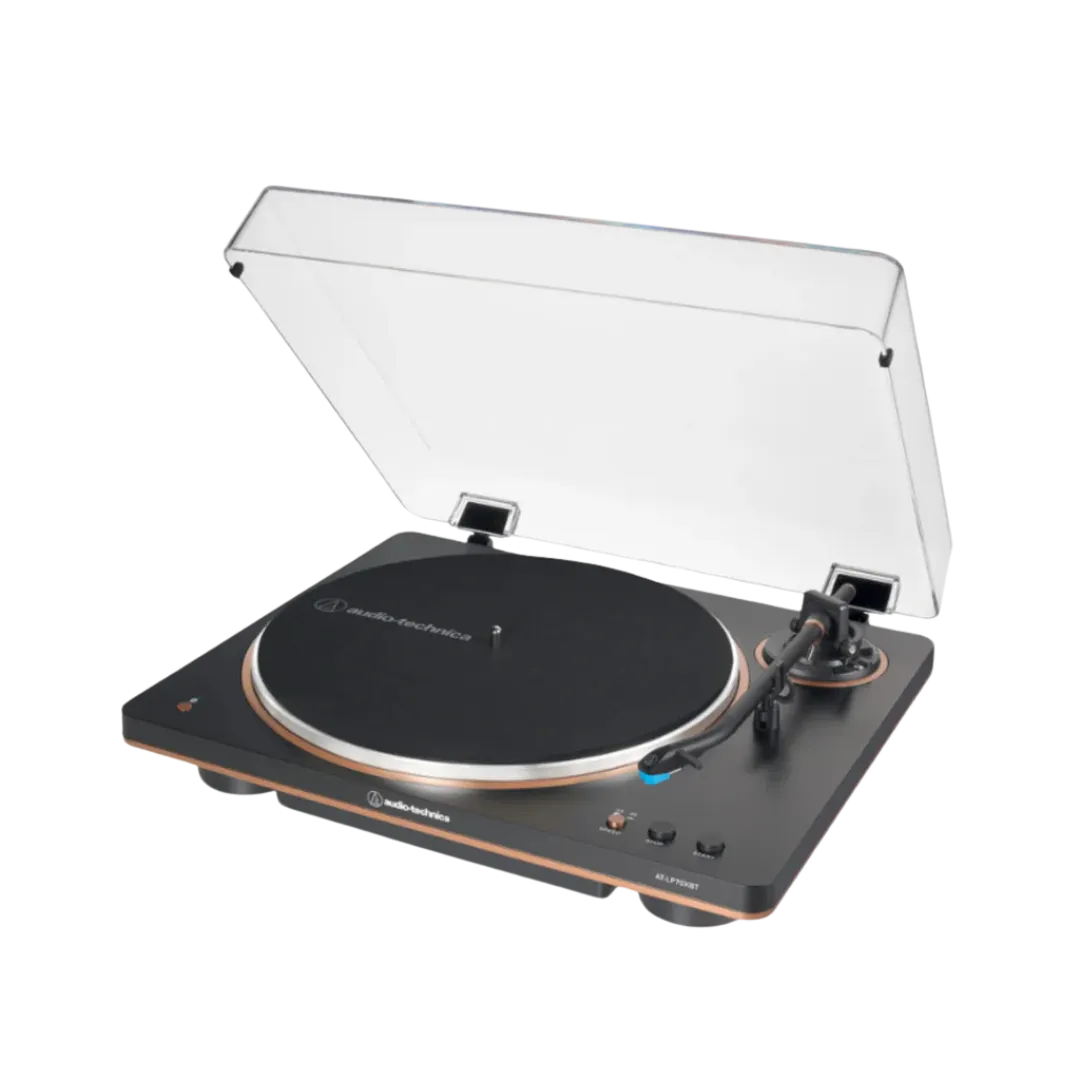
Audio-Technica AT-LP70XBT
- Perfect For: Most beginners who can spend a little more for a better long-term first turntable.
- Turntable Type: Plug-and-Play Turntable
This is the one I’d buy – probably the best overall value. A built-in phono preamp, and an upgradeable AT-VM95C stylus. It’s a genuinely solid beginner turntable, not just a cheap record player with Bluetooth slapped on. For around $300, I think it’s the sweet spot.
If your budget can stretch to it, this is the easy answer.

Crosley C6 Record Player
- Perfect For: Budget buyers who want a proper, wood, manual turntable
- Turntable Type: Plug-and-Play Turntable
Yes, Crosley. I know.
Now here’s a Crosley I can actually get behind.
The C6 Bluetooth has an adjustable counterweight, anti-skate, an Audio-Technica cartridge, and a built-in switchable preamp – crazy good for something at this budget.
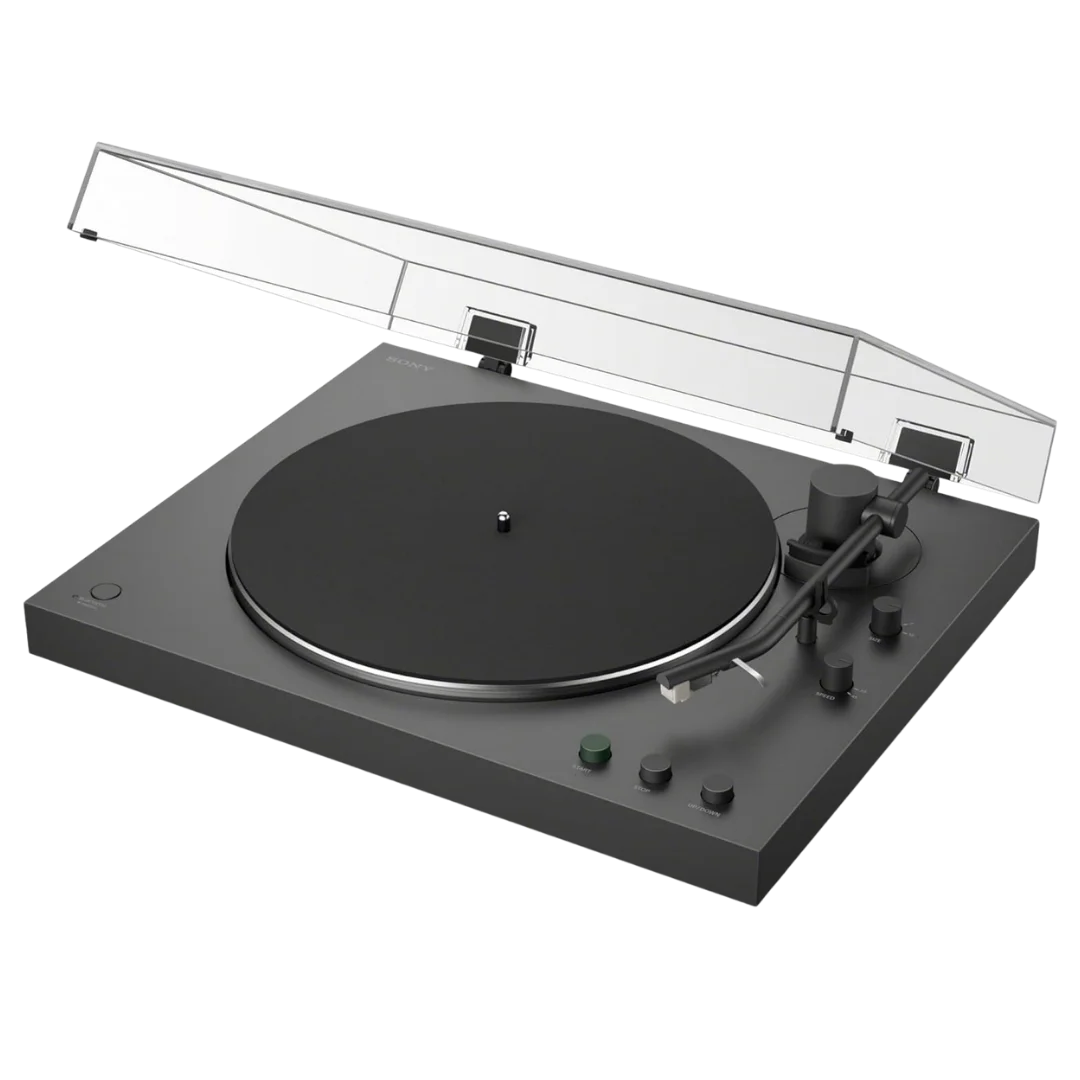
Sony PS-LX3BT
- Perfect For: Minimalists who appreciate clean, modern design.
- Turntable Type: Plug-and-Play Turntable
Sony’s newer PS-LX3BT is a slick-looking machine with one-button playback, Bluetooth, and a built-in preamp.
My only hesitation is the price. At around $400, I’d have a hard time choosing it over the LP70XBT unless I really preferred Sony’s design (which many do).
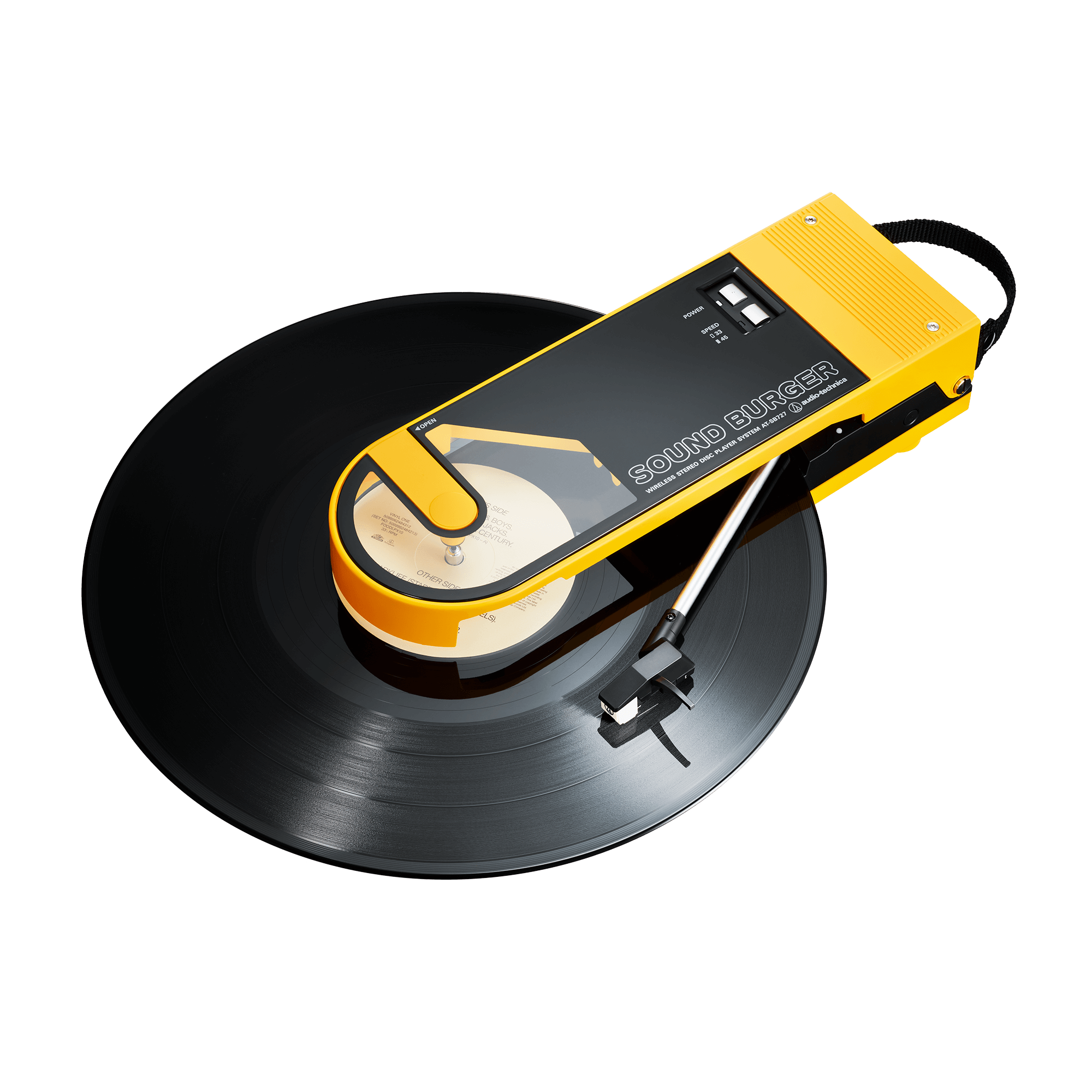
Audio-Technica Sound Burger
- Perfect For: Anyone who wants something portable and fun.
- Turntable Type: Portable/all in one
I couldn’t leave this one out. The Sound Burger is tiny, battery-powered, plays full-size records, and has Bluetooth. Is it the best choice for your main setup?
Probably not. But it’s ridiculously cool, and we’ve already written a whole Sound Burger review explaining why.
| Feature | Victrola Eastwood II | AT-LP70XBT | Crosley C6 Bluetooth | Sony PS-LX3BT | Sound Burger |
|---|---|---|---|---|---|
| Price | $150 on Amazon | $299 on Amazon | $199 on Amazon | $400 on Amazon | $199 on Amazon |
| Turntable Type | All-in-One | Standalone | Standalone | Standalone | Portable |
| Bluetooth Type | 5.1 | 5.2 (aptX Adaptive, aptX, SBC) | Not Consistently Specified | aptX Adaptive, aptX, SBC | 5.2 (SBC) |
| Built-In Speakers | Yes | No | No | No | No |
| Built-In Preamp | Yes | Yes (Switchable) | Yes (Switchable) | Yes (Switchable) | Yes (Fixed) |
| Bluetooth Connection | Input & Output | Output | Output | Output | Output |
| Manual vs Automatic | Manual | Automatic | Manual (Auto-Stop) | Automatic | Manual |
| Cartridge | AT-3600 Series | AT-VM95C | AT-3600 Series | Moving Magnet | AT-3600 Series |
| Wired Output | RCA | RCA | RCA | RCA (Fixed Cable) | 3.5mm (RCA Cable Included) |
So Which Bluetooth Turntable Should You Buy?
If you want the cheapest way to get started, the Victrola Eastwood II has everything you need in one box. The Crosley C6 Bluetooth is a good budget option if you already have speakers, but I’d personally spend a little more and go with the AT-LP70XBT. That’s my pick for most people.
If you want something simple and modern, there’s the Sony PS-LX3BT. And if you’re looking for something a little more fun, well, there’s always the Sound Burger.
Building a Bluetooth Vinyl Setup? Here’s How I’d Do It.
Now, if you’re buying a standalone turntable and building a whole system around it, things can get a little confusing. Lucky for you, this is exactly why we built the free Recordbuilds Setup Builder.
Here’s how I would do it.
You can go through the turntables, put on the Bluetooth filter, and even enter a total budget for your setup. Then do the same thing for speakers if you want to put together a complete system.
And there are actually a ton of really good combinations you can put together for under $400–$500. Which, honestly, is not a whole lot of money to get into vinyl.
Anyway, rather than trying to explain the whole thing, let me just show you how it works below.
Conclusion: Are Bluetooth Turntables Worth It?
The way I see it, Bluetooth turntables basically fall into a few categories:
Budget ($150–$200): Mostly entry-level and all-in-one options. Not perfect, but a pretty inexpensive way to get started, especially if you already have Bluetooth speakers.
Sweet Spot ($200–$300): This is where I’d put my money. You can get a legitimately good turntable with Bluetooth without spending a fortune.
Step Up ($300–$500): Now we’re getting into better components, more features, and some pretty slick-looking machines. Just make sure you’re actually getting something for the extra money.
Audiophile ($500+): At this point, I’d personally be putting more of my money toward the actual turntable and speakers. Bluetooth would be pretty far down my list of priorities.
Our take: Bluetooth is absolutely worth having if it makes your setup easier or saves you from buying a whole new set of speakers. But don’t confuse convenience with better sound.
And if you’re still a little confused about what to buy, don’t overthink it. Start with our Beginner Record Players guide or play around with our free Setup Builder.
You don’t need a $2,000 hi-fi system to enjoy your records. And you definitely don’t need to apologize to anyone on Reddit for listening to them over Bluetooth.