

Here’s a fun way to waste money in the vinyl hobby.
Buy nicer speakers.
Buy a nicer amp.
Buy a better turntable.
Keep going in circles and wonder why your setup doesn’t sound much better.
If you’re here because you Googled what is the best turntable cartridge, you’re in the right place. Because the key – the absolute most important part – is that same stock cartridge you’ve been using since day one.
It’s the most overlooked piece. And when you think about it, it’s kind of insane. It’s literally the part that touches the vinyl and turns grooves into the music you hear. Everyone pushes the flashy stuff: a nicer turntable, beefier amps, speakers that could double as furniture.
But the truth is, if your cartridge sucks, everything else does too.
It’s easy to ignore. It’s just a tiny piece hanging off the end of the tonearm. But that little thing makes a world of difference.
If you’re the kind of person who actually cares about how your records sound – not just how the setup looks – this is the upgrade you can’t afford to skip.
Table of Contents
In this guide, we’ll cover everything you need to know about turntable cartridges – what they are, why they matter, and which ones are worth your money. Feeling unsure? We’ll walk you through it step-by-step.
Already know your stuff and just here because you’re asking what is the best turntable cartridge? Skip ahead to our top recommendations.
- What is a Turntable or Phono Cartridge?
- Why the Turntable Cartridge is the Biggest Upgrade
- How to Choose the Best Turntable Cartridge for You
- The 3 Best Turntable Cartridges (and 3 bonus picks)
- Conclusion Upgrade Where It Counts
Affiliate Disclosure: We’re a small team of vinyl enthusiasts – if you get value from our insights, using our affiliate links (including Amazon Associates) helps us earn a commission and keep the lights on at no extra cost to you. Thank you for supporting Recordbuilds.com!
What is a Turntable or Phono Cartridge
A turntable cartridge (also called a phono cartridge) is the tiny piece on the end of your tonearm that makes the magic happen. It holds the stylus (needle) and turns what’s in the groove into a signal your system can turn into music.
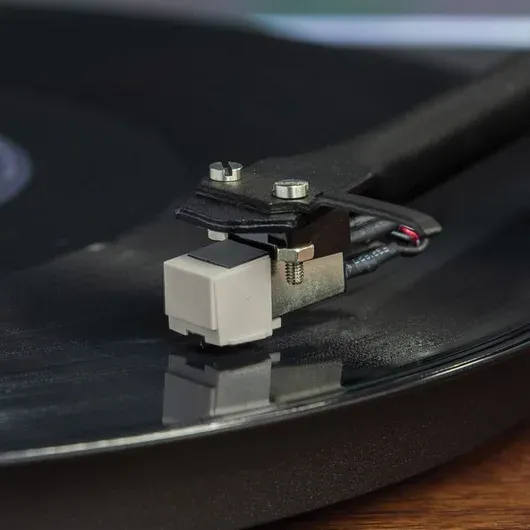
So to dumb it down and keep it short and sweet:
- your turntable spins the record
- the stylus rides that little track in the vinyl
- the tiny bumps and ridges in the groove become an electrical signal
- your other components turn that signal into music you can actually hear
So in terms of the music, it’s literally the first step in the whole chain.
The Anatomy of a Turntable Cartridge (Quick Version)
There are a couple different parts in a cartridge, but you don’t need to memorize any of this. It just helps to know what you’re looking at.
- Stylus (needle) – the tiny tip that actually touches the record groove
- Cantilever – the little arm the stylus is attached to (it moves with the groove)
- Rubber suspension – a tiny shock absorber that controls that movement
- Magnets + coils – the guts that turn that movement into an electrical signal
- Cartridge body – the housing that holds everything in place
- Connection pins – the terminals on the back that send the signal down the tonearm
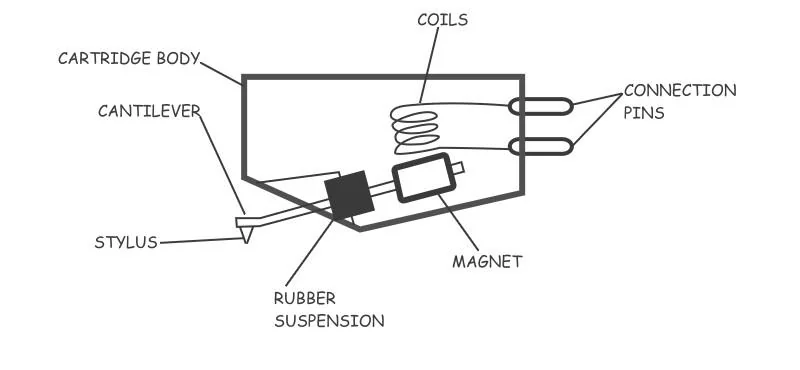
So yeah, it’s a small piece of plastic hanging off the end of your tonearm. But it’s also a highly refined, surprisingly complex little machine. Awesome engineering, honestly.
Once you see how much engineering is packed into that little piece, it makes sense why the next question becomes what is the best turntable cartridge for your tonearm.
Why the Turntable Cartridge is the Biggest Upgrade
Cartridges can sound way, way different from each other. And you’ll notice it instantly if you’ve ever compared two side by side.
Most people are told to save for a better turntable, buy a bigger amp, or upgrade their speakers. Those things matter, sure. But they all rely on the cartridge doing its job first.
That’s why people eventually end up asking: what is the best turntable cartridge for my setup?
I know I’ve said it so many times, but the cartridge is the starting point. It’s kind of like taking a photo – if the lens is blurry, you can bring it into Photoshop and hit the “refine” tool (or whatever), but you’re never getting back detail that the camera didn’t capture in the first place.
Everything downstream is basically working with whatever the cartridge gives it. Amplifying it. Coloring it. Cleaning it up a little.
But it can’t invent information that never got picked up in the first place.
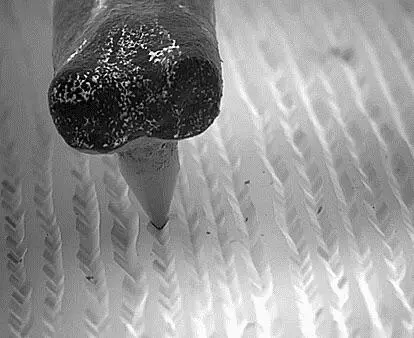
So that’s why it’s the biggest upgrade, especially if you do have a lower quality cartridge.
Speakers change the flavor. Amps give you more power or warmth. But a new cartridge changes the source of truth. It’s like cleaning up that lens for the raw image. And once the raw image is cleaner, the entire system has more to work with.
And if you aren’t sold yet, it’s because cartridges are the most overlooked. It’s just a small, fiddly thing that isn’t super flashy.
But I will go to the grave with this: dollar for dollar, they are one of the most impactful upgrades you can make in any vinyl setup.
How to Choose the Best Turntable Cartridge for You
Already have a turntable and thinking about a cartridge upgrade? Let’s help narrow down which direction you might be going.
1. Check Your Turntable’s Existing Cartridge
Before you rush to upgrade, look at what’s already mounted. Many entry-level turntables ship with very basic cartridges that are fine for getting started but won’t blow you away. But here’s the thing: if you own a more premium brand like U-Turn, Pro-Ject, or Fluance, you might already be set.
These models often come stock with cartridges (like Ortofon or Audio-Technica mid-tiers) that punch way above “beginner” level. In other words, you could already be listening at a pretty high standard without realizing it.
2. Check Your Turntable’s Compatibility
Not every cartridge works with every turntable. The two main mounting types are:
- Standard ½-inch mount: The most flexible option. Screws into a removable headshell and gives you lots of upgrade choices.
- P-mount (T4P): Found on some entry-level turntables, Technics, and Sony. Easier to install but more limited in upgrade options.
Check your turntable manual or model page to confirm which you have before shopping.
3. Budget: How Far Do You Want to Go?
Because the cartridge is that important, prices can swing wildly. Here’s how to think about it:
- Under $100: Solid upgrades for beginners, like the Audio-Technica VM95 series. These are affordable, easy to install, and a huge step up from bundled stock carts.
- $100–$500: This is the sweet spot for most vinyl enthusiasts. Ortofon 2M Red/Blue, Grado Prestige series, or AT’s higher-end VM line all live here—more detail, better tracking, richer sound.
- $500+: This is where things get serious. At this level, you’re paying for cartridges that extract every last nuance from your records. They’re designed for high-end systems where every component matches in quality. Not necessary for beginners, but if you’re chasing “endgame” sound, this is where it lives.
4. Match It to Your Listening Style
Think about what you actually spin and how you listen:
Lots of older or worn records? A conical stylus might track better and reduce noise.
Casual, all-genre listener? Stick with forgiving cartridges that sound good everywhere.
Obsessive detail-hunter? Go for a stylus shape like microline or nude elliptical that pulls out every hidden texture.
The Best Turntable Cartridges for Beginners and Beyond
When it comes to cartridges, there are two names that show up again and again, for good reason. They’re proven, accessible, and trusted by everyone from beginners to seasoned vinyl fans.
So if you are here because you are wondering “what is the best turntable cartridge”, look no further, here are the answers:
The Trusted Standards:

Audio-Technica VM95E
Key Specs & Compatibility:
- Mounting: Fits any standard ½-inch mount tonearm
- Tracking Force: 1.8–2.2 g (2.0 g is the sweet spot).
- Stylus Shape: 0.3 × 0.7 mil elliptical diamond (bonded).
- Stylus Options: Fully compatible with the entire VM95 stylus family (conical, elliptical, nude elliptical, etc.)
The AT-VM95E is the definition of a no-brainer upgrade. It’s a clear step up from the older AT95E, with clean, detailed sound and an easy upgrade path thanks to its interchangeable stylus options. For most people who have not considered upgrading their cartridge, this is the best place to start.
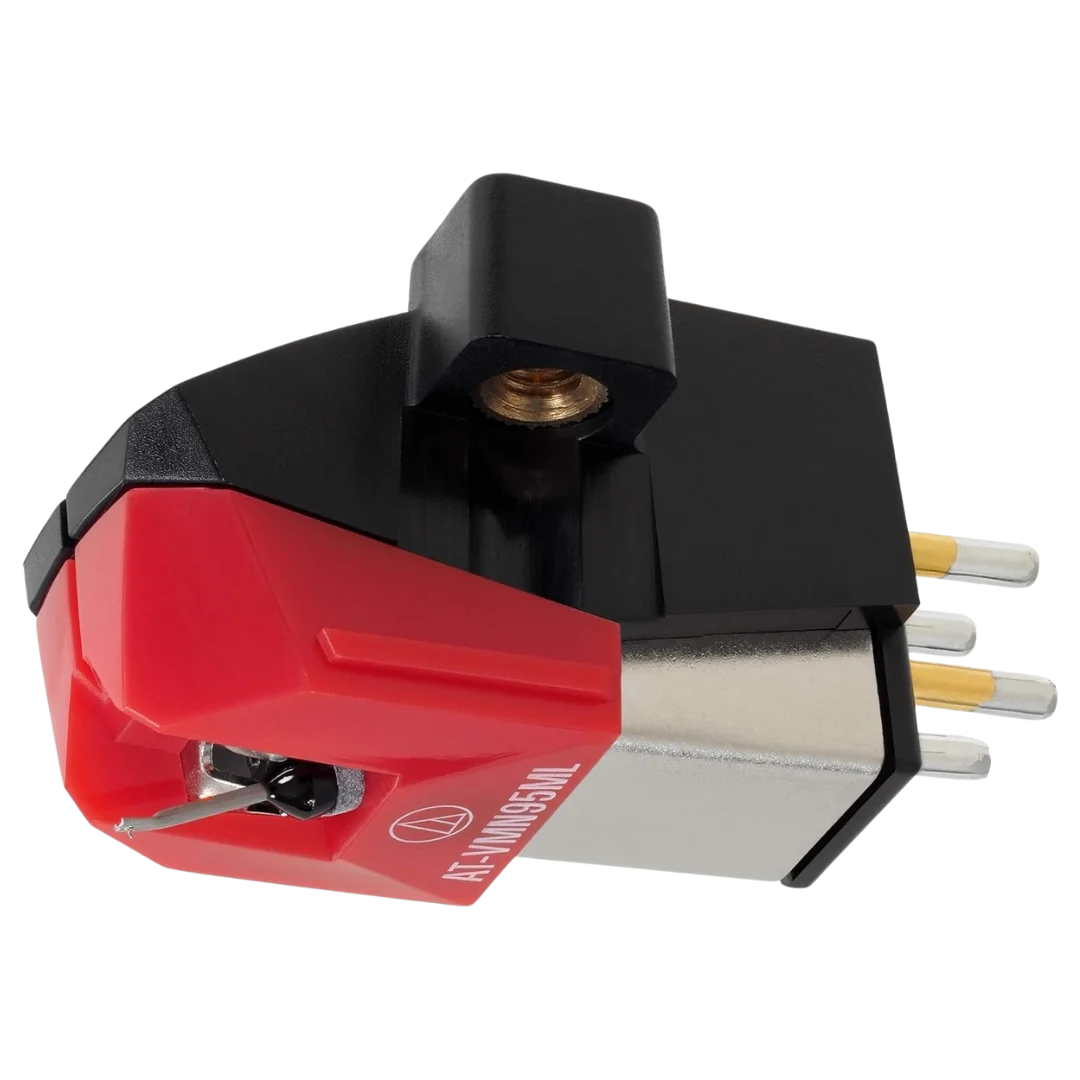
Audio-Technica VM95ML
Key Specs & Compatibility:
- Mounting: Fits any standard ½-inch mount tonearm
- Tracking Force: 1.8–2.2 g (2.0 g recommended)
- Stylus Shape: MicroLine diamond
- Stylus Options: Fully compatible with the entire VM95 stylus family (conical, elliptical, nude elliptical, etc.)
The VM95ML is the crown jewel of Audio-Technica’s VM95 line. It’s the best value “serious” upgrade most listeners will ever need — delivering clarity, separation, and tracking ability miles ahead of the cartridge that comes stock with most turntables, and a clear step up from the VM95E. For many, this is where vinyl playback really starts to feel high-end without a high-end price tag.

Ortofon 2M Blue
Key Specs & Compatibility:
- Mounting: Fits any standard ½-inch mount tonearm
- Tracking Force: 1.6–2.0 g (1.8 g recommended)
- Stylus Shape: Nude elliptical diamond
- Stylus Options: Compatible with the Ortofon 2M series (swap in Red, Bronze, or Black styli on the same cartridge body)
The Ortofon 2M Blue is a trusted upgrade that brings a big jump in clarity, separation, and overall detail. It’s pricier than entry-level options, but for those who are truly dedicated to their vinyl listening, this is the path for truly opening your system up.
Other Solid Picks

Audio-Technica AT85EP
Key Specs & Compatibility:
- Mounting: P-mount / T4P standard (plug-in, no manual alignment required)
- Tracking Force: 1.25 g (fixed on most P-mount arms)
- Stylus Shape: 0.3 × 0.7 mil elliptical diamond
- Stylus Options: Compatible with ATN85EP replacement styli (direct swap)
If you have a Technics, Sony, or other linear-tracking deck, chances are you’re running a P-mount cartridge. The AT85EP is the go-to upgrade: plug it in, and you’re set. Despite the low price, it uses Audio-Technica’s dual moving magnet design, delivering cleaner, more detailed sound than most stock P-mount carts.
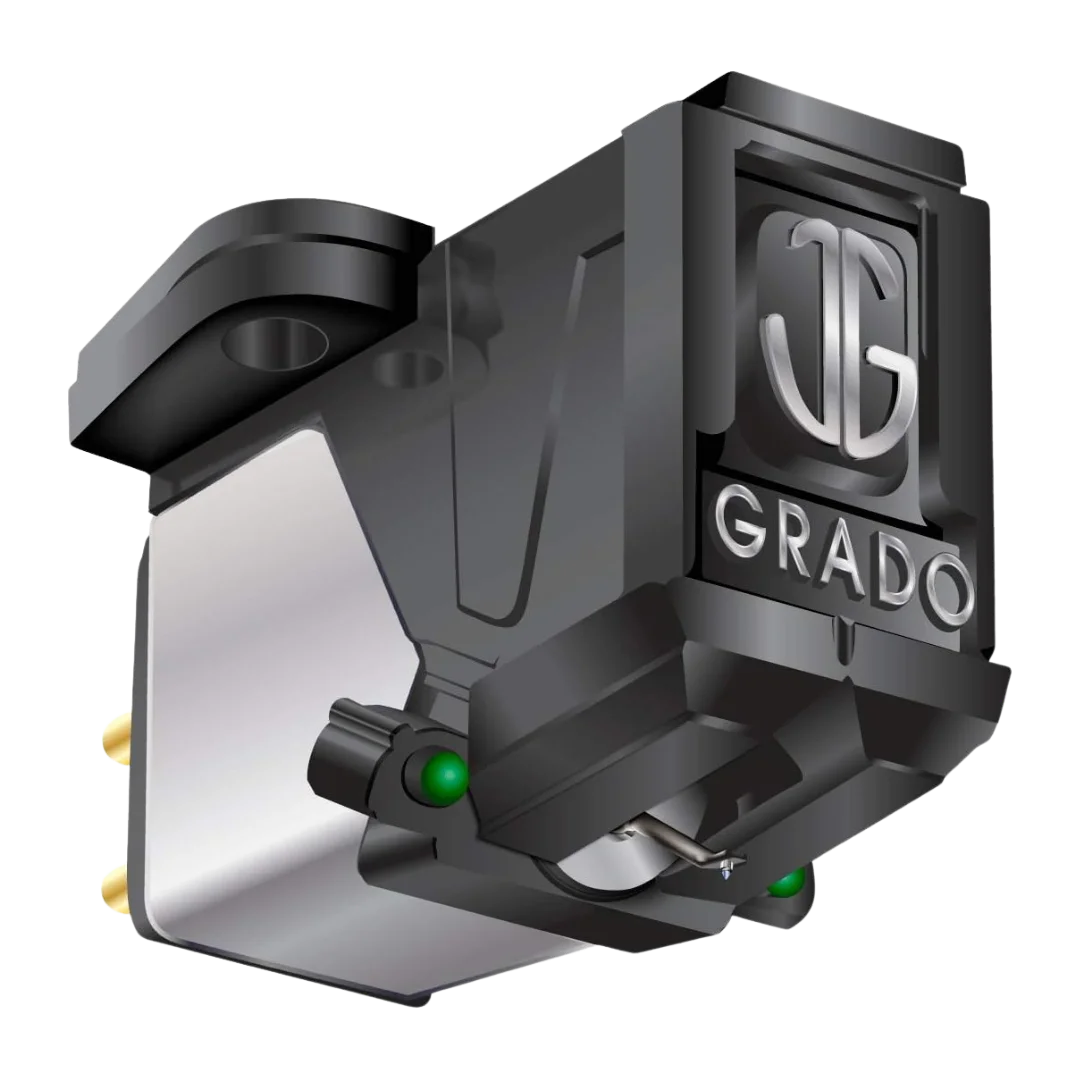
Grado Prestige Green3
Key Specs & Compatibility:
- Mounting: Fits any standard ½-inch mount tonearm
- Tracking Force: 1.5–2.0 g (1.8 g recommended)
- Stylus Shape: Elliptical diamond
- Compatible with all Grado Prestige styli
The Green3 is Grado’s step-up cartridge in the Prestige line, hand-assembled in Brooklyn and known for its warm, natural, and very “musical” presentation. Where Audio-Technica leans detailed and Ortofon leans crisp, Grado goes for rich midrange and smooth highs that make long listening sessions a joy.

Nagaoka MP-110
Key Specs & Compatibility:
- Mounting: Fits any standard ½-inch mount tonearm
- Tracking Force: 1.5–2.0 g (1.8 g recommended)
- Stylus Shape: 0.4 × 0.7 mil elliptical (bonded diamond)
- Stylus Options: Compatible with the entire Nagaoka MP series — can be upgraded to MP-150, MP-200, MP-300, or MP-500 styli without changing the cartridge body.
The Nagaoka MP-110 is a fan favorite for listeners who want a more forgiving, laid-back sound compared to the sharper Audio-Technica or Ortofon profiles. Great at taming surface noise, it makes older or less-than-perfect records sound better than you’d expect.
Conclusion: Upgrade Where It Counts
Let’s recap. You might be looking at your setup totally differently now.
A cartridge upgrade is the clearest way to get more out of your system. That’s a fact.
If you were already sold on that and were just wondering what are the best turntable cartridges, the AT-VM95E is the no-brainer first step up.
And if you know you’re in this for the long haul, it’s worth stretching for options like the VM95ML or the 2M Blue. Both bring out more detail and separation – the kind of jump that makes your system feel like it finally opens up.
But before you buy anything, first check what cartridge your turntable already has. You want to make sure you’re compatible with the new one, and also make sure you aren’t already using a really great cartridge. If you are, your next upgrade might be elsewhere.
So thanks for listening to my spiel. We hope your vinyl setup takes a step from this.
And if you haven’t seen us already – we don’t just write these helpful articles.
We’re building a sick platform for vinyl setups. I hate when people say “the Discogs of X”… but it kind of is the Discogs of vinyl setups.
If you haven’t already, you can make your listening room profile, track your setup, see the ratings, and easily share your profile with a simple link. All your setup info in one place, so you never have to type it out again.
We’d love to have you along for the journey of demystifying vinyl setups and building a community where people can actually learn from each other’s systems.
If you want to check it out: