
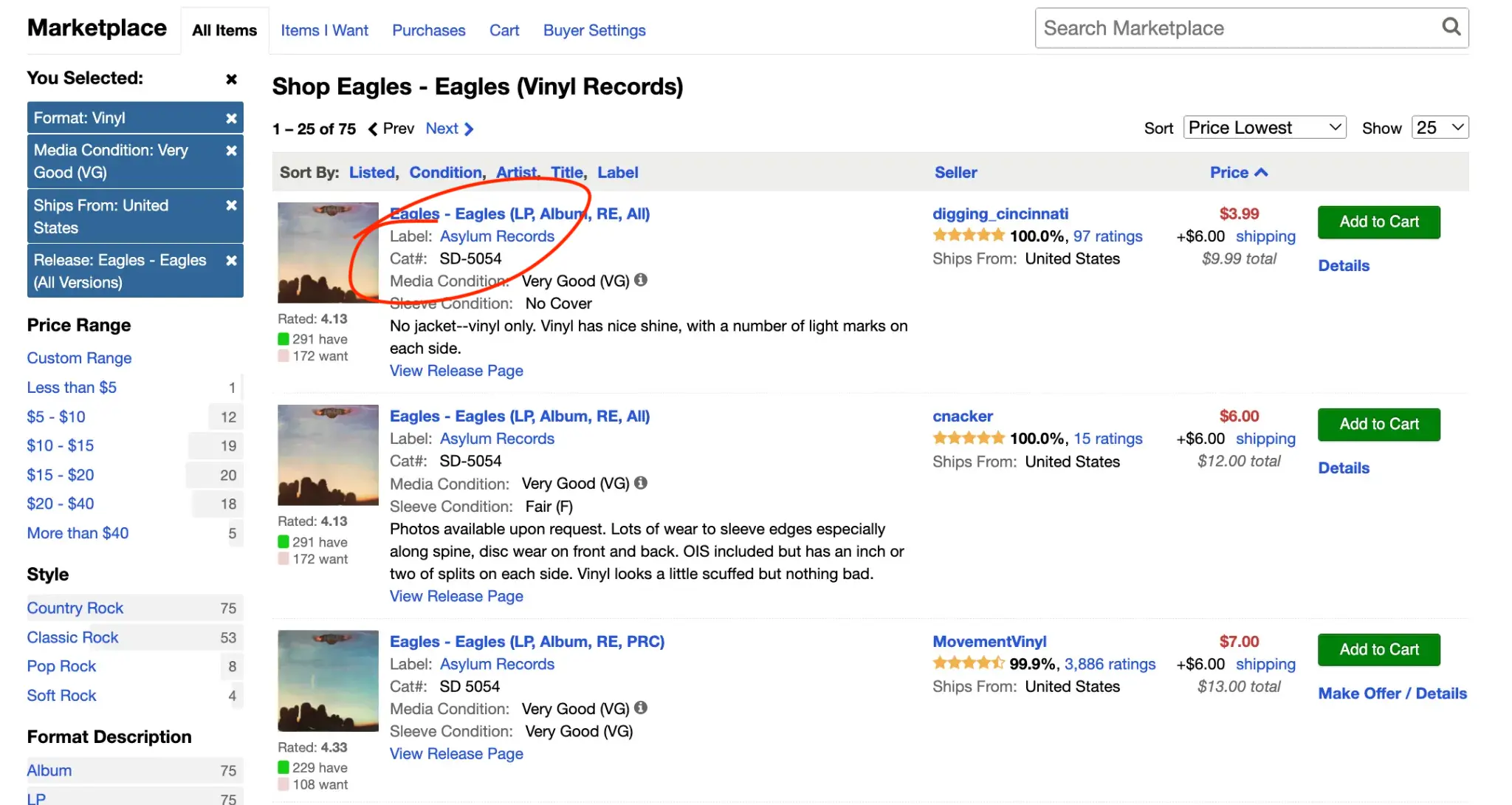
It’s pretty easy to assume the most valuable vinyl records are worth so much because they are really old, famous, or tied to iconic artists. The truth is that it is only part of the total story. Most of the valuable vinyl you’ll come across has a high price point because they’re rare, in high demand, in a specific condition, or a blend of all those factors.
Collectors are not paying only for the album. They want a specific version, pressing, or condition that reflects a story behind why it’s so valuable. It’s why you might find a well-known record that you think is crazy expensive in the $20 value bin, while another version that looks almost identical, but has rare factors, sells for ten or a hundred times that amount.
If you want to get into collecting vinyl, it helps to understand that owning a title isn’t the only goal. It’s owning a certain version of that title that people want.
Table of Contents
In this guide, we’ll cover everything you need to know about valuable vinyl records broken into the following sections:
- The Biggest Mistake People Make About Valuable Records
- What Actually Creates Outsized Value in a Record
- A Few Examples That Show How This Actually Works
- The Real Takeaway
The Biggest Mistake People Make About Valuable Records
The most significant misunderstanding about the most valuable vinyl records is pretty simple. Those outside “the know” focus on the album. Collectors want the copy. The difference between the two motivations changes everything.
A globally recognized album like something from Taylor Swift or Gloria Estefan doesn’t automatically mean a ton of value. When you think about it, most albums of this level end up with thousands to millions of pressings because so many people want a copy for their home. That level of production means these albums are a “dime a dozen” from a manufacturing or supply/demand perspective.
The same idea applies to age. An “old” album is misleading. It doesn’t mean rare. You can easily go into a vintage shop and see tons of Fleetwood Mac, Ray Charles, Miles Davis, and The Beatles. If a record is from the ‘60s or ‘70s, it isn’t immediately more valuable.
Value comes from a specific pressing, exact release, or details that make a certain version more appealing to collectors than another. Platforms like Discogs exist for this exact reason. They track the value at the release level, not only the album level. Every single variation that makes it to market has a unique sales history, pricing range, and demand. A small difference, like what studio the album was recorded in or a special label design, creates more value.
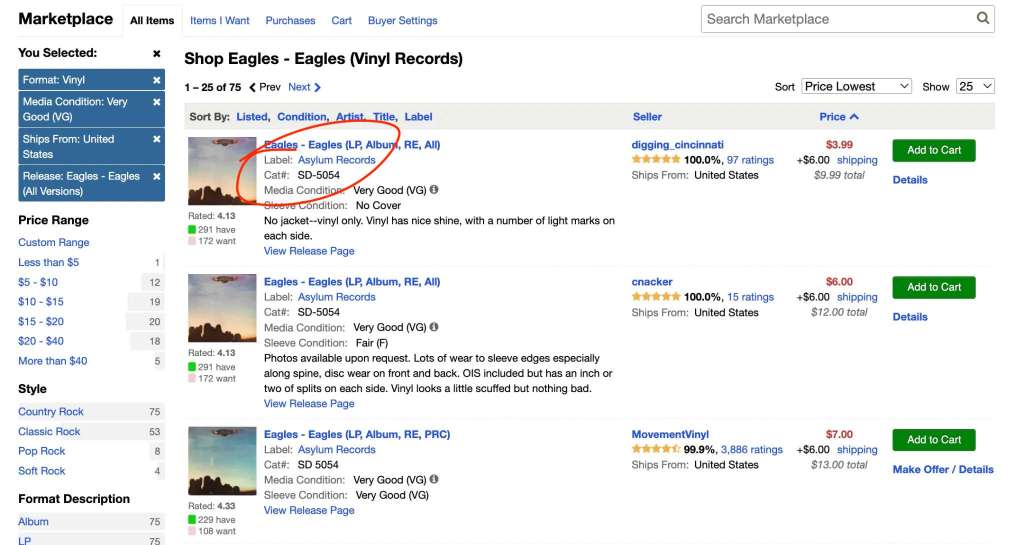
The condition also matters. If you have two collector’s items that get a lot of attention because of the album name and are exact copies, except one is in better condition, that album is worth more. A “near mint” copy will sell for way more than a worn one.
What Actually Creates Outsized Value in a Record
The most valuable vinyl records don’t get that way because of a single factor (with a few exceptions). It’s a bunch of different elements working together to establish a higher-value point.
The Exact Pressing
A record is made by stamping audio grooves into the material using a hydraulic press or metal stamper mold. Like coin collecting, different presses are rarer than others. Some of those differences might include:
- Whether this album is a part of “first pressings”
- Where the album’s country of origin is
- If there are label variations (original label compared to modern label)
- Matrix and runout details that are etched into the record
- Promotional copies or withdrawn releases
- Misprints and unusual manufacturing quirks
In most cases, the first pressing is worth more because it’s the earliest recording of that artist you’ll hear for those songs. However, not all first pressings immediately instill value. Plenty of collectors want authenticity, scarcity, or distinctive versions over a general first pressing. It’s the specifics that matter.
It’d be like finding a first pressing with Slash on guitar for RHCP, or a guest singer on an Oasis album, before it was withdrawn and re-recorded with someone else. Little details like that make a big difference in value.
Album Condition
If there is one factor that determines the value of vinyl records, it’s condition. Two identical pressings that look, sound, and feel the same can, and often do, have way different values.
Discogs “Goldmine grading scale” comes into play here. That is where you see things like:
- Mint (M): The crème de la crème of perfect album condition (usually sealed).
- Near Mint (NM): Clean copies with little to no signs of use.
- Very Good Plus (VG+): Light wear on the copies, but still playable.
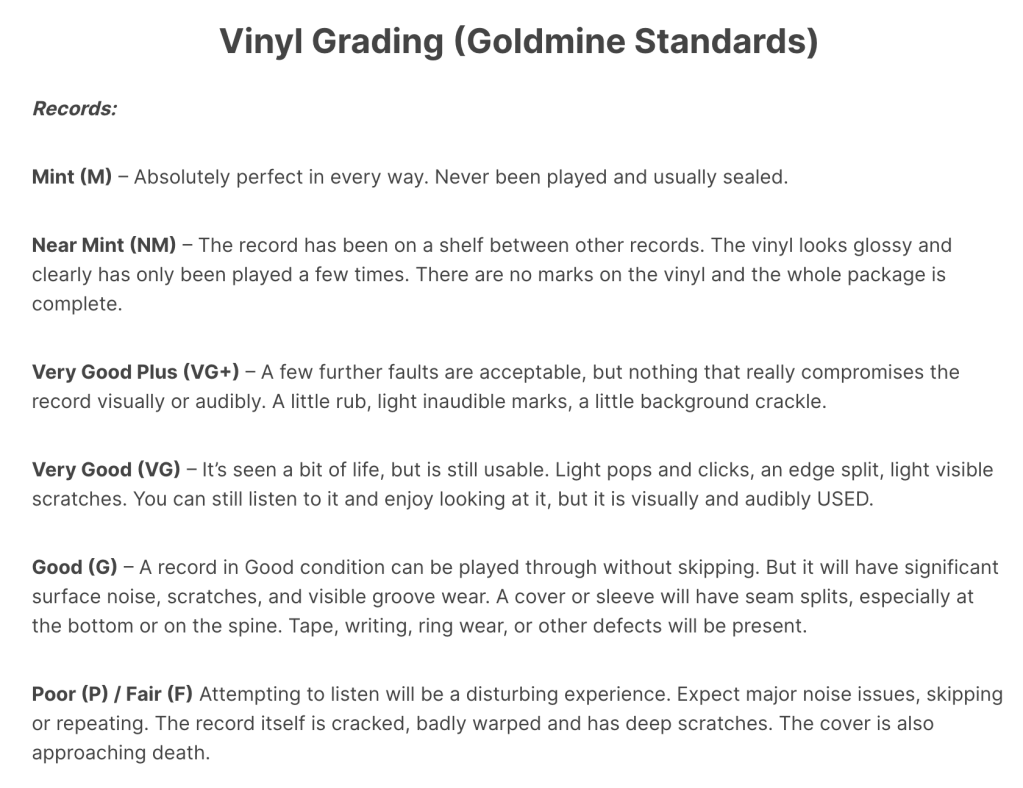
The other rates are variations of good, poor, or fair. Each has concerns like more wear, visible scuffs, scratches, warping, or not playing without skipping. Value fluctuates based on this scale. A VG copy of a specific Mamas and Papas album might only be worth a small fraction of an NM or M copy.
Collectors care about condition. When they look at an album, they want to see the sleeves, original inserts, folded up posters, specific booklets, hype stickers, and even the Obi strips on Japanese releases. The more well-preserved an album with all the original packaging and content included, the better.
Demand, Not Just Rarity
If an album is rare, that’s good. But if there is no demand for that rare edition, that’s bad. There are millions of “rare” records out there with no audience willing to pay a premium to acquire that recording.
Value spikes the most when rarity meets a collector base that cares. These are the buyers who look for an artist’s or album’s cultural impact. They seek out specific pressings or come from communities focused on certain album genres or eras.
For these collectors, the value comes more from the narrative behind a release. It’s the difference between Wu-Tang Clan’s Once Upon a Time in Shaolin selling for over $2 million compared to something from the Mighty Mighty Bosstones. A rare album needs audience demand to be valuable.
Check out any album auction site or marketplace, and you’ll see that same pattern of rarity and demand repeat. The highest value comes from pieces collectors recognize, care about, and want to acquire at a higher price.
A Few Examples That Show How This Actually Works
#1: Promo/Withdrawn/Ultra-Limited Copies
Prince’s 16th studio album, known as the Black Album, was scheduled for release in 1987. Before it could hit the market, the album was withdrawn. Rumor has it that Prince thought the album was evil or full of dark energy and ordered all 500,000 copies destroyed.
Before that destruction could happen, a small number of copies were distributed to industry insiders, fellow artists, labels, and reviewers. Due to a storyline, supply scarcity, and massive demand for a bestselling artist, copies of that album are often the hardest to find. They are highly valued on sites like Discogs.
#2: Misprints and Corrected Editions
Elvis Presley put out 45 RPM singles from Sun Records. These might look normal to some buyers, but they often had misprints, push marks (three small circles around the hole from manufacturing defects), or other details that make them incredibly unique.
A recent sale on Popsike is an example. A rare, true first pressing misprint of Presley’s first-ever single from the Sun label sold for over $5,600. The catalog number 209 on the B-Side was upside down, had push marks, and a 72 on the Matrix. These are legendary misprints that, even when they make the record unplayable, are highly sought after by collectors, thereby increasing their value.
#3: Famous Album, Uncommon Specific Copy
Plenty of Beatles albums illustrate the value gap between fame and price tag. Many of the countless records in circulation are affordable. Mixed in that bag are specific versions, promo materials, first pressings, and regional variations that sell for a lot more.
Finding a “First State” copy with the artwork featuring raw meat and doll parts is a great example. The U.K. demo of Love Me Do / P.S. I Love You, where Paul McCartney’s name was misspelled (McArtney), is another. There are plenty of people who look for lower-number pressings of the White Album, a vinyl record common at higher numbers in most collections.
The difference is all about the exact release. Those versions are what make collectors so excited when they’re on marketplaces or in an auction.
#4: Condition Premium
A record in great condition (M, NM, VG+) will sell for more than something in rough shape. A VG+/NM yellow promotional copy of The Velvet Underground & Nico, still in great shape and with the removable banana sticker, sells for almost $9,000. Something at the G/P level is only going to be worth a few hundred. They’re rare, but not in a condition collectors want.
Clean copies rise to the top of sales charts. Lower-grade versions trade at fractions of the price. Condition might feel like a minor detail, but it is the most significant separator in the album market.
How to Tell If A Record Might Be More Valuable Than It Looks
When you understand that the most valuable vinyl records have more to do with specific pressings, errors, or copies, you begin to look at yard sales and vintage markets differently. The problem then becomes how to filter through the thousands of records you’ll see in a single shopping trip. Here’s some tips:
- Start with the exact release.
- Look for the catalog number, label design, and country of origin to get version details.
- Check the runout or matric info etched into the vinyl.
- Assess the condition honestly, not just what you hope.
- Check whether the sleeve, posters, or other marketing materials are included.
- Find out whether the album is part of a promotional copy, if there are any misprints, or if it has been withdrawn.
The last thing you want to do once you have all the information gathered is compare the price to the actual sales history. Don’t just look at the number on the screen. Some sellers try to get more than buyers are willing to pay. Look for albums that have really sold. A sold price reflects the real value of that album.
Using a resource like Discogs’ price guide or Popsike gives you useful information on what will sell, how much demand there is, and whether the album you have in your hands is valued accurately. Someone saying, “I found this album online for $2,000!” isn’t enough. You need details to determine value.
The Real Takeaway
At the end of the day, the most valuable vinyl records are not the ones that are simply old or famous. They are the copies where the right pressing, the right condition, and the right level of demand all come together. That is what creates the difference between a record that sits in a bargain bin and one that ends up selling for a serious amount of money.
Once you understand that, collecting starts to feel very different. You stop looking only at the artist or album title and start paying attention to the details that actually move value. And if vinyl is becoming a bigger part of your life, that usually does not stop at collecting. It also starts to shape how you listen, what kind of setup you build, and what sort of space you want around the records you love.
If that side of the hobby speaks to you…Welcome to Recordbuilds. Glad to have you aboard.