

Picture this: You walk into a record store. You’re surrounded by, you guessed it, vinyl records.
Each album has its own story you can touch and feel with the weight of the physical product in your hands. Then, there it is—an album you’ve been searching for. The excitement builds as you bring it home, carefully slide the vinyl from its sleeve, place it on your turntable, and drop the needle. There’s that familiar crackle, and suddenly, you’re transported into the world of the music.
But here’s the thing: could you have just pressed “play” on Spotify and gotten the same experience? Would the music sound as rich and immersive? Do vinyl records actually sound better than streaming?
If you’re here, you’ve probably heard people say that vinyl is the ultimate listening experience. Some say it’s unmatched, that vinyl records capture the sound quality that streaming just can’t deliver. But is that really the case? Or is the whole debate fueled by nostalgia and the ritualistic charm of vinyl?
Let’s dig in. The answer might surprise you.
Table of Contents
In this guide, we’ll explore whether vinyl records really sound better than streaming, diving into the differences between analog and digital formats, the importance of your audio setup, and the unique experiences each format offers:
- What Science Says About Whether Vinyl Records Sound Better
- Your Setup Matters: The Gear Behind the Sound
- Do Vinyl Records Sound Better – or Just Feel Better
- Vinyl’s Flaws: The Imperfections That Make It Special
- Sound Quality Showdown: Vinyl vs. Streaming
- Conclusion: So, Do Vinyl Records Sound Better Than Streaming?
What Science Says About Whether Vinyl Records Sound Better
Let’s not bury the lead: do vinyl records sound better than streaming?
Vinyl enthusiasts love to claim that their beloved analog sound is superior to digital music. They’ll tell you vinyl captures every nuance of the original recording, giving you that “authentic” sound that digital compresses and loses. The claim is that with digital formats, you’re getting a watered-down version of the music—one that lacks the depth that only vinyl can provide.
But here’s the thing: unless you’re rocking some serious audio gear, you might not hear a massive difference between the two. Modern streaming services like Tidal and Apple Music offer lossless formats, which means they’re preserving all the detail of the original recording. And for most people, the sound quality of a high-resolution digital file is going to be pretty close to what you’d get from a well-maintained vinyl record.
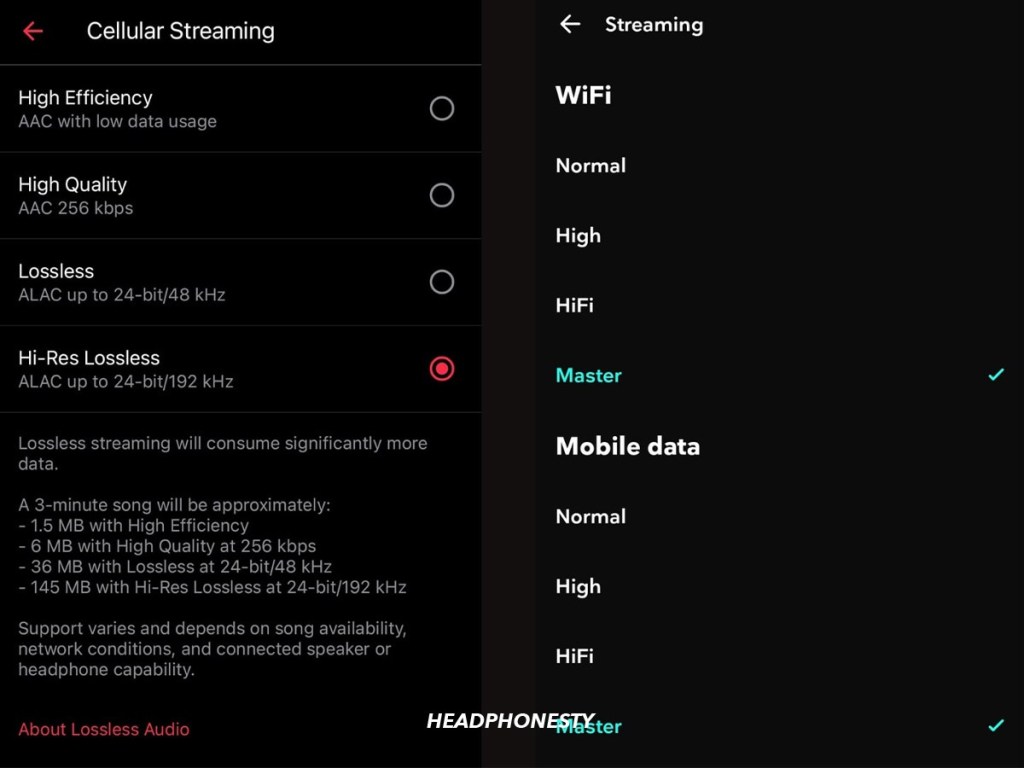
Source: Headphonesty
Analog vs. Digital: What’s the Real Difference?
Let’s break it down: vinyl records give you an analog recording. That means the music is captured as a continuous sound wave, and in theory, you’re hearing everything as it was recorded. Digital music, on the other hand, takes that sound and chops it up into little pieces—ones and zeros—which then get reconstructed when you press play. Critics of digital formats argue that this process loses some of the finer details and that the result can sound a little too clinical or sterile.
But the truth is, modern digital formats, especially lossless files, are incredibly precise. Unless you’ve got a finely tuned ear or a super high-end system, you’re probably not going to notice much of a difference between a well-mastered digital track and a vinyl record. Sure, back in the early days of MP3s, when compression was heavy, you were losing some quality. But those days are long gone.

Source: Musicguymixing
Also, let’s not forget about vinyl’s own imperfections. While vinyl fans may celebrate the little pops and crackles, those are technically flaws. Records degrade over time, and as they get scratched or warped, those imperfections become more noticeable. With digital, you don’t have that problem—every time you hit play, you get a pristine version of the track.
Your Setup Matters: The Gear Behind the Sound
Now, let’s talk about something crucial—your audio setup. No matter how good your vinyl records or digital files are, if you’re playing them on subpar equipment, you’re not getting the full experience. This is where a lot of the difference between vinyl and streaming really comes into play.
Cheap Turntables vs. High-End Gear
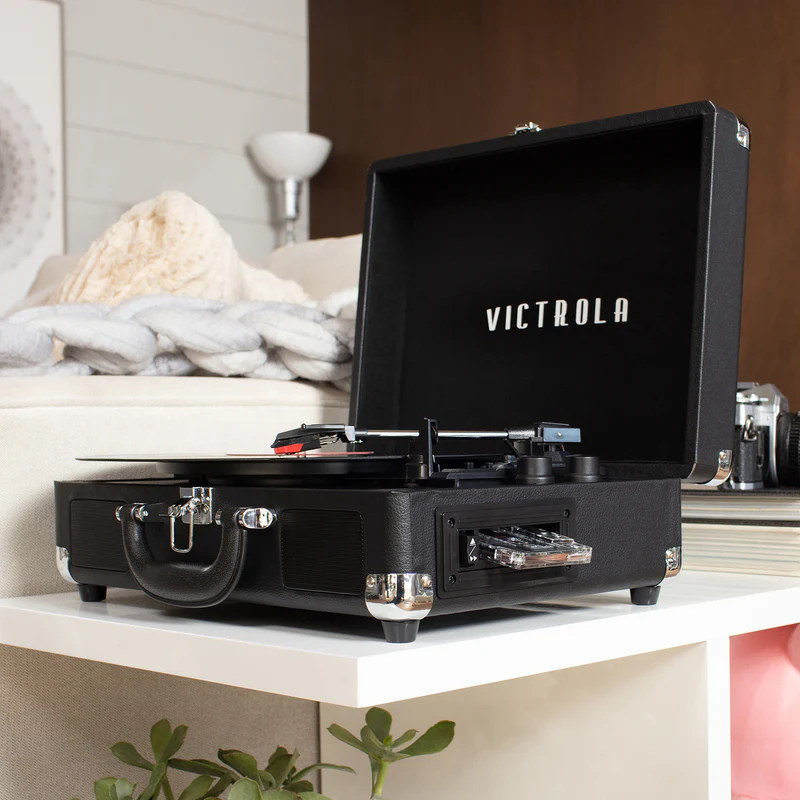
So, let’s say you’ve just bought a vinyl record, and you’re excited to play it. You’ve got one of those budget Crosley or Victrola turntables that you picked up for $50 because, well, it looks retro, and it plays records, right? Wrong.
The truth is, those turntables might get the job done in the most basic sense, but they’re not giving you the full vinyl experience. They come with plastic tonearms, cheap cartridges, and speakers that just don’t do the music justice. The result? You’re missing out on the richness and depth that vinyl is capable of delivering.

The Space Around the Sound
Now, take it even further – picture this: you’re in a room built for sound, like a WhisperRoom or a treated home studio. The space feels quiet enough to hear your own breath between notes. In that kind of environment, you start to understand why people say vinyl records sound better. It’s not magic — it’s control.
Even with just serviceable equipment, these spaces reveal the truth in the recording—the depth, texture, and presence that can’t be faked by the format. What most people mistake for the “magic” of vinyl is often just what happens when the music finally has the right room to live in.
So when people ask, do vinyl records sound better, part of the answer lies in the room itself. The better your space, the more your system-and your music-comes alive.
Streaming Gear Isn’t Inferior
Now, let’s flip the script. A lot of vinyl purists love to talk down on streaming, as if it’s some sort of inferior product. But that’s not really fair. The truth is, streaming music can sound incredible if you’ve got the right setup. Invest in a good DAC (that’s a digital-to-analog converter, for the non-techies) and a solid pair of headphones, and you’ll be blown away by how clean and detailed your digital music can sound.
If you’re using a decent system, streaming can sound just as good—if not better—than a cheap vinyl setup. Previously mentioned streaming services like Tidal or Apple music, for example, offer lossless streaming in CD-quality or higher. With good gear, you’ll get high-resolution audio that’s clean, precise, and free of the imperfections that come with vinyl.
So, whether you’re a vinyl lover or a streaming devotee, the quality of your equipment matters more than the format itself.
Do Vinyl Records Sound Better – or Just Feel Better
All right, unfortunately, this is the part where we have to talk about the sentimentality of vinyl and how those intangible aspects actually contribute to the experience and the perception of better sound quality.
But we can’t skip it – this is the very reason people collect vinyl. It’s not just about the sound. It’s about the ritual, the tactile experience, and the connection you feel when you physically interact with the music.
Oh, and of course, sharing your collection on Reddit – which will definitely get you more internet points than posting a neatly organized Spotify playlist. So, even though streaming can technically match vinyl in sound quality, there’s one thing it can’t replicate – the experience of playing a vinyl record.
Vinyl Isn’t Just Music—It’s an Event
Think about it. When you listen to music on Spotify or Apple Music, you pull up an app, hit play, and boom—the music starts. It’s fast, it’s easy, and it’s convenient. But let’s be honest: it’s a little impersonal. You’re just pressing a button, and while that’s fine for day-to-day listening, it doesn’t always feel special.
With vinyl, you’re involved in the process. You choose a record from your collection, carefully remove it from its sleeve, and place it on the turntable. You drop the needle, and that familiar crackle lets you know it’s showtime. This isn’t just passive listening—you’re engaging with the music in a way that streaming just can’t replicate. There’s something about the process that makes it feel more intentional, like you’re giving the music your full attention.
And don’t forget the satisfaction of flipping the record over when one side is done. There’s a sense of accomplishment, like you’ve earned the right to listen to the second half. It’s a ritual that’s slow, deliberate, and a refreshing change from the instant gratification of digital music.
That’s the beauty of vinyl. It forces you to slow down, to sit back, and to really appreciate the album as a whole. You’re not just queuing up random songs or skipping tracks—you’re listening to an entire side of an album, uninterrupted. It’s a different kind of listening experience, one that encourages you to connect with the music on a deeper level.
This is one aspect we just can not overlook. Personally, my fondest memories from adolescent are exactly this:
- Blasting Zeppelin IV with some of my best friends (and maybe, allegedly, partaking in a few questionable substances—responsibly, of course)
- Long nights after a brutal day of college classes, kicking back in my $20 Facebook Marketplace chair with a cheap beer in hand – letting Shine On You Crazy Diamonds (parts 1-5, naturally) wash over me
- Taking spontaneous road trips out to the middle of nowhere when I had endless free time, digging through some retiree’s dusty collection, and scoring 20 killer albums for just $3 each
There’s something special about this physicality of vinyl. Holding a record in your hands, admiring the album art—it’s all part of the experience. When you flip through a collection trying to decide what to play, you’re not just choosing a song; you’re choosing a moment, an inside joke, a memory, at the end of the day, feeling.
Vinyl’s Flaws: The Imperfections That Make It Special
Now, let’s be honest—vinyl isn’t perfect. Records warp, they get scratched, and they collect dust. Over time, even the best-maintained albums will start to show signs of wear. You’ll hear the occasional pop, crackle, or skip, and for some people, that’s a dealbreaker. They want their music clean, flawless, and free of imperfections.
But here’s the thing: for a lot of vinyl lovers, those imperfections are part of the charm. The little quirks of a record—the hiss in the background, the faint crackling of the needle—give the music a human touch. It’s not perfect, but that’s what makes it feel alive. Every time you play a record, it’s a little different. The sound might change slightly depending on the condition of the record or the quality of your setup, and that unpredictability adds to the magic.
Embracing the Pops and Crackles
For some listeners, those pops and crackles are what make vinyl special. They give the music texture, warmth, and a sense of history. Every scratch tells a story. It’s like looking at a vintage photograph—you don’t want it to be perfect; you want it to feel authentic. Digital music, by comparison, is flawless, but some people find that perfection a little too sterile.
Every time you press play on a digital track, you’re getting the exact same sound, perfectly replicated. There’s no room for quirks, no variation. While that’s great for people who value precision, it can feel a bit mechanical for others. Vinyl’s imperfections make the listening experience more organic, more personal.
Digital Music: Clean and Consistent
But let’s not downplay the advantages of digital music. If you’re someone who values clean sound, digital formats are the way to go. You’ll never have to worry about a record skipping, warping, or degrading over time. Every time you press play, you’re getting perfect, crisp sound without any of the imperfections that come with vinyl.
And for a lot of people, that’s what matters most. They want to hear the music as it was meant to be heard, without any interference from the format. So, if you’re looking for consistency, reliability, and a flawless listening experience, digital music is hard to beat.
Sound Quality Showdown: Vinyl vs. Streaming
Now that we’ve covered the experience, let’s get back to the heart of the matter: does vinyl actually sound better than streaming? The answer depends on what you’re after.
| Feature | Vinyl Records | Streaming |
|---|---|---|
| Sound Character | Warm, analog depth with slight imperfections that add texture. | Clean, precise, often more neutral and consistent across tracks. |
| Dynamic Range | Limited by the physical medium; gentle compression adds smoothness. | Wider range possible with lossless formats like Tidal or Apple Music. |
| Noise & Artifacts | Surface noise, pops, and crackles — charming for some, distracting for others. | Virtually none; playback remains identical every time. |
| Consistency | Varies by pressing, condition, and setup quality. | Highly consistent; studio-quality playback with stable sources. |
| Setup & Maintenance | Requires turntable calibration, stylus care, and storage upkeep. | Plug-and-play convenience; zero physical maintenance. |
| Emotional Experience | Tactile ritual that invites focus and connection to the music. | Instant access to millions of songs but less physical engagement. |
| Best Environment | Quiet, acoustically treated space (think WhisperRoom or a home listening room). | Anywhere — optimized for mobility and convenience. |
The Case for Vinyl’s Sound Quality
On a high-quality system, vinyl can sound absolutely incredible. The analog format preserves the entire sound wave, giving you that warm, full-bodied sound that vinyl fans rave about. The physical nature of vinyl means you’re getting a direct copy of the original recording, and many listeners find that this gives the music a richness and depth that digital just can’t match.
But here’s the catch: to really hear the difference, you need a great setup or a highly refined ear. Cheap turntables and speakers aren’t going to give you that experience. You’ll need to invest in a quality turntable, some good speakers, and an amplifier to get the most out of your records. And that can get expensive, fast.
The Case for Streaming’s Sound Quality
On the other hand, streaming has come a long way. With lossless formats and high-resolution audio, digital music can sound incredibly precise and detailed. And unlike vinyl, you don’t need to spend thousands of dollars on equipment to enjoy it. A decent set of headphones or speakers, paired with a good DAC, will give you an amazing listening experience without all the fuss.
Digital music offers consistency, convenience, and—when done right—top-notch sound quality. You won’t have to worry about pops, crackles, or scratches, and your music will sound as good on the 100th listen as it did on the first.
Conclusion, So Do Vinyl Records Sound Better Than Streaming
Science says there’s no major difference between vinyl and streaming. Your brain says, “Cool.”
Then your heart drops a needle on Dark Side of the Moon and says, “Shut up.”
And that’s when it hits you – this isn’t about data or fidelity. It’s about presence. The little imperfections that make your music breathe. Streaming gets you close. Vinyl puts you in the room.
Streaming gives you data. Vinyl gives you depth. You don’t need golden ears to hear it – you just need a decent setup and a room that lets sound breathe.
If you’ve been itching to taste that magic but always felt a little too overwhelmed to make the jump, good news – we’ve got you.
We put together two simple, comprehensive guides:
- One for those who want to start small — affordable, simple, and easy to try.
- And another for those ready to go all in — a full setup built for real listening.
These are the easiest ways to step into vinyl, and we’re helping as many people get there as possible.
We’ll see you on the sunnier side.
All-in-One Record Players
Keep it simple.
One box, built for small spaces and easy listening.

Get a safe, compact pick in minutes
DIY Setup Planner
Build it your way.
Compare parts and personalize your setup.

Your room, your gear, your way.