
So you did it huh? Finally decide to get into vinyl.
You’re excited, ready to build your setup, and then-boom.
A Google search throws you into a world of jargon, conflicting opinions, and endless debates over what’s “right.” Ask a question online? Good luck. Half the replies will tell you you’re an idiot. No wonder so many people give up before they even start.
But there’s good news: Finding the best record player for beginners isn’t rocket science.
You just need a clear, no-BS guide that will start you on the right path-and that’s exactly what this is.
You have scrolled enough Reddit threads about this for one lifetime. So let’s make this simple.
Here’s what actually matters, and how to start your vinyl listening journey on the right foot.
Table of Contents
In this guide, we’ll cover everything you need to know about choosing your first vinyl record setup.
- What Do I Actually Need?
- What are the Best Record Player for Beginners?
- Used Vinyl Gear: Is It a Good Idea for Beginners?
- Conclusion: Finding the Best Record Player Setup for You
Affiliate Disclosure: We’re a small team of vinyl enthusiasts-if you get value from our insights, using our affiliate links (including Amazon Associates) helps us earn a commission and keep the lights on at no extra cost to you. Thank you for supporting Recordbuilds.com!
What Do I Actually Need?
Ok, this isn’t a test. But if you just want answers, we’ve already pulled the best beginner record players – the ones actually respected by the vinyl community.
These aren’t just random picks either; they’re part of full setups, from budget plug-and-play options to multi-component systems that’ll have you feeling like a full on audiophile.
So just wanted to throw that out there before we dive in, if you just want a complete, proven, hand-picked setup that you can buy with confidence, this it it.



All of these options are contained in our Builds resource which you can explore here.
Otherwise, if you’re starting from scratch, it can feel like vinyl requires a million pieces of gear. But at its core, every setup follows the same simple signal chain – aka how music gets from the record to your ears:
Turntable → Phono Preamp → Power Amplifier → Speakers
Here’s what that actually means:
Turntable – Spins the record and reads the grooves.
Phono Preamp – Boosts the weak turntable signal to a usable level.
Power Amplifier – Powers the speakers and controls volume.
Speakers – Turns the signal into sound you can actually hear.
Every setup. No matter how fancy. Follows this exact formula:
It’s the amazing process used to produce that sweet, indistinguishable, vinyl record sound.
But before you start adding all that to your cart – No. You do not necessarily need every single piece. The kind of listener you are will determine the type of setup (and turntable) fits you best.
And really, there are only two paths.
Let’s find yours.
Plug-and-Play Setup
If you are looking for the simplest, most budget-friendly way to start spinning records, a plug-and-play setup is where you want to be.
With this type of setup, you’ll typically get:
- Turntable with a built-in preamp – No need for an external preamp.
- Pair of active speakers – These have built-in amplification, so you don’t need a separate amp.
This setup is:
- Easy – Just connect your turntable to the speakers and start playing.
- Convenient – Fewer components to manage.
- Affordable – Often cheaper than building a system from separate parts.
If you want an easy (but true), no-fuss way to enjoy vinyl, this is your best bet. Here’s a basic diagram showing your signal chain.

Individual Components Setup
If you have got a little more to spend and really care about sound quality, flexibility, and getting that full audiophile experience, a setup with individual components is a smarter, long-term move.
With this setup, you’ll need:
- A turntable (without a built-in preamp) – Typically higher quality, with the flexibility to upgrade later.
- A phono preamp and/or an amplifier/receiver with a phono input – Converts the turntable’s signal and provides power for your speakers.
- Passive speakers – Require an external amp but usually deliver superior sound quality.
This setup is:
- Higher performing – More detailed, immersive sound.
- More flexible – Upgrade individual components as your needs evolve.
- A bigger investment – Requires more knowledge and setup but pays off in audio quality.
If you’re serious about sound, this is the way to go.

What Type Of Setup Is Best for You?
Okay, quick recap:
- if you want simple and affordable, go plug-and-play
- If you want better sound and room to grow, go with separate components.
What are the Best Record Player for Beginners?
That was the hard part: figuring out what kind of vinyl listening setup best suits you.
Now, is where the real fun comes in – making sure you end up with the right record player for the job.
- Plug-and-Players: make sure your turntable has a built-in preamp (don’t worry, you can double-check using our setup builder tool).
- Individual components: stick with one of the models that doesn’t include a built-in preamp – you’ll be setting yourself up for a cleaner, upgrade-ready system.
Later on, we will show you that Setup Builder which is probably the best way to view all these options and visualize your entire vinyl setup.
It’s a free, comprehensive tool that shows exactly how your turntable, amp, and speakers fit (and sound) together.
Because after all, the next logical question is: “What speakers go best with this?”
But for now, here’s what you’ve been waiting for – the list.
No fluff, no paid placements, just the turntables that actually hold up. We added a quick write up on each turntable below the table.
Picture us knee-deep in forums and reviews, sorting the good from the garbage – so you can skip straight to the good stuff. You’re welcome.

Crosley C6 Record Player
- Perfect For: Listeners who want a stylish turntable that balances form and function.
- Turntable Type: Plug-and-Play
I know what you are thinking. Crosley? Isn’t that the company that gets a terrible rap? Yes that it the Crosley, but their turntables are suprisingly, rock solid, for that entry level tier.
The C6 in partciular has a clean design, a belt drive, an adjustable tonearm, and a built-in preamp, so you can plug in and play without extra gear.
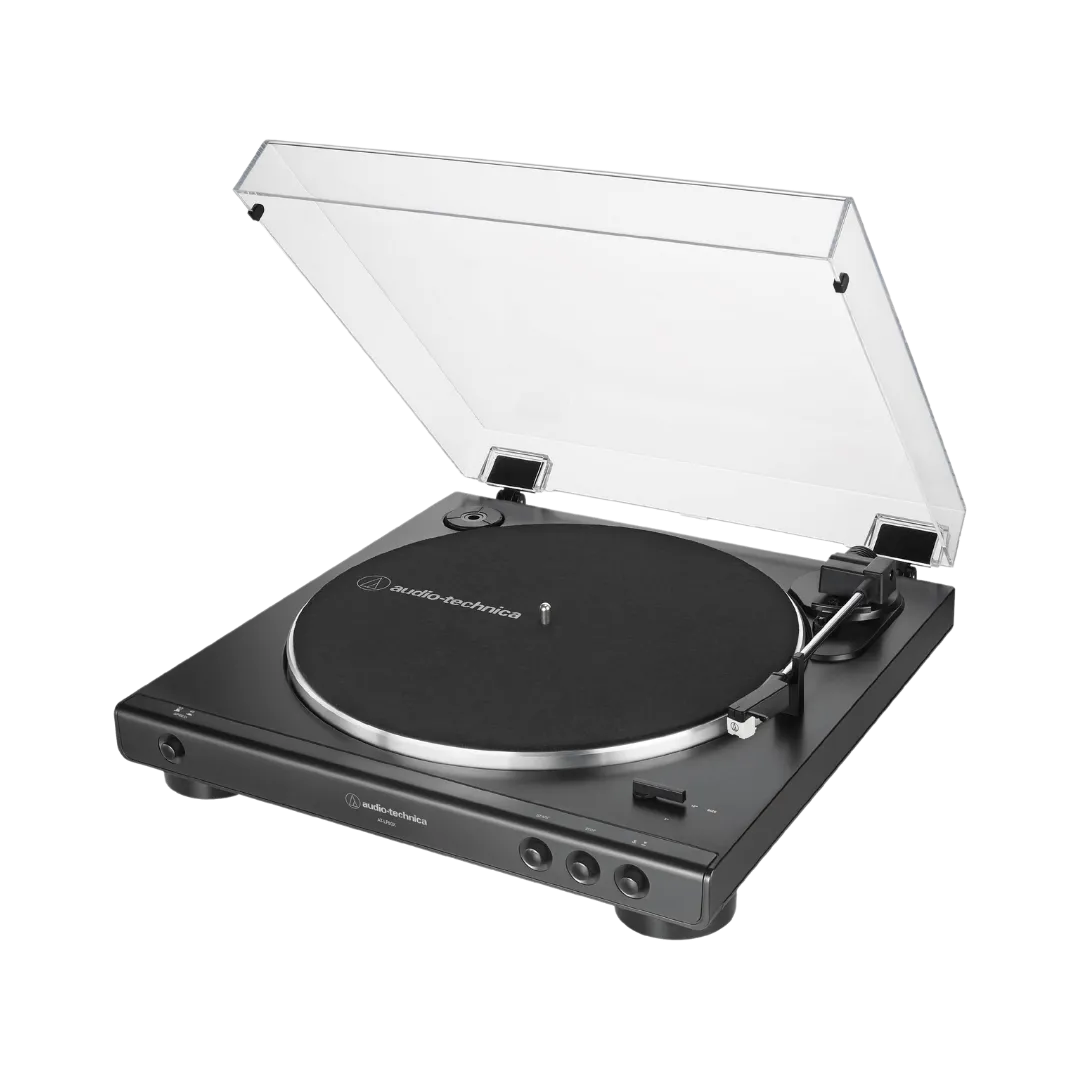
Audio-Technica AT-LP60X
- Perfect For: Beginners looking for an easy and hassle-free introduction to vinyl.
- Turntable Type: Plug-and-Play
Fully automatic and ready to go out of the box, the AT-LP60X is a fan favorite for first-time vinyl enthusiasts. It does include that all import built-in preamp, making it simple to pair with powered speakers or an existing sound system.
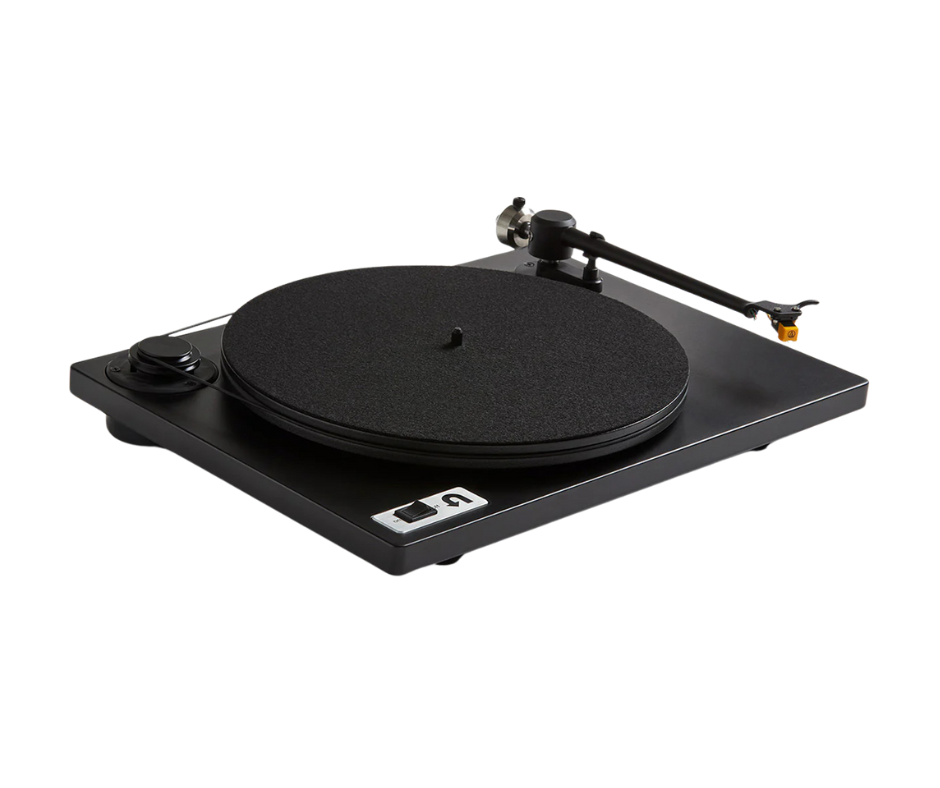
U-Turn Orbit Basic Turntable
- Perfect For: Minimalists who appreciate clean, modern design.
- Turntable Type: Individual Components
The U-Turn turntable is a clean, modern option for hi-fi enthusiasts. While it lacks a built-in preamp, its solid build make it a standout in its class.
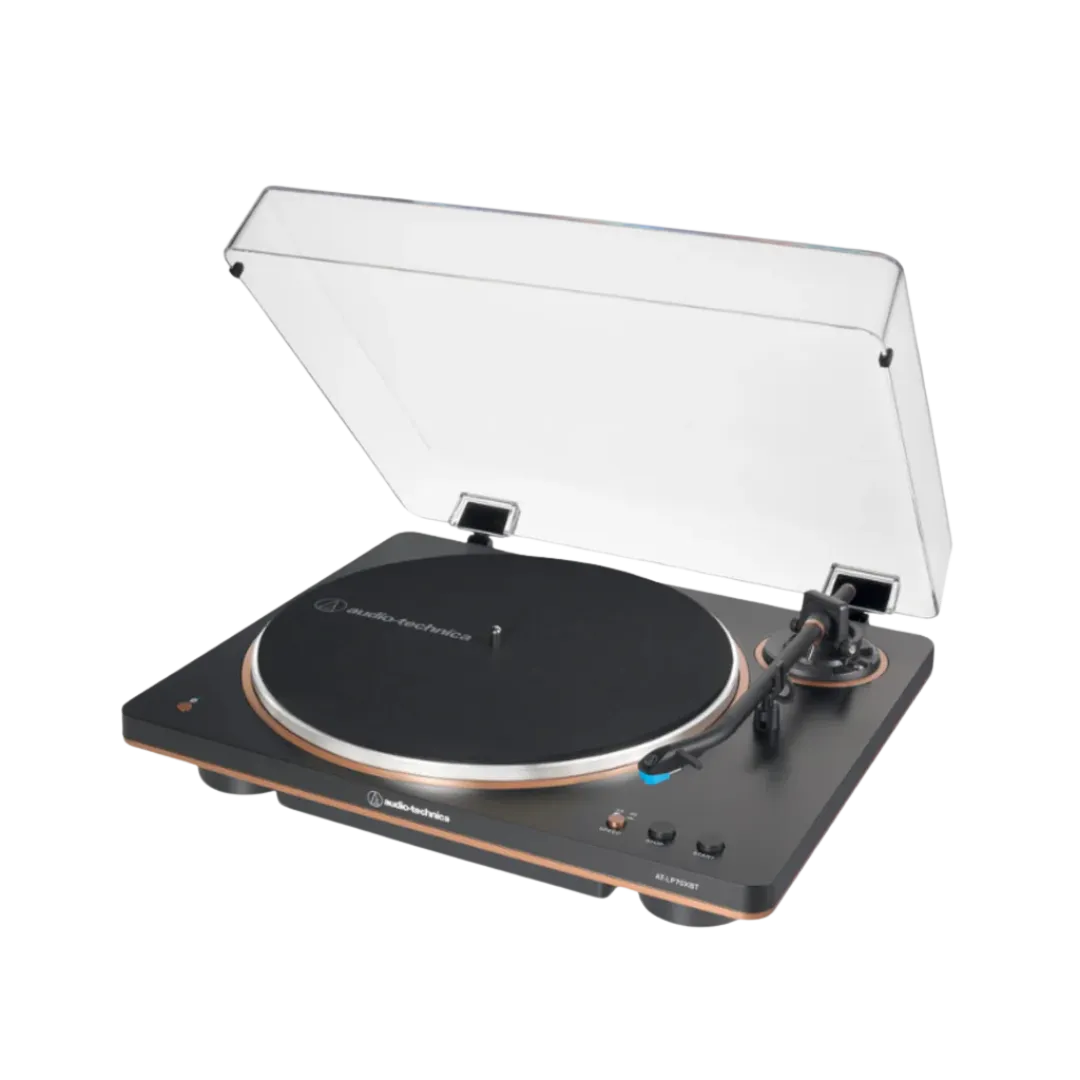
Audio-Technica AT-LP70X
- Perfect For: Budget-conscious audiophiles seeking the most reliable turntable at this price range.
- Turntable Type: Plug-and-Play
The gold standard of entry level vinyl listening: the AT-LP70X offers excellent sound for its price. With an upgraded cartridge, tonearm and die-cast aluminum platter (compared to the 60x), it’s one of the best options on the market for your first turntable.
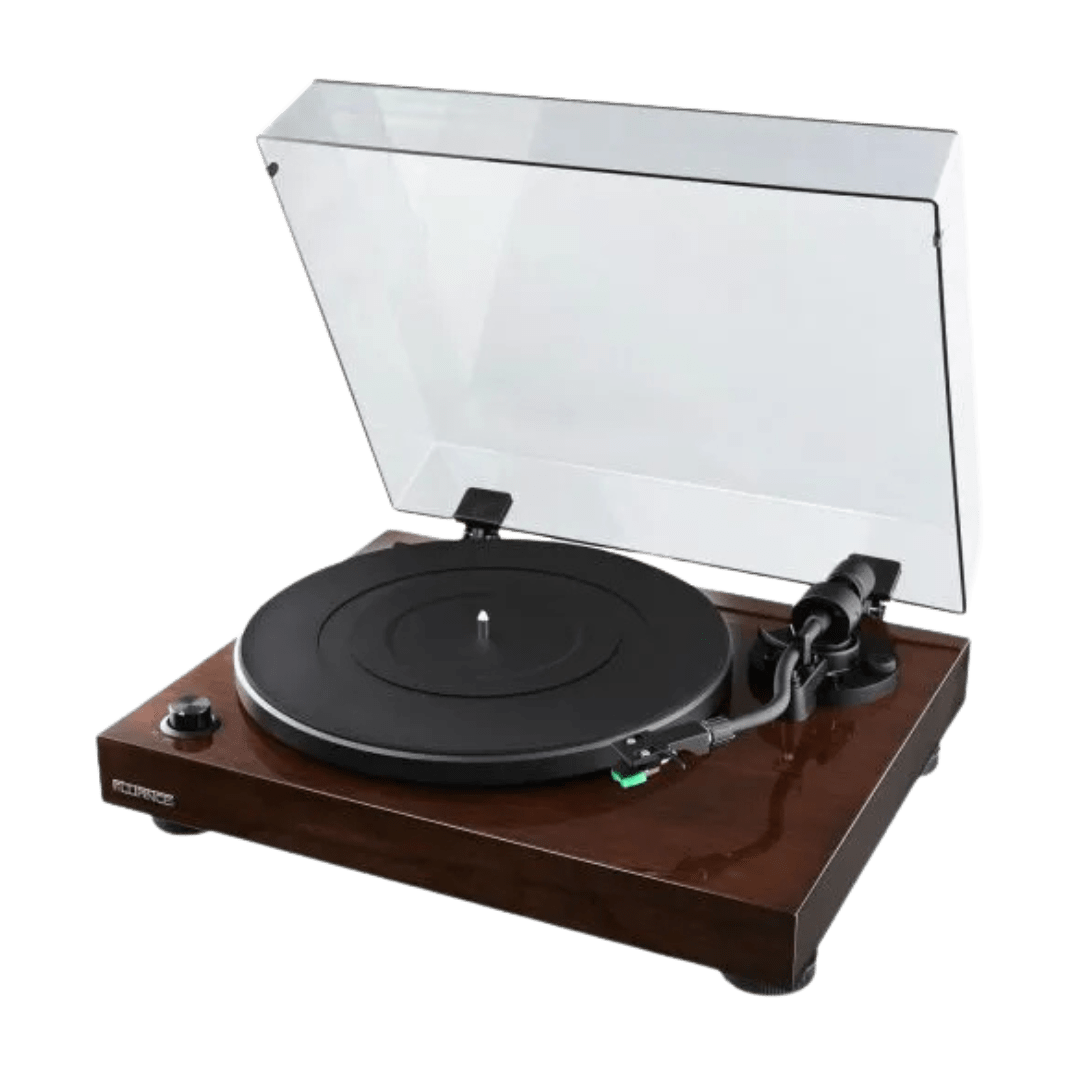
Fluance RT81
- Perfect For: Listeners willing to pay slightly more for superior build quality and sound.
- Turntable Type: Plug-and-Play
Featuring a solid wood plinth, adjustable tonearm, and Audio-Technica AT95E cartridge, the RT81 punches above its weight. The built-in preamp ensures easy compatibility with most setups.
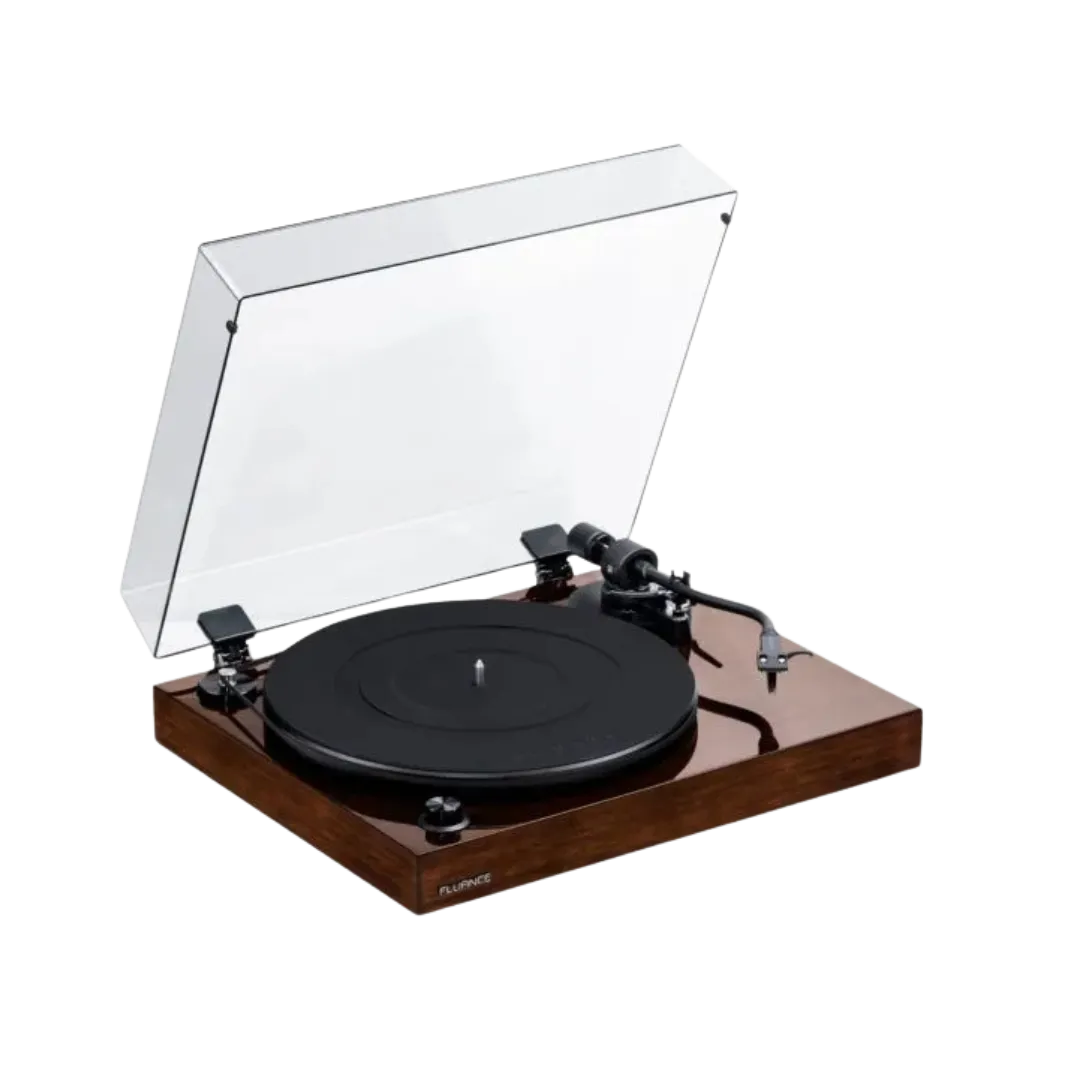
Fluance RT82
- Perfect For: Entry-level enthusiasts wanting to expand their setup over time.
- Turntable Type: Individual Components
The RT82 features a motor with speed control and a solid acrylic platter, delivering stable playback and rich sound. Its Ortofon OM10 cartridge is upgradeable, making it a great investment.
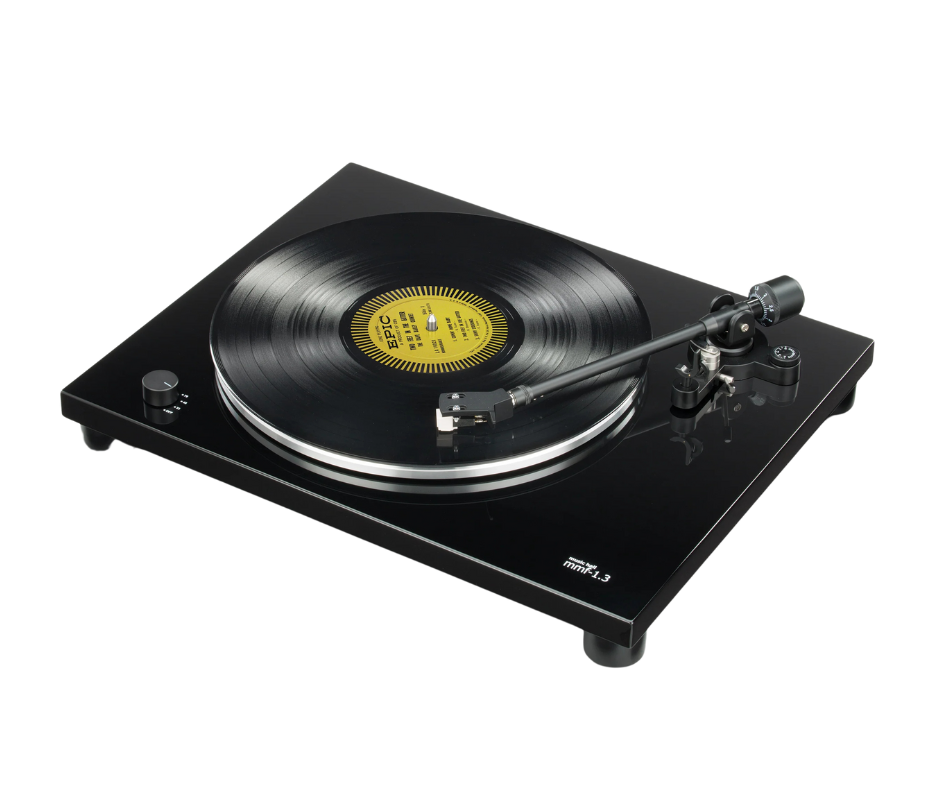
Music Hall MMF-1.3 Turntable
- Perfect For: Entry-level listeners looking for a manual turntable with room to grow.
- Turntable Type: Plug-and-Play
This belt-driven turntable includes a built-in preamp, adjustable tonearm, and a solid plinth for reduced vibration. This is veering on the edge of a mid level turntable and the price reflects that.

Fluance RT83
- Perfect For: Listeners prioritizing upgraded sound and build quality.
- Turntable Type: Individual Components
With a walnut finish, aluminum platter, and Ortofon 2M Red cartridge, the RT83 adds style and substance to your vinyl setup. It’s a great pick for those looking to step up from entry-level models.
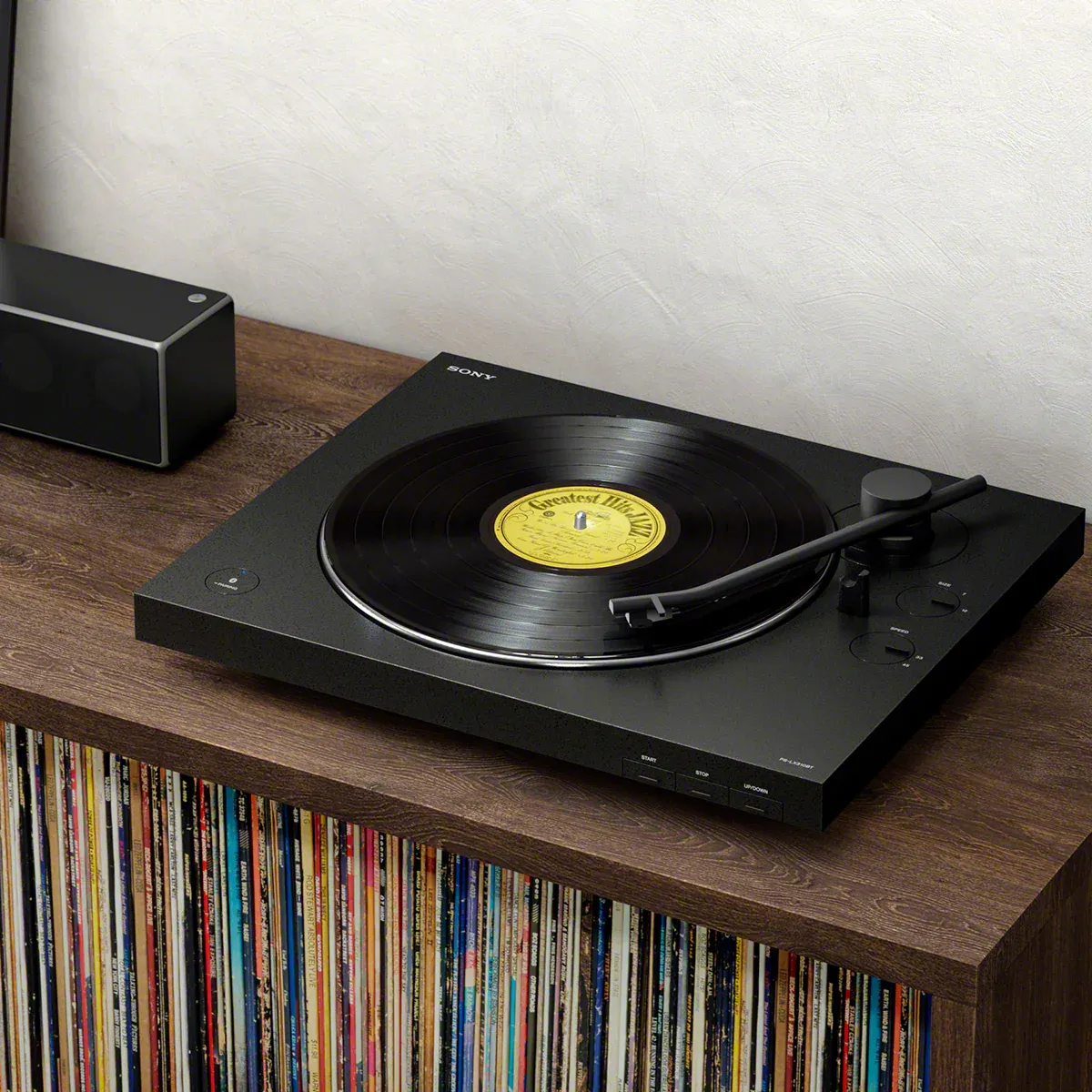
Sony PS-LX310BT
- Perfect For: Tech-savvy users comparing the best record player for beginners with Bluetooth
- Turntable Type: Plug-and-Play
This fully automatic turntable features Bluetooth for seamless wireless playback, making it great for modern setups. It also includes a built-in preamp and RCA outputs for traditional wired connections.

Audio-Technica AT-LP120-USB
- Perfect For: Those wanting extra control over their playback.
- Turntable Type: Plug-and-Play
This direct-drive turntable is known for its durability and precision. It includes a switchable preamp, USB connectivity for digitizing records, and adjustable pitch controls, making it versatile for a variety of use cases.
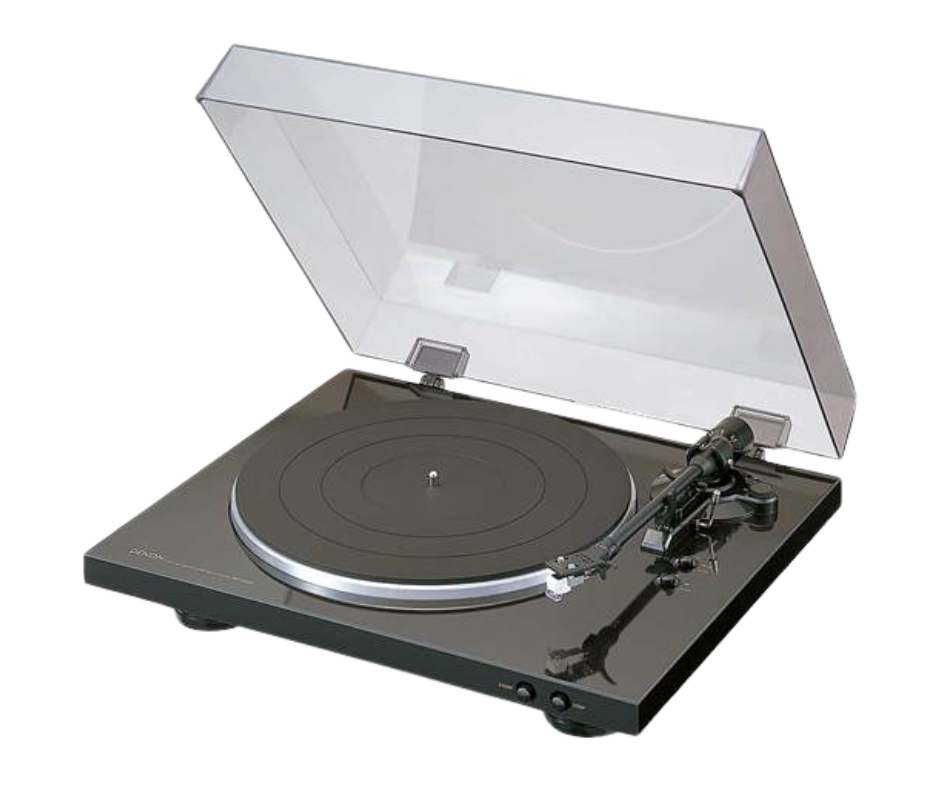
Denon DP-300F
- Perfect For: Fans of automatic turntables who don’t want to sacrifice sound quality.
- Turntable Type: Plug-and-Play
The DP-300F offers full automation with a high-quality moving magnet cartridge and solid aluminum platter. Its built-in preamp can also be turned off for use with external systems.
Best Record Player For Beginners Table
| Feature | Crosley C6 | AT-LP60X | Orbit Basic | RT81 | AT-LP70X | RT82 | MMF-1.3 | RT83 | PS-LX310BT | AT-LP120XUSB | DP-300F |
|---|---|---|---|---|---|---|---|---|---|---|---|
| Price | $190 on Amazon | $199 on Amazon | $249 on U-Turn | $299 on Amazon | $279 on Amazon | $350 on Amazon | $350 on Amazon | $399 on Amazon | $449 on Amazon | $449 on Amazon | $500 on Amazon |
| Turntable Type | Plug-and-Play | Plug-and-Play | Plug-and-Play | Plug-and-Play | Plug-and-Play | Individual Components | Plug-and-Play | Individual Components | Plug-and-Play | Plug-and-Play | Plug-and-Play |
| Built-In Preamp | Yes | Yes | (Plus) | Yes (Switchable) | Yes | No | Yes (Switchable) | No | Yes (Switchable) | Yes (Switchable) | Yes (Switchable) |
| Bluetooth Option | No | Yes (BT) | No | No | Yes (BT) | No | No | No | Yes | Yes (BT) | No |
| Manual vs Automatic | Manual | Automatic | Manual | Manual | Automatic | Manual | Manual | Manual | Automatic | Manual | Automatic |
| Cartridge | ATN3600L | ATN3600L | AT91B | ATN95E | AT-VM95C | Ortofon OM10 | ATN3600L | Ortofon 2M Red | AT3600L MM | AT-VM95E | MM Cartridge |
Setup Builder
Still not 100% sure yet? Neither was I.
That is why we felt compelled to create the setup builder – basically the resource we wish we had when we first started trying to get into vinyl.
It’s a free, comprehensive resource that lets you mix and match turntables, amps, and speakers to check compatibility. We also track the latest prices and sales, and you can filter by things like built-in preamps, Bluetooth, price – pretty much everything we just covered, made simple.
Try it out – and skip all of the guesswork that we went through.

Used Vinyl Gear: Is It a Good Idea for Beginners?
Most people buying their first turntable go for new gear-it’s easier to find and order online. But if you’ve got a hand-me-down turntable, speakers, or amplifier from your parents or grandparents, there’s nothing wrong with using it.
In fact, vintage gear can be an amazing value.
You might find a turntable at a thrift store or yard sale for $20, only to discover it sells for $400 on eBay.
But here’s the catch:
Used equipment can be risky. It might be broken, need costly repairs, or have hidden issues.
If you are trying to find the absolute best record player for beginners, here is how we would think about it:
1. Buy new if you want hassle-free reliability.
With Amazon prime and electronics stores with buyer friendly policies, most of your options usually include warranties, making them safer for first-time users.
2. Buy used if you’re willing to learn (and gamble a little).
Hunting for vintage gear can save money and deliver incredible sound, but you’ll need patience and basic repair know-how.
Watch out for:
- Worn-out styluses
- Unbalanced tonearms
- Faulty or outdated preamps
- Cracked belts or noisy motors
If you’re unsure, bring a knowledgeable friend or consult a local record shop before buying used – they’ll often check condition and even test playback for free.
Conclusion: Finding the Best Record Player Setup for You – More Art Than Science
We’ve armed you with all the tools and knowledge for choosing the best record player for beginners.
By now, you know there’s no one-size-fits-all answer.
- If budget and simplicity matter most → go plug-and-play.
- If sound quality and upgrades excite you → go with separate components.
No matter which path you take, you’re already ahead – you’re building with intention.
At first, all the options might feel overwhelming – but that’s part of the fun. Exploring the finer details is how you truly start to appreciate the magic of vinyl. And it all starts with finding the best record player that actually fits you.
If you got through all of this and thought, “Hey, this is actually too complex—or maybe out of our price range right now,” we put together another guide for that: the Best All-in-One Record Player Options.
These are literally just one box, about as plug-and-play as it get, and way more budget-friendly.
If you like the idea of a true vinyl setup but want to see some real-world examples of systems that have been tested and used by real enthusiasts (and that you can straight-up copy), check out our Builds.
All-in-One Record Players
Keep it simple.
One box, built for small spaces and easy listening.

Get a safe, compact pick in minutes
Fully Curated Setups
Skip the decisions.
These complete setups are balanced, beautiful, and ready to go.

Hand-picked, proven builds — buy with confidence.
And if you’ve got any setup questions, feel free to reach out at info@recordbuilds.com or DM us on Instagram.