

There is a very specific point where saving money stops being a good deal.
And when you are looking for the best affordable turntable, that is really the useful question: where does cheap stop being a bargain and start becoming something you are just going to want to replace? Fortunately, (despite what people in the comments might try to tell you), the answer is not “spend $800.”
However, you probably should believe them on this one thing: a $70 record player that you replace six months later is not really cheaper than the $200 one you could have kept for years. That much is true.
There are plenty of affordable turntables that are genuinely good. They sound good, they are built like actual pieces of audio equipment, and they can stick around with you even if you get more serious about vinyl later. So instead of throwing another giant list at you, we have put together a couple of actually helpful tools to make this much simpler.
And we are going to be pretty real about what separates the good cheap turntables from the ones I would skip, and exactly where I think your money is best spent.
Table of Contents
In this guide, we’ll cover the best affordable turntables on the market. If you’d rather skip the background and jump straight to our top picks, click here.
- How Much Should You Spend on an Affordable Turntable?
- What Makes a Good Affordable Turntable?
- Affordable Turntables: Plug-and-Play vs. Individual Components
- Are Cheap All-in-One Record Players Worth It?
- The 7 Best Affordable Turntables in 2026
- Conclusion: Which Affordable Turntable Should You Buy?
Affiliate Disclosure: We’re a small team of vinyl enthusiasts – if you get value from our insights, using our affiliate links (including Amazon Associates) helps us earn a commission and keep the lights on at no extra cost to you. Thank you for supporting Recordbuilds.com!
How Much Should You Spend on an Affordable Turntable?
This is probably the part nobody wants to hear, especially if you are younger, in school, or just riding the struggle bus like the rest of us.
Okay, here goes: once you get much below $150, you start getting into pretty dangerous territory. There are exceptions, and sales can move things around, but below that point is where you start seeing a lot more plastic construction, cheap cartridges, questionable tonearms, and record players built more around looking like a record player than being a particularly good one.
Unfortunately, I know $150 is not exactly pocket change. And that is just the turntable.
On the really budget end, a decent pair of powered speakers can start at around $100, which means even a pretty stripped-down first setup can land somewhere around $250 before you have bought a single record.
Sorry. I know I said I was trying to make this less overwhelming.
The good news is that once you get into roughly that $150 to $300 range, you can get a legit vinyl listening setup that could last you for years. You definitely do not need to spend $800 for that, and you definitely do not need to start with the kind of system people spend years piecing together.
What I would rather see someone do is spend $200 on a turntable they can keep than spend $70 now, get frustrated with it, and end up buying the $200 one six months later anyway.
And if even $150 to $300 for the whole setup sounds like a lot, keep reading. There is a pretty good cheat code here: A little later, I’ll show you how to put together a genuinely affordable complete vinyl setup, turntable and speakers included, without just buying the cheapest thing in every category and hoping for the best.
What Makes a Good Affordable Turntable?
To separate the keepers from the clunkers, I look for three simple checkboxes. Hit these, and you’re likely looking at one of the best affordable turntable for a beginners.
1. Build Quality
Are you a mechanical engineer? No? Me neither.
Turntables are complicated little mechanical things, but checking build quality does not have to be. There are a few basics anyone can look for that will tell you a lot about how the thing is going to feel and play.

I am mainly looking at the plinth and tonearm.
Most turntables under $400 use some amount of plastic, which is fine. What you want to avoid is the really thin, hollow-feeling stuff. If you can see one in person, pick it up, press around the body, move the controls. If it feels light, creaky, or bendy, that is usually not a great sign.
There are also some great MDF options from brands like Fluance and U-Turn (which we will get into later), which tend to feel a little heavier and more solid.
Shopping online is obviously harder, so look at the weight, materials, and close-up photos. A heavier plinth, MDF construction, or a substantial plastic body from brands like Audio-Technica or Sony is usually a better sign than an ultra-light plastic shell.
Then check the tonearm. In person, it should move smoothly and not feel loose or wobbly. Online, look for a counterweight on the back of the tonearm and adjustable tracking force. Those are easy visual clues that the tonearm is designed to be set up properly rather than just fixed in place at the factory.
That is basically it: solid body, decent tonearm, proper tracking. You can learn a lot from those three things alone.
2. Sound Quality
Affordable doesn’t mean you have to settle for meh sound.
Even the best affordable turntables need one thing: a decent cartridge. That’s the little piece at the end of the tonearm that actually touches the record – and if it’s cheap, the whole experience is going to feel cheap.
Quick rule of thumb: if your turntable has the red “needle of death” (common on super budget players), stay clear.
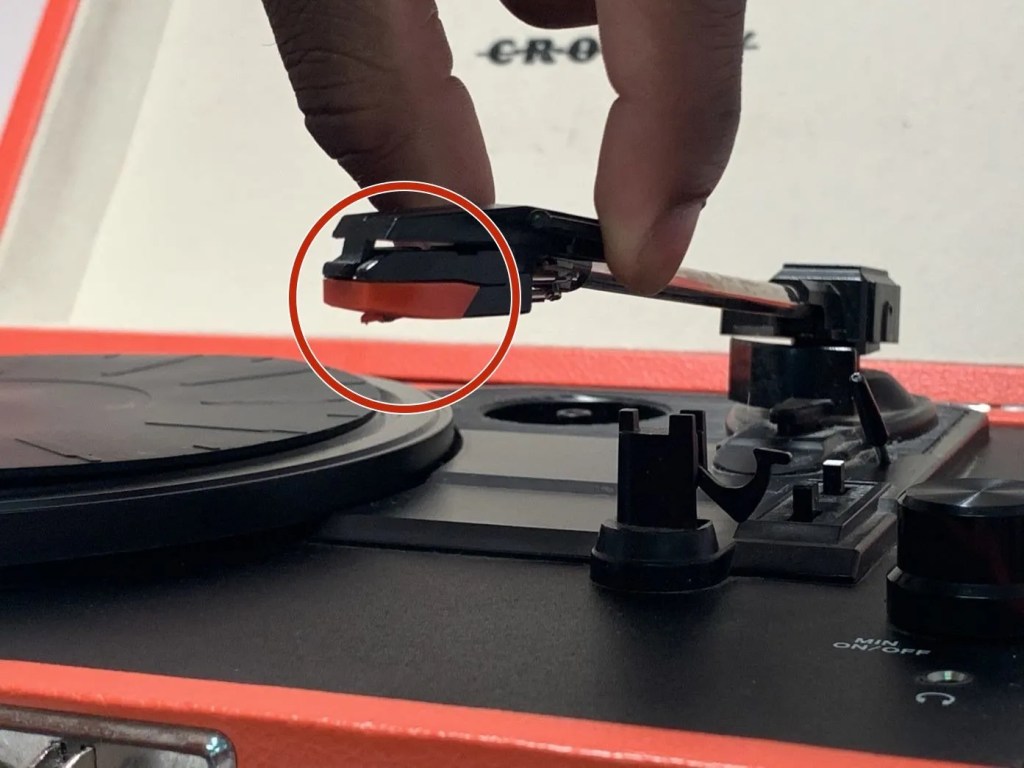
And if you end up getting hooked, some turntables let you swap the cartridge later. It’s the simplest upgrade you can make without replacing the whole table. A longtime favorite in this range is the Audio-Technica AT95E – reliable, great value, and a real step up from the bargain stuff.
Also – here’s the honest part most people don’t hear until after they buy: your speakers matter more than your turntable. The turntable sets the foundation and gets the spotlight, but the speakers do the heavy lifting. A great table into tiny speakers will still sound tiny. A decent table into good speakers can sound shockingly legit.
3. Ease of Use
For my first setup, I just wanted something simple to get my feet wet. No complex wiring, no confusing adjustments.
If you agree, plug-and-play turntables are lifesavers. To keep it simple, look for a built-in preamp. That way, you can connect directly to powered speakers or an amp without buying extra gear. Another friendly feature is automatic start/stop. With the push of a button, the tonearm sets down at the beginning and lifts at the end, no need to manually place or park the needle.
If you want a little extra convenience, consider Bluetooth. It costs around $100 more depending on the turntable, but it lets you pair with the wireless speakers you already own. Beyond that, most of the basics, speed switch, dust covers, even decent cartridges, are usually included. Stick to these essentials, and you’ll avoid the setup headaches that scare off most beginners.
Affordable Turntables: Plug-and-Play vs. Individual Components
When you’re shopping for an affordable turntable, you’ll run into two main flavors: plug-and-play and individual components. Think of it as convenience vs. customization.
Plug-and-Play Turntables
These are the “all-in-one” solutions. Pre-assembled, built-in preamp, and ready to connect straight into powered speakers. If you just want to start spinning records without extra components or wires, this is your lane.
This is what that kind of setup would look like:


A few highlights of plug-and-play turntables:
- Built-in Preamp: no extra gear needed.
- Quick Setup: Everything is ready to go right out of the box.
- Beginner-Friendly: Great for those who want a hassle-free introduction to vinyl.
Individual Component Turntables
These are for when you want more control and better sound as you grow. They need an external preamp (or a receiver with a phono input) and passive speakers, but the tradeoff is freedom to shape your system and upgrade piece by piece over time.
This is what that kind of setup would look like:

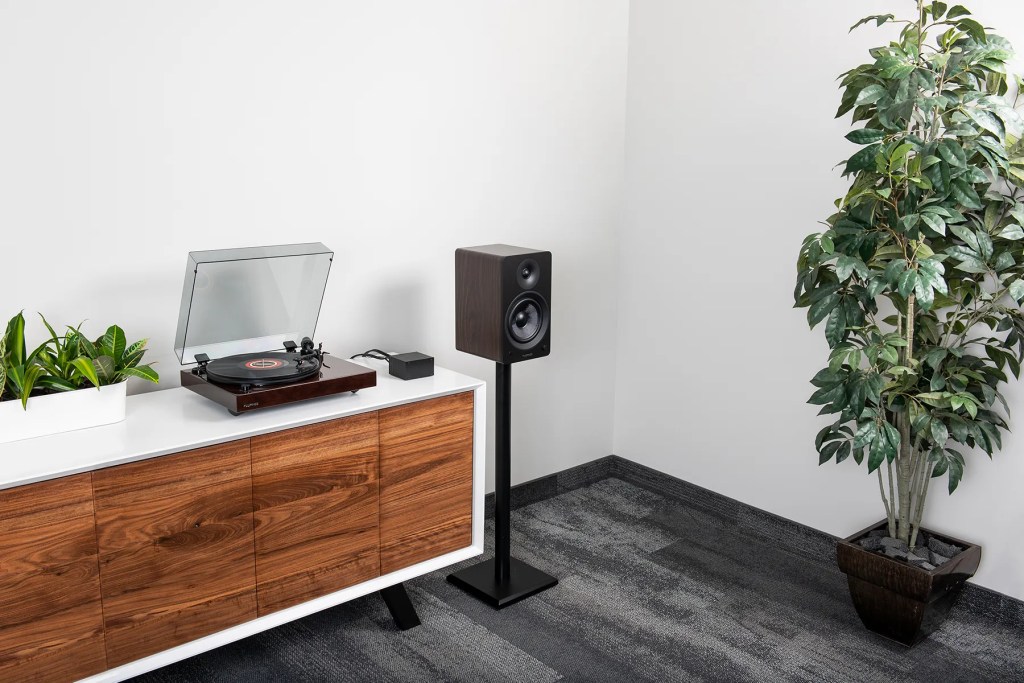
Key features of individual component turntables:
- No Built-in Preamp: You’ll need to purchase an external preamp or use a receiver with a phono input.
- Upgradable Components: Swappable cartridges, isolating amps, speakers
- Enhanced Sound Quality: fewer compromises.
The trade-off? More setup, more wires, and a little more patience, they sure do sound nice though.
Which Option Is Right for You?
- Want easy, all-in-one? → Plug-and-play.
- Want better sound and upgrade paths? → Components.
Both will play your records. The right choice depends on whether you’d rather keep things dead simple or treat listening room tinkering as a hobby you’ll build on.
Are Cheap All-in-One Record Players Worth It?
This is the million-dollar question.
And if you’re even asking it, you’re already ahead of most people.
Because yeah – the thought has definitely crossed your mind. You’re walking down the aisle at Target or Best Buy, you see the price tag, and it’s hard not to stop. They’re undeniably cheap, undeniably cute, and they look great on a shelf. They also promise the easiest deal in vinyl: one box, built-in speakers, zero extra gear.
Tempting.
But here’s the rub: with these, you really do get what you pay for. The build is usually flimsy, and the needle is not very precise (there’s that red needle of death we were talking about before) – which can be rough on your records over time.

They’ll play music, sure, but they won’t protect your collection. Just want you to know what you are getting into.
Still – if you’re feeling overwhelmed by all the hate online, I’m here to tell you it’s not the end of the world. The real goal is simple: get you a setup that feels fun, looks good in your space, and lets you actually enjoy your favorite albums without stressing.
And the good news is you’ve got options.
There are plenty of beginner-friendly picks in the $75-$200 range that still feel “affordable,” but are a noticeably better start than the typical suitcase player. We rounded up the ones we actually trust in our Beginner Record Players guide.
It’s dead simple: pick what matters most to you (looks, ease, Bluetooth, built-in speakers, upgrade path), and we’ll point you to a few options that match – no deep dive required. Take a look:
The 7 Best Affordable Turntables in 2026
Ok so if you scrolled past that trap (just kidding guys) – here’s the expanded list of the best budget turntables, with a brief description below to help you pick the perfect one for your setup.
And at the end, we included the greatest cheat code of all time.
Not only to figure out which one of these you should actually buy, but how to build a personalized setup around it without guessing.
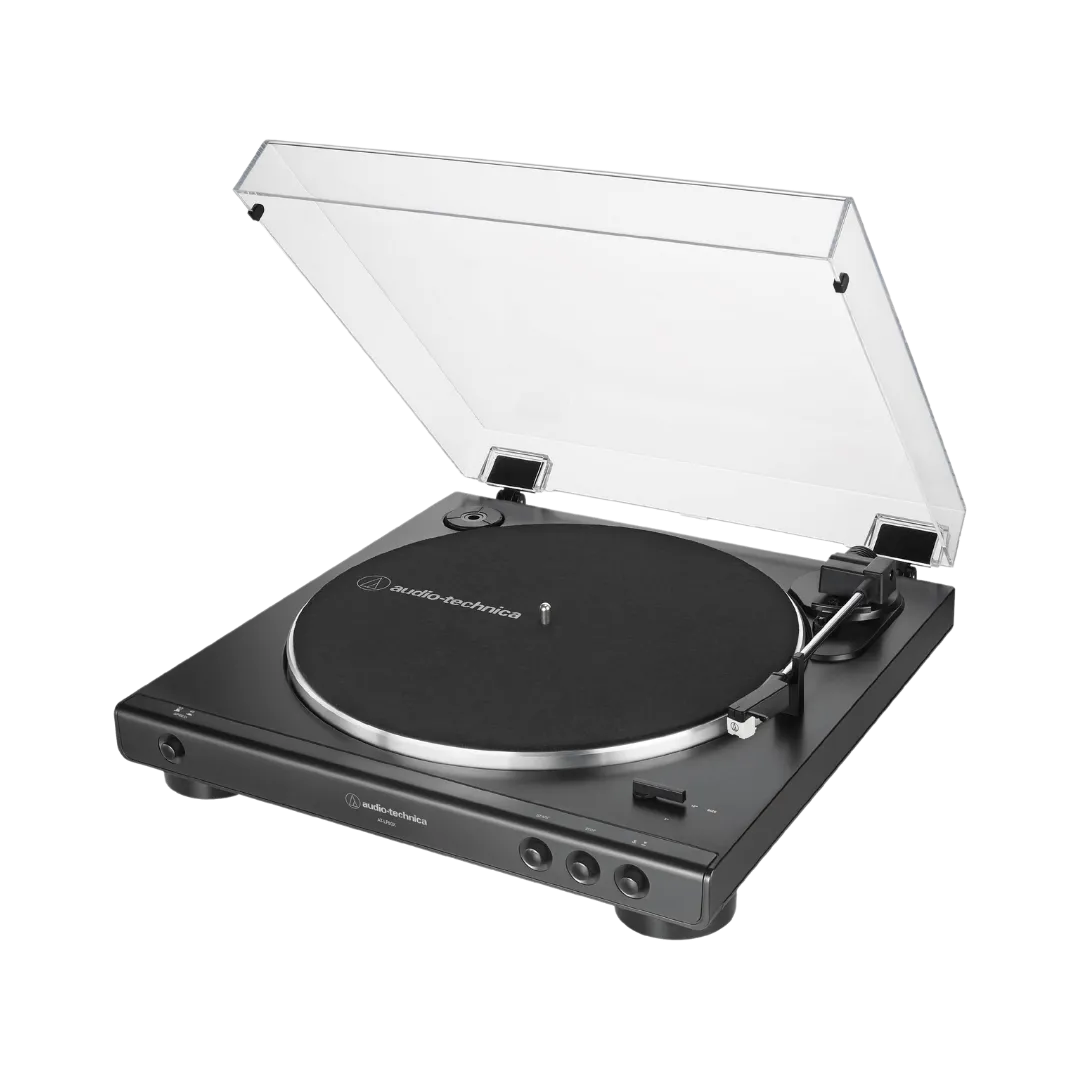
Audio-Technica AT-LP60X
- Perfect For: Anyone who wants the easiest, most widely available first turntable.
- Turntable Type: Plug-and-Play
This is kind of the one you see everywhere. It is probably the most popular entry point into vinyl, and honestly, you are not going to go terribly wrong with it.
I do think there are better options if you have the choice, but if you find one on sale, already have one available to you, or just want something dead simple, I would absolutely go with it.
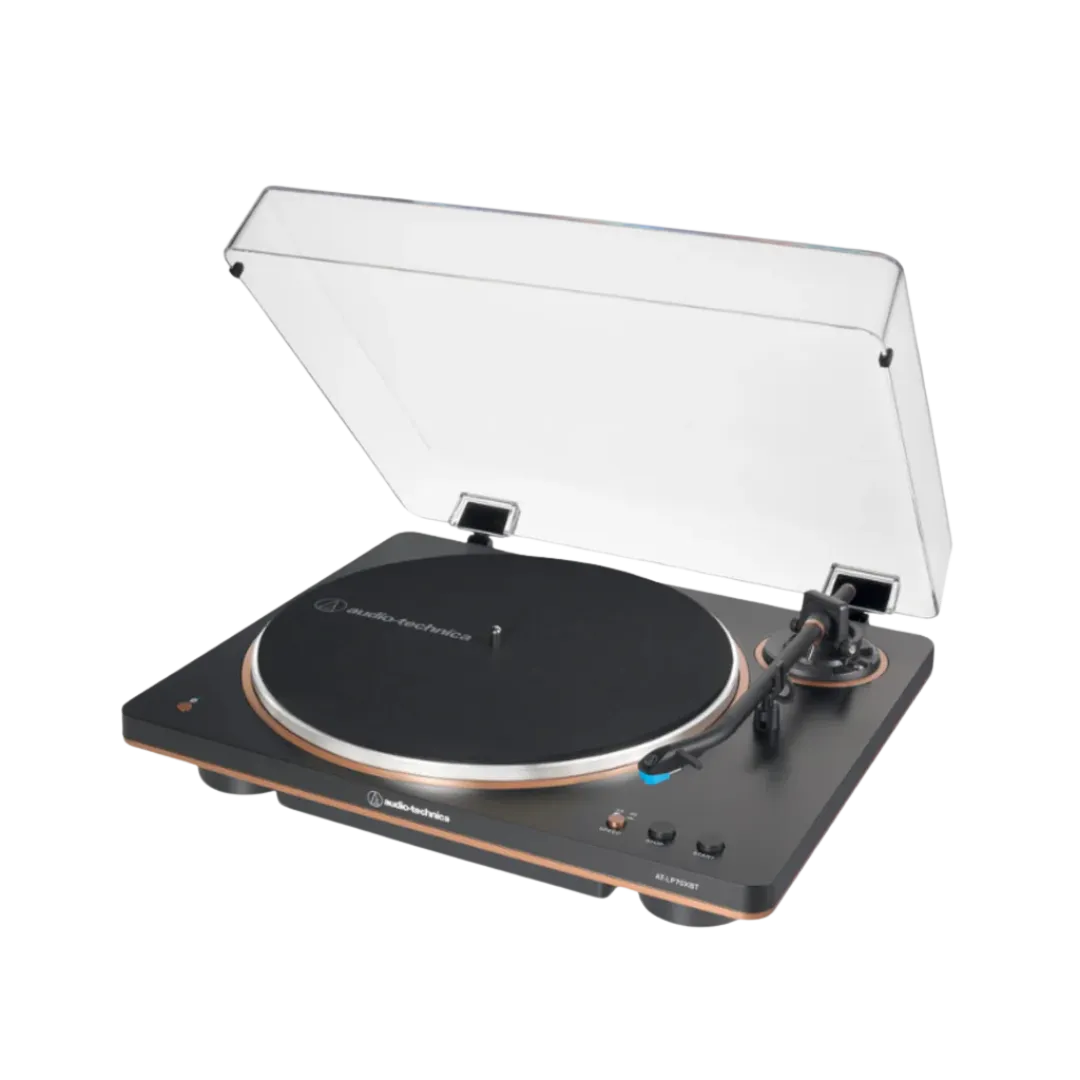
Audio-Technica AT-LP70X
- Perfect For: Most beginners who can spend a little more for a better long-term first turntable.
- Turntable Type: Plug-and-Play
The gold standard entry level turntable – with an upgraded cartridge, tonearm and platter (compared to the 60x), the AT-LP70X offers excellent sound for its price.
If your budget can stretch to it, this is the easy answer.

Crosley C6 Record Player
- Perfect For: Budget buyers who want a proper, wood, manual turntable
- Turntable Type: Plug-and-Play
Yes, Crosley. I know.
The C6 is one of the exceptions to the reputation. It is much closer to a real starter hi-fi table than the suitcase players most people associate with Crosley.
If you are trying to stay toward the cheaper end of this list, this is one I would actually feel pretty good about recommending.
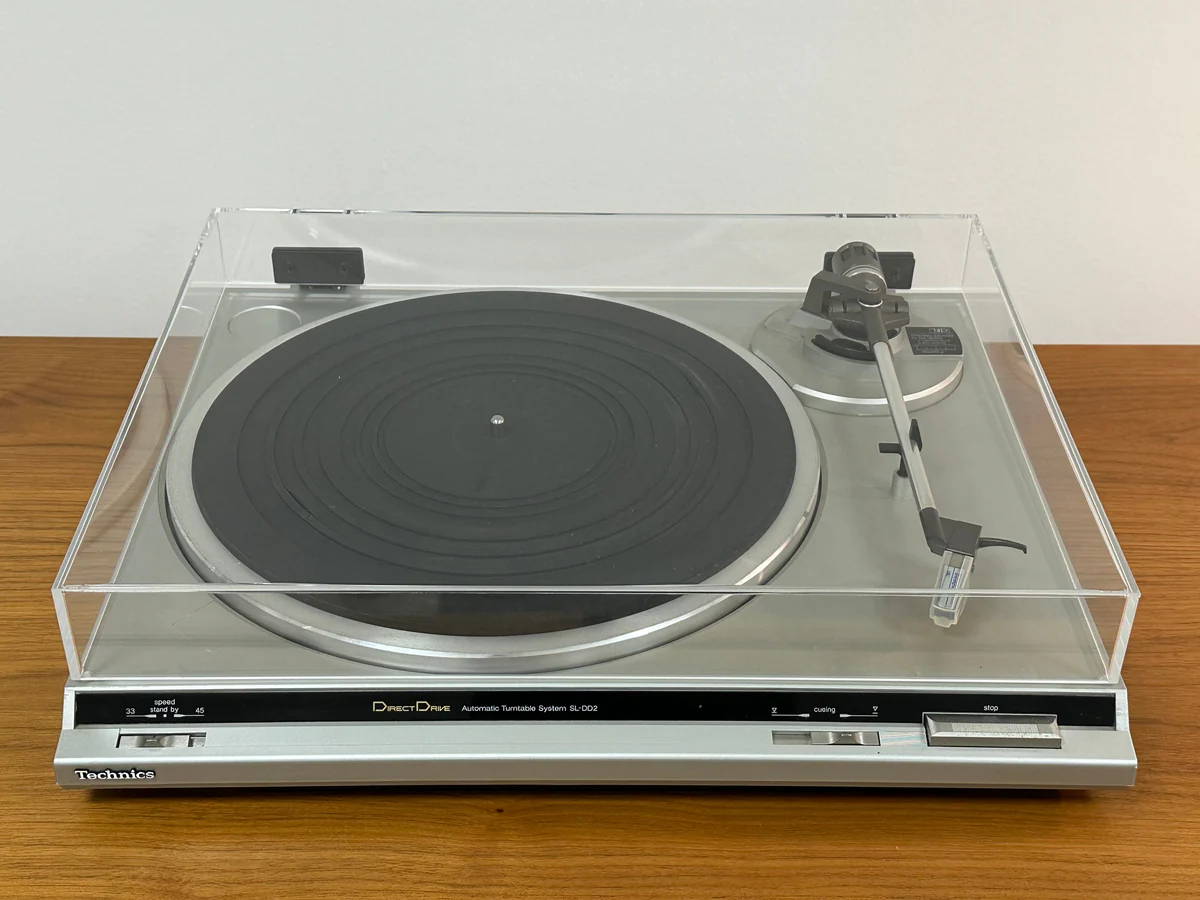
Technics SL-DD2
- Perfect For: Vintage lovers seeking a reliable, budget-friendly option.
- Turntable Type: Individual Components
If you want to go vintage, an old Technics is not a bad call at all.
The SL-DD2 is a direct-drive table from an era when Technics was making a lot of extremely solid stuff, and you can sometimes find one for surprisingly little money.
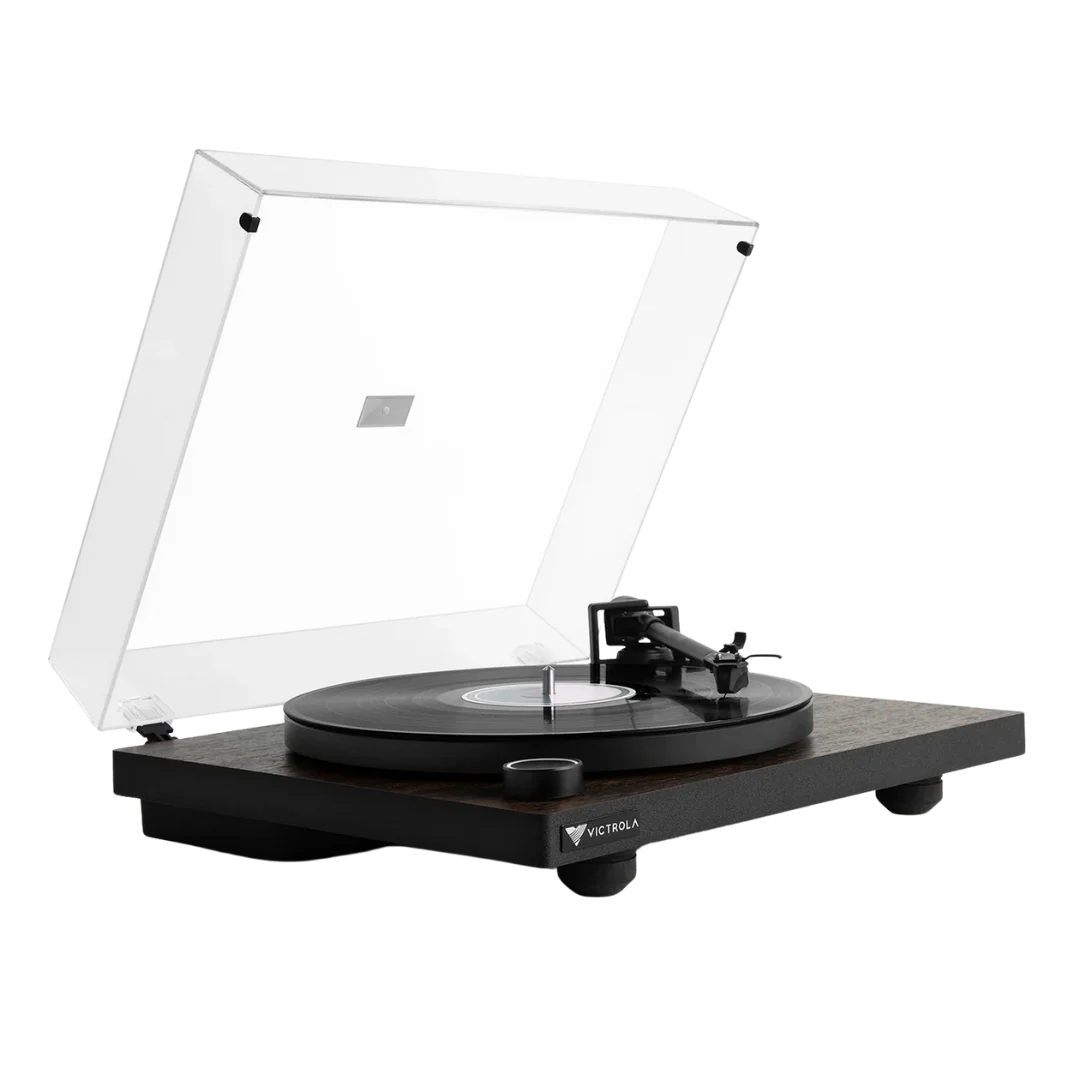
Victrola Premiere
- Perfect For: Buyers who want a more substantial turntable with extra flexibility
- Turntable Type: Plug-and-Play
This is one of Victrola’s more serious turntables. You get a wood plinth, adjustable tonearm, built-in preamp, and Bluetooth, so it gives you quite a bit of flexibility without making the setup complicated.
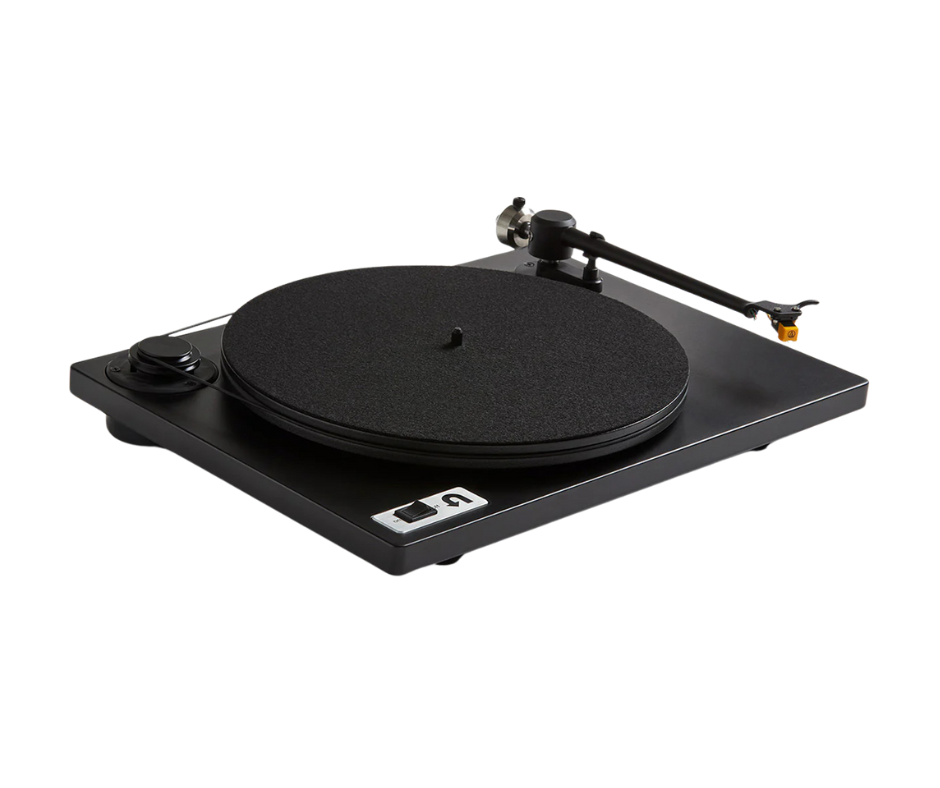
U-Turn Orbit Basic Turntable
- Perfect For: Minimalists who appreciate clean, modern design.
- Turntable Type: Individual Components
The Orbit Basic keeps things very simple and puts the money into the actual turntable.
It is clean, well-built, upgradeable, but the base model does not come with that built-in preamp.

Fluance RT81
- Perfect For: Anyone who wants a heavier, more substantial turntable with a built-in preamp.
- Turntable Type: Plug-and-Play
This is where we start moving into the more solid builds.
The RT81 is a legit step up – solid wood plinth, adjustable tonearm, and that Audio-Technica AT95E cartridge we were talking about earlier, and the built-in preamp makes it easy to pair with most setups.
| Feature | AT-LP60X | AT-LP70X | Crosley C6 | Technics SL-DD2 | Victrola Premiere T1 | U-Turn Orbit Basic | Fluance RT81 |
|---|---|---|---|---|---|---|---|
| Price | $199 on Amazon | $279 on Amazon | $190 on Amazon | ≈ $200 on Reverb | $150 on Amazon | $249 on U-Turn | $299 on Amazon |
| Turntable Type | Plug-and-Play | Plug-and-Play | Plug-and-Play | Individual Components | Plug-and-Play | Individual Components | Plug-and-Play |
| Built-In Preamp | Yes | Yes | Yes | No | Yes (Switchable) | Optional | Yes (Switchable) |
| Bluetooth Option | No | No | No | No | Yes | No | No |
| Manual vs Automatic | Automatic | Automatic | Manual | Automatic | Manual | Manual | Manual |
| Cartridge | ATN3600L | AT-VM95C | AT3600L | Varies with P-Mount | Victrola VPC-190 | AT91B | AT95E |
If we had to pick, the AT-LP70X is the no-brainer for anyone who just wants something reliable and easy. If you’re already thinking long-term, the U-Turn Orbit is a killer choice, built to grow with you as your system evolves.
And a quick shoutout to the Crosley C6. We all know Crosley catches plenty of flak, but this model actually delivers really solid performance for the price. It won’t compete with the Fluance or U-Turn, but for under $200, it’s genuinely solid.
But if we’re being real, this is a pretty easy list to make.
The harder part is what happens after you pick a turntable. What speakers actually make sense with it? Do you need an amp? A preamp? Can you plug it straight in, or are you about to accidentally buy a setup that doesn’t even work together?
That’s exactly why we built our free Builder tool.
It’s a single page where you can plan your whole vinyl setup in one place – turntable, speakers, amp/preamp if you need it – and see what actually works together without having 10 options open on different tabs. Every record player in there is something we’d actually recommend, and you can sort by price and features to narrow it down fast.
So instead of guessing (or asking online and getting 12 conflicting answers), you can just build it, compare it, and move on with your life. Here’s how it works:
Conclusion: Which Affordable Turntable Should You Buy?
The tiers of the best affordable turntables are basically:
Bottom: cheap $50 suitcase toys from Target. Nice first step, but if you get serious about records you will probably move on pretty fast.
Mid: $50 to $250. Still mostly all-in-one, still not perfect, but these can be great value and keep you going.
Legit: $250+. Now we are cooking. This is where things start feeling reliable and sound noticeably better.
Audiophile: $2,000+. The nerds on Reddit who stress every single piece of the signal chain. Bless y’all.
Our take: you can get in at any price point. Listening to your records does not have to mean draining your bank account. Each category serves its purpose. But in that mid to legit range, you start getting way more reliability and way better sound.
If you are still a bit confused: under $250, stick with our Beginner Record Players guide. When you are ready to upgrade into a “real” vinyl setup, hop into our Builder and just explore. Play around, learn what works together, and start seeing how deep you actually want to go.