
Let’s run a little experiment.
Hypothetically, say you could send some robot out across the internet to index every time someone asks the same basic question: What record player should I buy? My budget is under $500.
Well, we sort of ran that experiment.
Not with a robot. But this is the kind of question we see all the time, in DMs, online forums, Reddit threads, comment sections, and pretty much anywhere people start asking about their first real turntable.
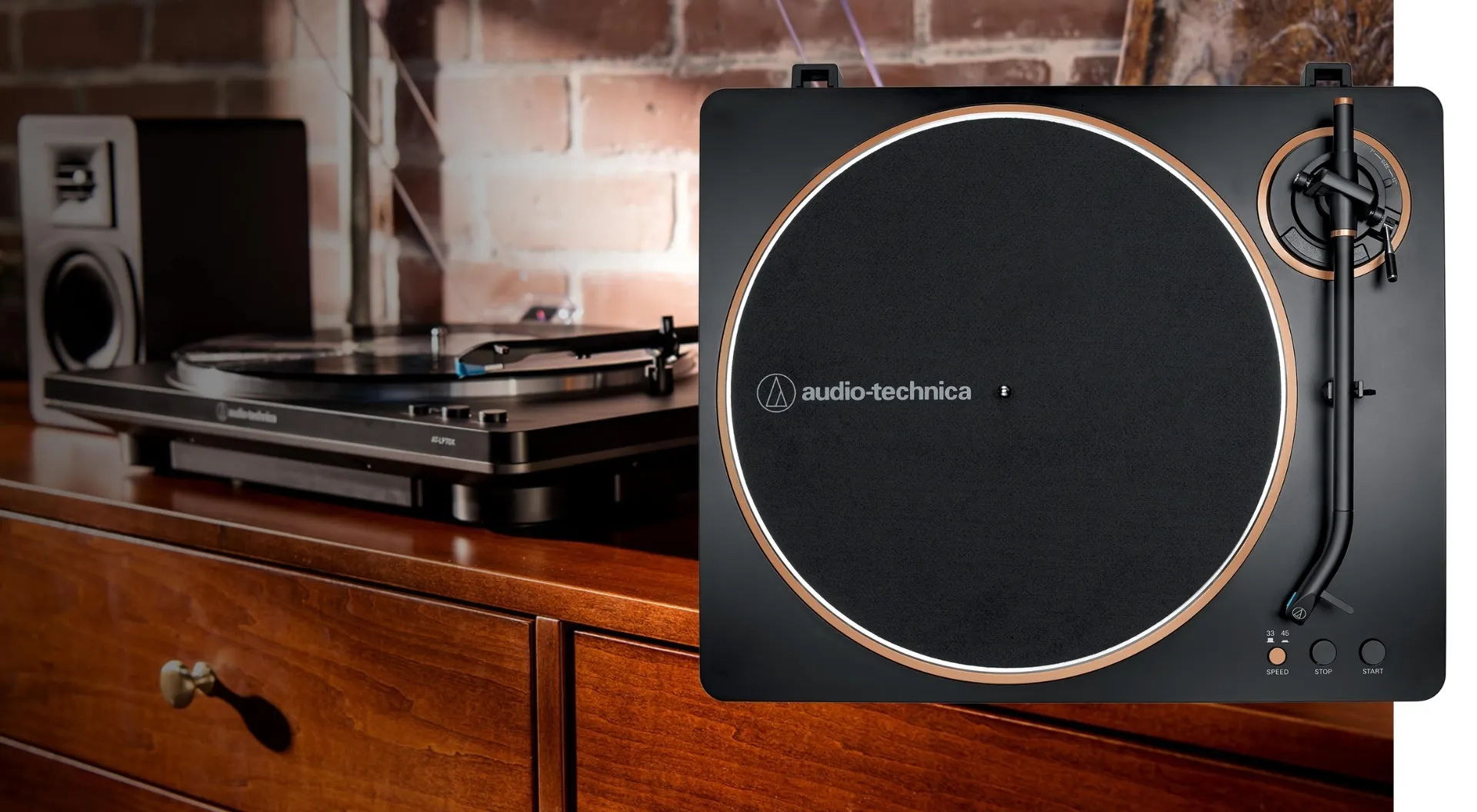
So we got the answer for you. If you are shopping for your first record player in the $300 range, you can probably stop here. Most of the time, the Audio-Technica AT-LP70x is the one.
Now, we are going to get deeper into why it works so well, where it makes the most sense, and the few cases where it might not be quite the right pick. There is some nuance here. There always is.
But overall, this is the kind of starter table you can feel good about after you buy it. It is easy. It sounds good. It does not feel like a toy. And it gives you enough room to grow that you are not immediately shopping for its replacement three months later.
The old go-to beginner hit was the LP60x, the “first turntable” for half the vinyl world. The AT-LP70x feels like the better version of that default answer. For a first real turntable setup, it does more than enough right.
Here’s what changed, why it matters, and whether it’s the one to start your setup with.
Table of Contents
In this guide, we’ll cover everything you need to know about the Audio-Technica AT-LP70x, broken down into the following sections:
- High Level Overview: What is the AT-LP70x
- Design and Build
- Sound Quality
- Connectivity and Compatibility
- Comparing the AT-LP70x and AT-LP60x
- Design and Build
- Cartridge and Customization
- User Experience and Features
- Summary of Upgrades
- Comparing to Other Entry-Level Turntables
- Crosley C6
- Fluance RT81
- Sony PS-LX310BT
- What It’s Missing Compared to Higher-End Models
- Conclusion: Is It Worth It?
Affiliate Disclosure: We’re a small team of vinyl enthusiasts, if you get value from our insights, using our affiliate links (including Amazon Associates) helps us earn a commission and keep the lights on at no extra cost to you. Thank you for supporting Recordbuilds.com!
High Level Overview: What is the AT-LP70X?
Here, we are going to give you the most important things you need to know. And again, for most of you, this should be a great first turntable.
When you are shopping for your first record player, you probably see a bunch of all-in-one options first. Suitcase players. Little record players with speakers built in. The kind of thing that looks easy, affordable, and honestly pretty tempting when you do not know where to start. Fair enough. Just know that the AT-LP70x is miles better than the all-in-one or suitcase players people usually get warned away from.
On the other end, it also does not throw you straight into the deep end with a fully manual setup, cartridge alignment, tracking force, anti-skate, and all the other stuff that can make a first record player feel way more complicated than it needs to be.
That is why it works. It is a great in-between for someone who wants to enjoy records simply, maybe a couple times a week, without going crazy and turning the whole thing into a huge hobby.
The simplicity of the machine is actually pretty beautiful. You press a button. The arm moves on its own. The record plays. Easy. But unlike those more budget options, you still get a sturdier build, better materials, and a better cartridge and stylus, which is the little needle portion that actually touches the record. That matters, because it can make a tremendous difference in the sound you are actually hearing.
Beginner-friendly, but not disposable. Simple, but not cheap-feeling. Easy enough for someone buying their first record player, but good enough that you probably will not feel like you made the wrong move three months later.
The upgrades show up in three places: how it is built, how it sounds, and how easy it is to actually use.
Design and Build
The LP70x does not feel like a toy, which is where a lot of entry-level turntables start to lose people. The body is slim, the design is clean, and it looks a lot more modern than the bulky budget record players you usually see in this range. The die-cast aluminum platter helps too. It is not there just to sound impressive on a spec sheet. It adds a little weight and stability, which helps keep vibration down and playback steady.


The J-shaped tonearm gives it a little bit of that classic hi-fi look, the buttons feel more purposeful than plasticky, and the whole thing hits a nice middle ground: simple, clean, and grown-up enough that you can put it on a shelf in your living room without it screaming “first record player.”
Sound Quality
The cartridge is where the LP70x separates itself even further from the cheaper beginner stuff. It ships with the AT-VM95C, which is a proper cartridge and a real step up from what you usually get on record players in this range. This really matters, because the cartridge and stylus are the parts actually reading the record. If those are bad, the rest of the setup is already fighting uphill.
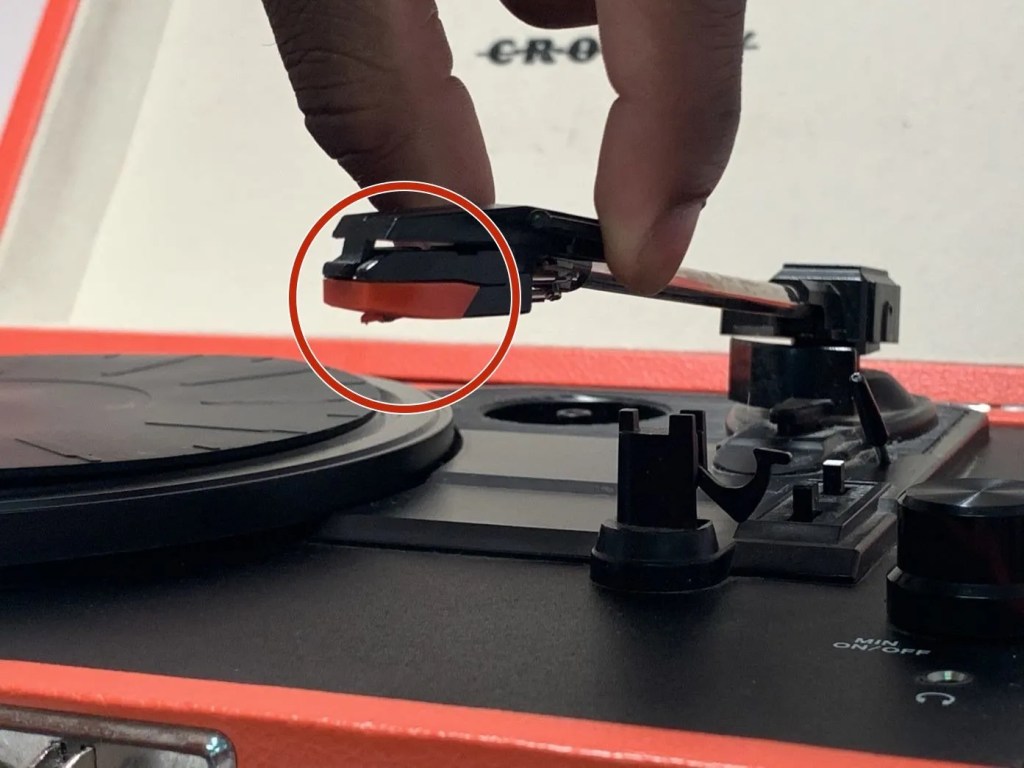
The stock VM95C stylus is solid on its own, but the underrated part is that you are not stuck there forever. Later on, you can swap the stylus for a variety of different options without replacing the whole turntable (trust us you will want to one day). So the LP70x gives you something rare at this level: a first record player that is simple right now, but still gives you a little room to care more later.
Connectivity and Compatibility
One of the big reasons the LP70x is so easy to use is the built-in phono preamp. If you have powered speakers, you can plug the turntable straight in and start listening. You do not need to buy a separate phono preamp. You do not need a receiver.
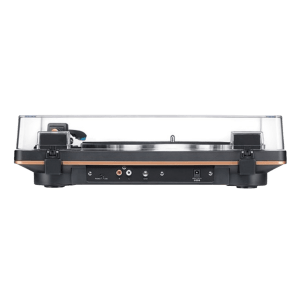
If you are curious about full setups or pairing a record player with your speakers, we have the perfect thing for you later on.
All in all, it is simple enough for a first setup, but not totally boxed in if you get more into vinyl later. That is the nice middle ground here: easy now, flexible later.
Comparing the AT-LP70x and AT-LP60x
The LP60x has been the starter turntable for years, cheap, simple, everywhere. It set the standard for what “beginner-friendly” looks like. But the LP70x takes that same idea and tightens it up with sturdier parts, a real cartridge, and sound that feels like a proper step forward. If the 60x is the entry point, the 70x is the upgrade that makes sticking with vinyl way more rewarding.
Here’s a quick look at them side by side:
| Feature | AT-LP60x | AT-LP70x |
|---|---|---|
| Price | $199 on Amazon | $279 on Amazon |
| Turntable Type | Fully automatic belt-drive | Fully automatic belt-drive |
| Platter | Aluminum | Die-cast aluminum |
| Tonearm | Straight tonearm | J-shaped tonearm |
| Cartridge | ATN3600LC | AT-VM95C Dual Moving Magnet |
Design and Build
The LP70x just looks and feels a little more serious than the LP60x. The body is cleaner. The shape is less blocky. And the J-shaped tonearm gives it more of that classic hi-fi look. I personally like that a lot, especially after owning the LP60x for three years. The LP60x works, but it definitely looks like a starter record player. The LP70x looks like Audio-Technica tried to make the starter record player feel a little more grown up.
A few things help:
- Cleaner body: less blocky than the LP60x, and a lot easier to imagine sitting out in a living room.
- J-shaped tonearm: a small detail, but it gives the table more of a proper hi-fi look.
- Die-cast aluminum platter: not the kind of spec beginners get excited about, but it adds weight and stability, which helps keep vibration down and playback steadier.
Cartridge and Customization
Instead of the more basic cartridge setup on the LP60x, you get Audio-Technica’s AT-VM95C. The bigger win is that you are not totally stuck with the stock stylus forever.
- Start simple: the included VM95C is good enough to get you going.
- Upgrade later: you can move up to an elliptical, microlinear, or even Shibata stylus.
- Keep the table: you do not need to replace the whole turntable just because your ears get pickier.
For a beginner table, that is a pretty big deal. It gives you somewhere to go if you start caring more.
User Experience and Features
This is where the LP60x and LP70x stay pretty close. Both are made to be easy.
- Fully automatic: press a button, the arm moves, the record plays.
- Built-in phono preamp: you can plug into powered speakers without buying extra gear.
- Switchable output: if you upgrade later, you can run it into a receiver or external phono preamp.
So the LP70x is not winning because it makes records easier to play. It is winning because it gives you the same easy experience with better parts around it.
Summary of Upgrades
So what does the extra money over the LP60x actually get you?
- A cleaner design
- A less blocky body
- A nicer-looking tonearm
- A sturdier platter
- A better cartridge platform
- A stylus upgrade path that gives the turntable a longer life
Not a totally different experience. Just the better version of the beginner answer Audio-Technica already had.
Comparing to Other Entry-Level Turntables
Here are the most popular first record players you will probably run into in that under-$300-ish range.
Some are cheaper. Some are more hands-on. Some have Bluetooth. Some look a little more like the kind of turntable you pictured when you first started shopping.
At this price, you will see options like the Crosley C6, Fluance RT81, and Sony PS-LX310BT. And to be fair, all of those have a case. The LP70x is probably still the favorite for the majority of people, but there are a few cases where a different direction makes sense.
We will go over those below.
Between the two Audio-Technica models, the LP60x and LP70x, I would personally lean toward the LP70x. The more modern look, upgraded cartridge, and ability to swap the stylus later make it feel like a real step forward.
That being said, if you already own an AT-LP60x, I would not necessarily rush to replace it with the LP70x. At that point, I would probably keep enjoying what you have and save for a bigger upgrade later.
So below, we are going to look at the main alternatives, where they win, where they fall short, and who might actually want something other than the LP70x.
How It Stacks Up in the $300 Category

Crosley C6:
The Crosley C6 is a manual, two-speed turntable aimed at people who want a hands-on, all-analog feel. Crosley gets a bad rap for their suitcase players, but the C6 is actually a solidly spec’d model for the price. Still, the manual operation makes it a different experience compared to the fully automatic LP70x – but maybe that’s exactly what you are after.
| Feature | Crosley C6 | Audio-Technica AT-LP70x |
|---|---|---|
| Price | $199 on Amazon | $279 on Amazon |
| Turntable Type | Manual, Belt-Drive | Fully Automatic, Belt-Drive |
| Speeds | 33 1/3 & 45 RPM | 33 1/3 & 45 RPM |
| Plinth Material | Audio-Grade MDF | Plastic |
| Platter | Heavy Steel | Die-Cast Aluminum |
| Tonearm | Aluminum with Adjustable Counterweight & Anti-Skate | J-Shaped, Fixed |
| Cartridge | Audio-Technica ATN3600L | Audio-Technica AT-VM95C |
| Preamp | Built-In, Switchable | Built-In, Switchable |
| Bluetooth | Yes | No |
Fluance RT81:
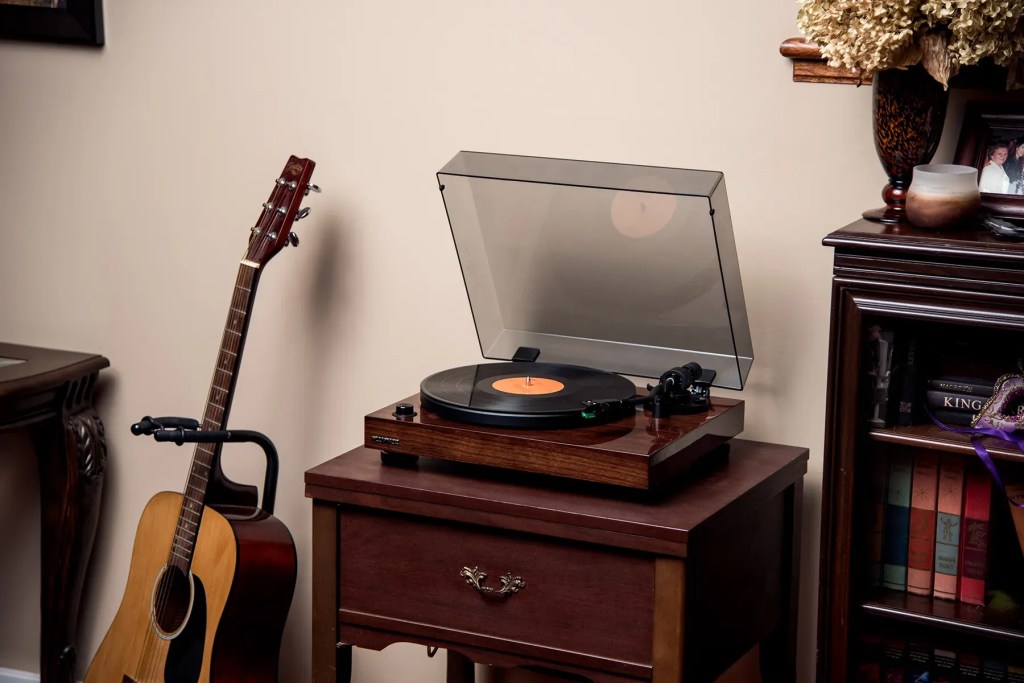
The Fluance RT81 is a real contender in this price bracket. It’s got a heavier build, strong performance, and that wood veneer finish that makes it look more expensive than it is. Honestly, I think it edges out the LP70x in sound and feel – just depends on the aesthetic and experience you are going for.
Similar to the C6 this is a manual turntable – so has a bit more setup.
| Feature | Fluance RT81 | Audio-Technica AT-LP70x |
|---|---|---|
| Price | $300 on Amazon | $279 on Amazon |
| Turntable Type | Manual, Belt-Drive | Fully Automatic, Belt-Drive |
| Speeds | 33 1/3 & 45 RPM | 33 1/3 & 45 RPM |
| Plinth Material | Audio-Grade MDF with Real Wood Veneer | Plastic |
| Platter | Die-Cast Aluminum | Die-Cast Aluminum |
| Tonearm | S-Type with Adjustable Counterweight & Anti-Skate | J-Shaped, Fixed |
| Cartridge | Audio-Technica AT95E | Audio-Technica AT-VM95C |
| Preamp | Built-In, Switchable | Built-In, Switchable |
| Bluetooth | No | No |
Sony PS-LX310BT:
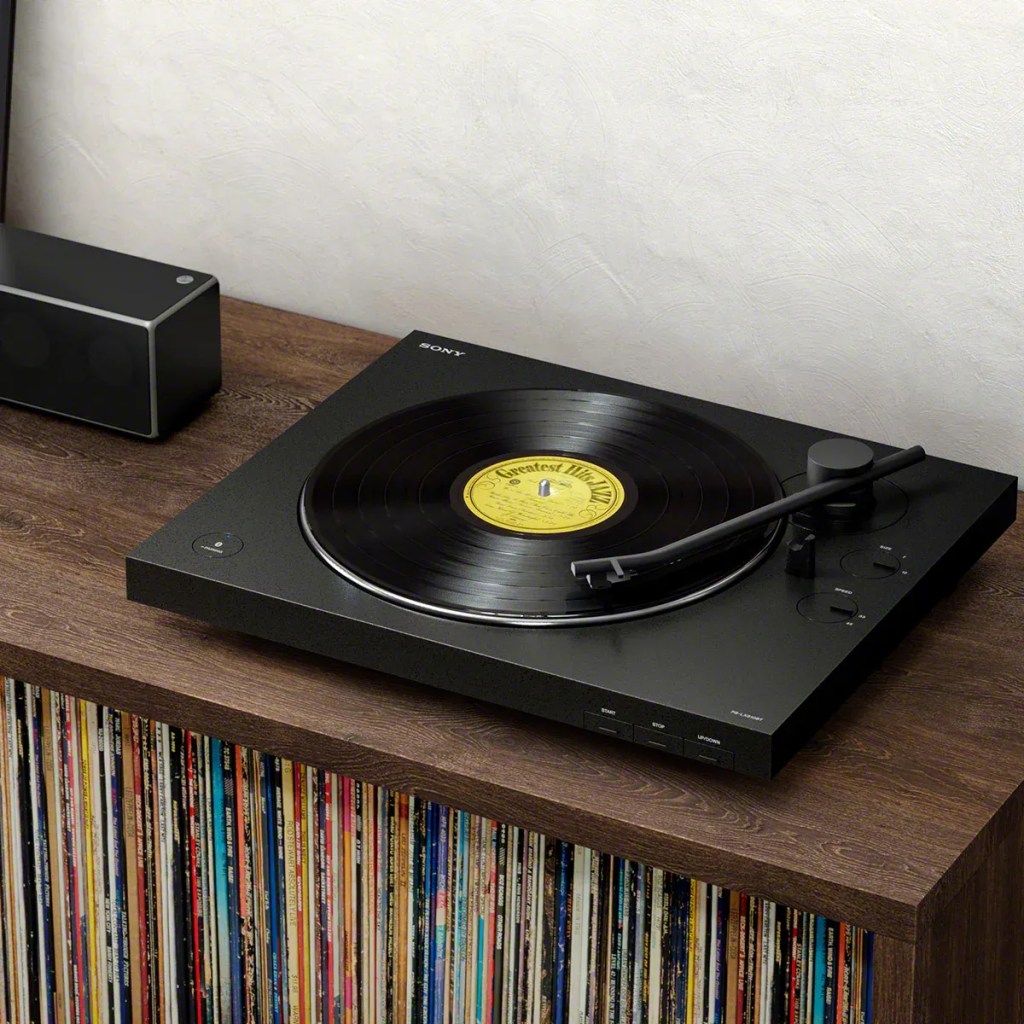
The Sony PS-LX310BT used to be a decent budget option, but after a recent price bump it’s now closer to $448. At that point, it’s hard to justify unless you really need the built-in Bluetooth. Otherwise, the AT-LP70x (or its BT models) give you more for less money.
| Feature | Sony PS-LX310BT | Audio-Technica AT-LP70x |
|---|---|---|
| Price | $448 on Amazon | $279 on Amazon |
| Turntable Type | Fully Automatic, Belt-Drive | Fully Automatic, Belt-Drive |
| Speeds | 33 1/3 & 45 RPM | 33 1/3 & 45 RPM |
| Platter | Aluminum | Die-Cast Aluminum |
| Tonearm | J-Shaped | J-Shaped |
| Cartridge | Integrated Cartridge | Audio-Technica AT-VM95C |
| Preamp | Built-In | Built-In, Switchable |
| Bluetooth | Yes, Built-In | No |
Where the Other Options Make Sense
If you want simple, automatic, and beginner-proof, the LP70x is probably still the better first pick. If you want your first turntable to feel a little more manual and “real” right away, the C6 or RT81 might be more your lane. Then there’s is the Sony PS-LX310BT…
Breakdown below:
| Feature | Audio-Technica AT-LP70x | Crosley C6 | Fluance RT81 | Sony PS-LX310BT |
|---|---|---|---|---|
| Price | $279 on Amazon | $199 on Amazon | $300 on Amazon | $448 on Amazon |
| Turntable Type | Fully Automatic, Belt-Drive | Manual, Belt-Drive | Manual, Belt-Drive | Fully Automatic, Belt-Drive |
| Speeds | 33 1/3 & 45 RPM | 33 1/3 & 45 RPM | 33 1/3 & 45 RPM | 33 1/3 & 45 RPM |
| Plinth Material | Plastic | Audio-Grade MDF | Audio-Grade MDF with Real Wood Veneer | Plastic |
| Platter | Die-Cast Aluminum | Heavy Steel | Die-Cast Aluminum | Aluminum |
| Tonearm | J-Shaped, Fixed | Aluminum with Adjustable Counterweight & Anti-Skate | S-Type with Adjustable Counterweight & Anti-Skate | J-Shaped |
| Cartridge | Audio-Technica AT-VM95C | Audio-Technica ATN3600L | Audio-Technica AT95E | Integrated Cartridge |
| Preamp | Built-In, Switchable | Built-In, Switchable | Built-In, Switchable | Built-In |
| Bluetooth | No | Yes | No | Yes, Built-In |
| Best For | The safest beginner pick | The budget manual option | The nicer manual wood option | The automatic Bluetooth option |
The Crosley C6 and Fluance RT81 are kind of in the same general bucket.
They are both good options if you want something that feels a little more like a traditional turntable. Wood-style finish, manual operation, adjustable counterweight, anti-skate, and more of that hands-on record player experience.
The C6 is more of the budget version of that idea. The RT81 feels like the nicer version. So if you are okay with a little more setup, and you actually want the tactile part of playing records, those are definitely worth looking at. You lower the arm yourself. You adjust the counterweight. You feel a little more connected to the whole process.
The Sony PS-LX310BT probably makes the most sense if you want to stay fully automatic, keep things easy, and get Bluetooth built in. It also has a clean, modern look, so I get why people like it.
I personally would not buy it at around $448. That is just a lot more than the LP70x, and at that price the value gets harder to defend. But keep an eye on sale prices. In our builder, we routinely see the Sony drop closer to the $200 to $300 range, and at that point it becomes a much more interesting option, especially if Bluetooth is one of the main things you care about.
What It’s Missing Compared to Higher-End Models
The LP70x is very good for what it is. But it is not magic.
Once you start looking at turntables like the Fluance RT85, Rega Planar 1, Pro-Ject Debut Carbon Evo, or entry-level Technics models, you start to see where the extra money goes. Not always in ways beginners need right away. But the differences are real. Here is what you are not getting with the LP70x:
- Tonearm adjustments: The LP70x has a fixed J-shaped tonearm. It works well, and for beginners, that is honestly part of the appeal. You do not have to mess with tracking force or anti-skate. The tradeoff is that you also do not get the same level of control you would get on a more serious manual turntable.
- A higher-end cartridge out of the box: The AT-VM95C is good. Especially at this price. But once you move into more expensive turntables, you start seeing better cartridges and stylus profiles included from the start. Elliptical. Nude elliptical. Microlinear. That is where more detail starts coming out of the record.
- Heavier materials: The LP70x has a die-cast aluminum platter, which is nice for a beginner turntable. Higher-end models usually go further with heavier platters, better damping, nicer plinths, and more attention to vibration control. That stuff is not very exciting to read about, but it does matter when you are chasing cleaner sound.
- The manual turntable feel: The LP70x is fully automatic. You press a button, the arm moves, the record plays. Great. That is exactly why beginners like it. But some people want the more hands-on ritual of a manual table. Lowering the arm yourself. Adjusting things. Feeling like you are a little more involved in the process.
So no, the LP70x is not secretly a $700 turntable hiding in a beginner body. It is just a really good first turntable.
If you want the big jump in performance, you are probably looking at the next price tier. Something more manual, heavier, more adjustable, and more serious. But if you are just starting out, the LP70x gives you the part that matters most: an easy way into vinyl that sounds good, feels clean, and does not make the whole thing harder than it needs to be.
Conclusion: Is It Worth It?
For me, this question almost might as well be: is owning physical media worth it? And if you are here, you probably already get it.
Is it worth holding your favorite album in your hands? Looking at the artwork. Pulling the record out. Dropping the needle. Hearing little notes and textures in songs you have already heard a hundred times, but somehow feeling a little closer to them because now the music is sitting right there in front of you?
Well, of course. That part is easy. The hard part is getting into it.
There are so many options. So many opinions. So many people telling you this record player is bad, that one is better, this setup is wrong, this speaker will not work, this turntable is not worth it. And before you know it, something that should be fun starts feeling weirdly difficult.
But if you landed on the AT-LP70x, you landed in a good spot. A damn good one.
This is a really solid entry-level turntable from one of the most respected manufacturers in the game. I do not think most beginners could go wrong with it. Maybe, for the right person, you could go more right. Maybe the Crosley C6 makes more sense. Maybe the Fluance RT81 makes more sense. Maybe you really want Bluetooth and should keep an eye on the Sony PS-LX310BT when it goes on sale.
But for most people buying their first real record player, the AT-LP70x is a very safe place to start. And if you have read this far, I am guessing you are doing the research because you actually want to dial in the purchase. Which makes sense. This stuff gets expensive quickly, and nobody wants to buy the wrong thing just because they got overwhelmed.
For people like you, we built a free tool that helps you plan your first vinyl setup around the best record player options, including all the ones we mentioned here. It checks compatibility between your turntable, amp, receiver, speakers, and other gear, while also helping you keep an eye on sale prices and top-rated products.
Check out a quick preview of how it works below.
For a first setup, whether you go with the AT-LP70x, Crosley C6, or Fluance RT81, picking something with a built-in phono preamp is probably a good idea. All three of those have one. That way, you can pair the turntable with powered speakers, which the builder can help sort through for you, and you are basically good to go.
Super simple. Easy. Effective. Keeps the budget reasonable.
Hope this helps, because getting into vinyl is a wonderful hobby, and it should feel that way from the start.