

Andover Audio has always done things a little differently.
It is a unique hifi company in that they have made some pretty weird products over the years. Speakers you can literally put a turntable on top of. Compact systems that try to squeeze an entire vinyl setup into one piece of furniture. A lot of it is built around the same idea: make vinyl easier to live with.
Then you get to the Andover One DD.
This is their new $999 direct-drive turntable, and it is a much more serious piece of gear than most people probably associate with Andover. On paper, it has pretty much everything you would expect from a turntable trying to compete around $1,000.
But Andover also did something I wish more companies at this price would do…They made it easier to use. The One DD is definitely a proper manual hi-fi turntable, but it handles some of the annoying stuff for you at the beginning and end of a record.
So that is really what I wanted to figure out with this one.
Is the Andover One DD actually a great $1,000 turntable, or is the convenience the most interesting thing about it?
Table of Contents
In this guide, we’ll cover everything you need to know about the new Andover One DD, broken down into the following sections:
- What Makes the Andover One DD Different?
- Andover One DD Overview: What You Get for $999
- Andover One DD vs. Other $1,000 Turntables
- Conclusion: Is the Andover One DD Worth It?
Affiliate Disclosure: We’re a small team of vinyl enthusiasts – if you get value from our insights, using our affiliate links (including Amazon Associates) helps us earn a commission and keep the lights on at no extra cost to you. Thank you for supporting Recordbuilds.com!
What Makes the Andover One DD Different?
Here’s the obvious answer: the convenience stuff.
Have you seen Andover’s take on vinyl? I actually think it is kind of genius. It hits that millennial who wants something tactile, physical, nostalgic, but still wants the setup to look super nice.
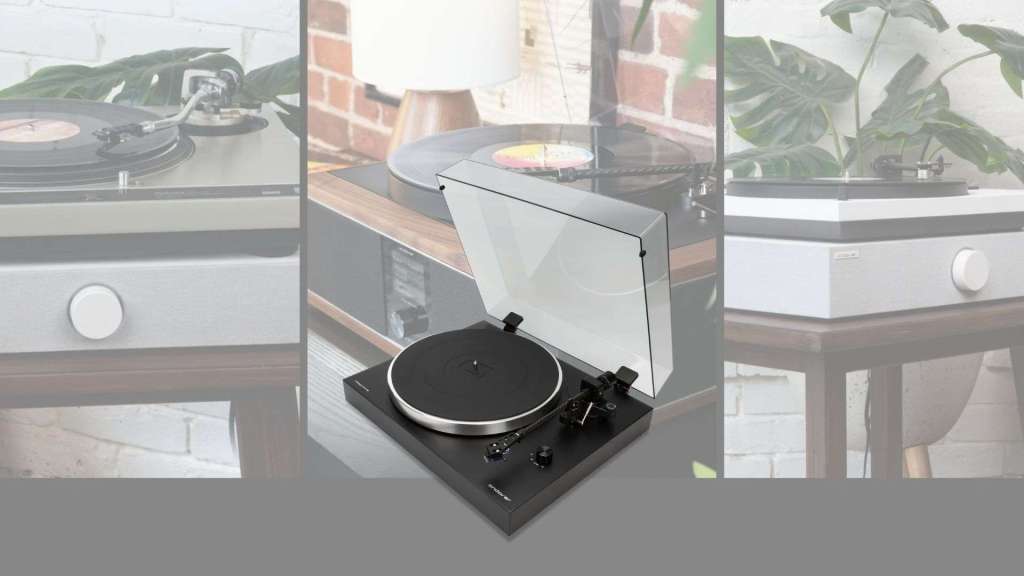
Because when you think about a traditional vinyl setup, it is usually wires, a bunch of boxes, separate components, all that stuff. Then look at something like the SpinBase. You literally put the turntable on top of the speaker.
But the One DD is also a legit hi-fi turntable, so the interesting part is how that shows up here.
Part of buying something at this level is wanting to set the needle down yourself, switch the cartridge later, and generally feel like you are using a proper turntable. The One DD keeps all of that. The specs, which we will get into shortly, are super legit too. This is not convenience replacing the hi-fi stuff. The hi-fi stuff is already there. But it quietly handles the two parts I would happily give up:
- Move the tonearm over the record and the platter starts spinning.
- When the record finishes, an optical sensor detects it, lifts the arm, and stops the platter. No sprinting back across the room because you forgot the side was almost over.
Kind of cool. And I like that they did it optically. There are no mechanical gears tied into the tonearm during playback, so the convenience stuff is there without really getting in the way.
So to me, that is what makes the One DD interesting. It does not try to automate vinyl. It just gets rid of a couple annoying parts without messing with the parts people actually enjoy.
Andover One DD Overview: What You Get for $999
Turntable get really interesting around this specific price range.
Once you get into the $800 to $1,000 zone, you are firmly in hi-fi territory. So I am not really looking for a built-in preamp or a bunch of beginner features anymore. At this point I want to know where the money actually went.
| Price | $999 at Andover Audio |
|---|---|
| Preamp | Not included (phono input or external preamp required) |
| Cartridge | Audio-Technica AT-VM520xEB moving magnet |
| Platter | Internally damped cast aluminum with silicone rubber mat |
| Plinth | High-mass MDF |
| Drive System | Digitally controlled direct drive |
| Automation | Optical auto-start and end-of-record arm lift / auto-stop |
| Tonearm | 8.8-inch straight carbon-fiber tonearm |
| Headshell | Removable cast-aluminum SME-style headshell |
| Counterweight | Yes, adjustable tracking force |
| Anti-Skate | Yes, adjustable |
| VTA | Yes, adjustable |
| Speeds | 33 1/3, 45, and 78 RPM |
| Speed Accuracy | Within 0.2% |
| Wow & Flutter | <0.15% |
| Isolation | Adjustable vibration-absorbing rubber leveling feet |
| Weight | 12.8 lb |

The first thing that jumps out to me is that Andover did not cheap out on the actual turntable underneath all the convenience stuff.
There is no built-in preamp, which is pretty much what you would expect at this price. If you are spending $1,000 on the turntable alone, chances are you already have a phono stage somewhere in the system or you are going to pick one yourself.
Tracking force, anti-skate and VTA are all adjustable too. Again, they kind of need to be here, but it is still good to see Andover checking all the boxes. The carbon-fiber tonearm is nice, although carbon fiber is pretty common once you get into this range.
The SME-style removable headshell is a little more interesting to me. You can keep another cartridge mounted on a second headshell and swap the whole thing instead of remounting a cartridge every time. If you ever get really into this stuff, or want a separate cartridge for 78s, that is actually pretty useful. Personally, I like having that option.
The plinth and platter are about what I would expect too. Heavy MDF base, damped cast-aluminum platter, vibration-absorbing feet. Nothing especially flashy, but it all feels appropriate for a turntable at this price.
And those adjustable feet make even more sense if you are buying into the Andover ecosystem. The One DD is made to work nicely with the Andover-One SB, so you can basically build this really clean premium setup without the usual pile of boxes and wires. Set the turntable on top, level it properly, and you have a very Andover-looking system.
To be honest, the cartridge is probably the one place where the value looks a little weaker. You get the Audio-Technica AT-VM520xEB, which is a good cartridge, but there are cheaper turntables shipping with more expensive or more advanced cartridges. So I would not point at the cartridge and say this is why the One DD costs $999.
That said, the One DD really makes more sense as a whole package.
You have the direct-drive motor, proper adjustability, removable headshell, three speeds, and all the smaller convenience stuff we already talked about. Then on top of that, you get the optical auto-start and end-of-record system.
So yeah, I still think the cartridge is a little weak for the price. But the overall package is what makes the One DD interesting.
Comparison to Other High-End Turntables
I feel like a kid in a candy shop looking at these turntables. At this range, I think most of us are drooling over the idea of having one of these in our endgame setup.
I’m just going to be honest with you from the top. You really can’t go wrong here, and choosing between these mostly comes down to personal preference. But I’ll try to break down what might be best for you.
And if you’re in the market for a great endgame turntable, check out our Community Builds to see real-world setups from people in our community using these turntables. Or you can search our Setup Directory for some ideas on these and other gear.
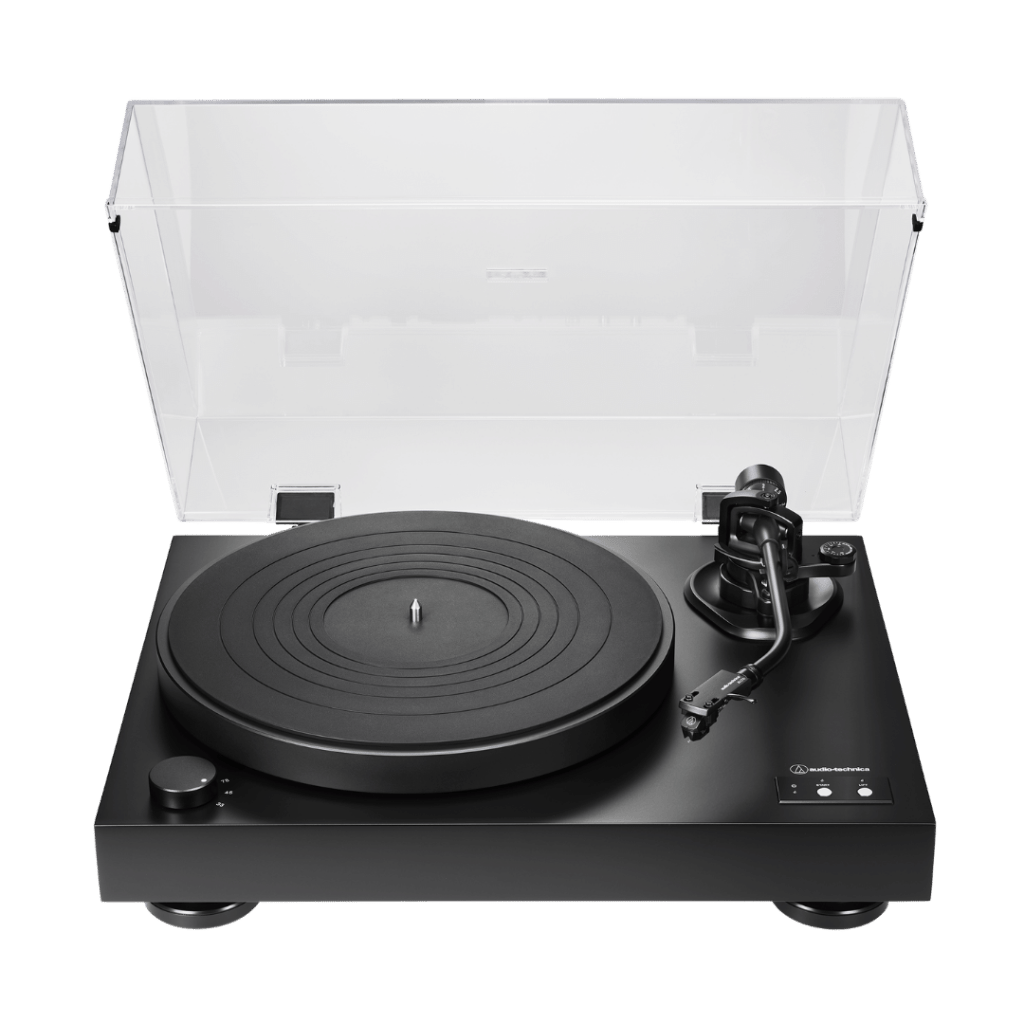
AT-LP8X
The Audio-Technica AT-LP8X is probably the closest competitor to the Andover One DD.
Both are direct drive, play all three speeds, and offer some automation. The Andover takes things a step further with its optical auto-start system.
Here’s the kicker: The AT-LP8X costs $300 more, and actually comes with the more basic AT-VM95E cartridge compared to the Andover’s AT-VM520xEB.
Personally, I’d have a hard time justifying that extra $300, especially when the Andover offers a little more convenience.
| Feature | Audio-Technica AT-LP8X | Andover One DD |
|---|---|---|
| Price | $1,299 on Amazon | $999 at Andover Audio |
| Turntable Type | Direct Drive, Semi-Automatic | Direct Drive, Semi-Automatic |
| Cartridge | Audio-Technica AT-VM95E | Audio-Technica AT-VM520xEB |
| Tonearm | J-Shaped Aluminum | 8.8-inch Carbon Fiber |
| Headshell | Removable | Removable SME-Style |
| Automation | Auto-Lift + Motor Stop | Optical Auto-Start + End-of-Record System |
| VTA Adjustment | Yes | Yes |
| Speeds | 33 1/3, 45, and 78 RPM | 33 1/3, 45, and 78 RPM |
| Preamp | No (external required) | No (external required) |
| Bluetooth | No | No |
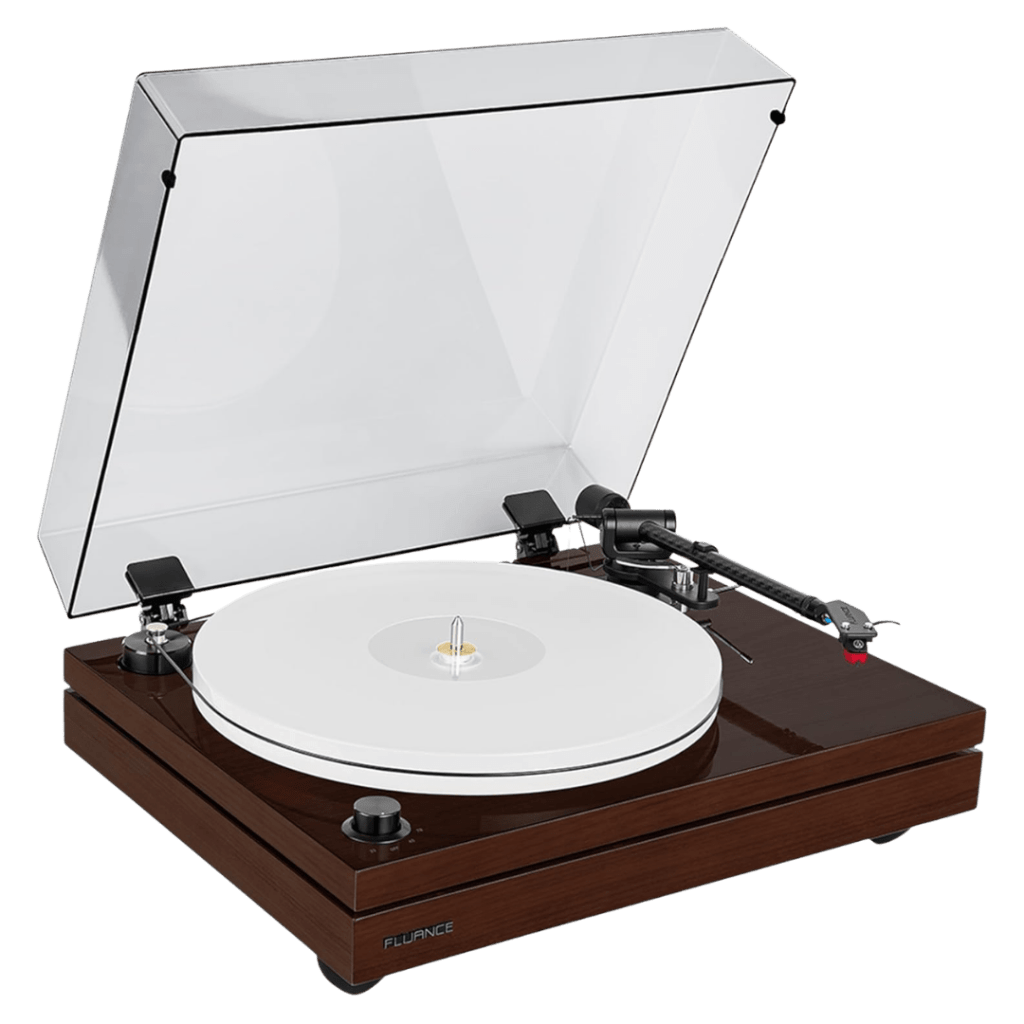
Fluance RT87
With the RT87, you’re saving $200 and getting a dual-plinth design, thick acrylic platter, carbon-fiber tonearm, and your choice of an AT-VM95ML or Ortofon 2M Blue cartridge. Personally, I’d take either cartridge over the one on the Andover.
But you’re giving up some convenience. The RT87 is belt drive with basic auto-stop, while the Andover gives you direct drive and that optical automation we’ve been talking about.
| Feature | Fluance RT87 | Andover One DD |
|---|---|---|
| Price | $799.99 on Amazon | $999 at Andover Audio |
| Turntable Type | Manual, Belt-Drive with Auto Stop | Direct Drive, Semi-Automatic |
| Plinth Material | Dual-Plinth MDF Design | High-Mass MDF |
| Platter | 22 mm High-Mass Acrylic | Damped Cast Aluminum |
| Tonearm | 9-inch Carbon Fiber with VTA Adjustment | 8.8-inch Carbon Fiber with VTA Adjustment |
| Cartridge | AT-VM95ML or Ortofon 2M Blue | Audio-Technica AT-VM520xEB |
| Automation | Auto-Stop | Optical Auto-Start + End-of-Record System |
| Speeds | 33 1/3, 45, and 78 RPM | 33 1/3, 45, and 78 RPM |
| Preamp | No (external required) | No (external required) |
| Bluetooth | No | No |
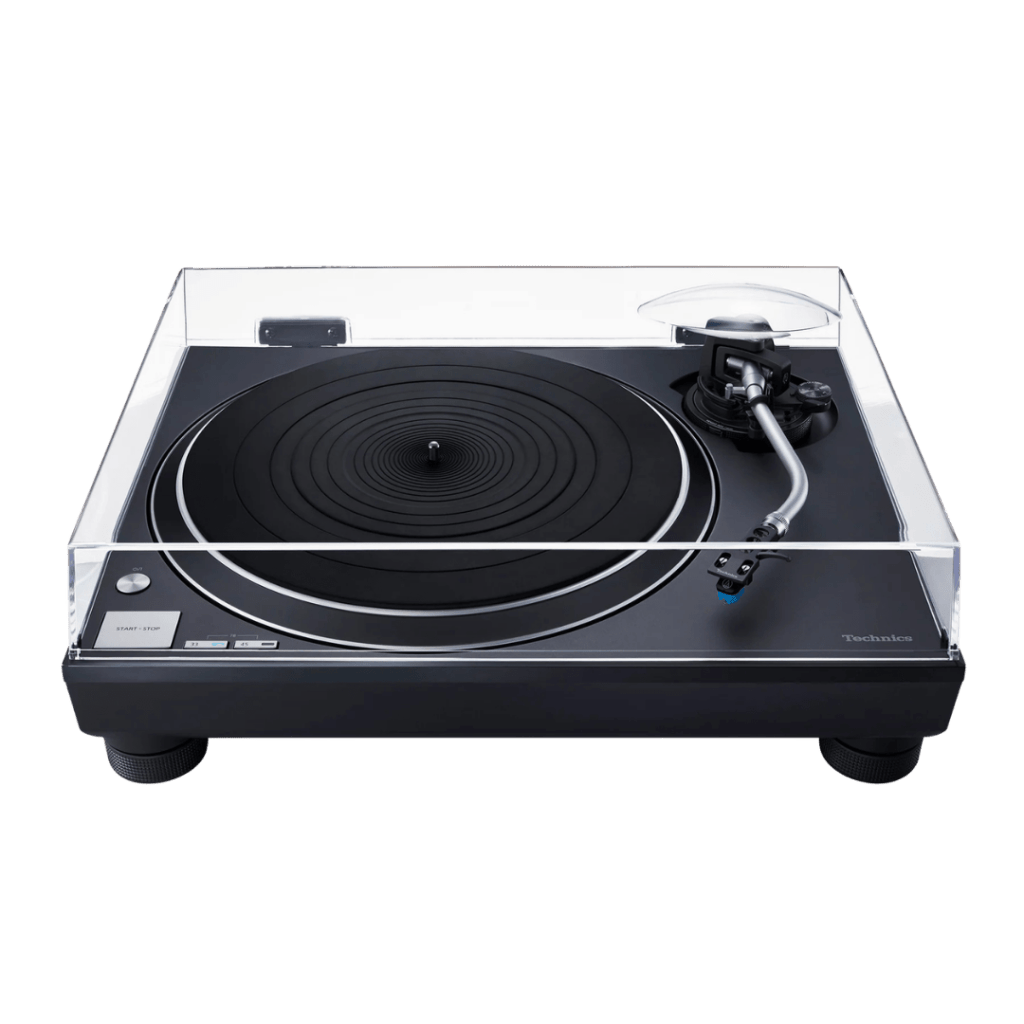
Technics SL-100C
Technics has been making direct-drive turntables for decades, and if you’re spending this kind of money, it’s hard not to consider one.
You get their proven coreless direct-drive motor, an S-shaped tonearm with VTA adjustment, and automatic tonearm lift at the end of a record.
But at $1,399.99, you’re paying $400 more than the Andover, and it actually comes with a more basic AT-VM95C cartridge.
I can definitely understand choosing the Technics for its reputation, build quality, and proven direct-drive technology. But looking at what you get for the money, I think the Andover makes a pretty compelling case for itself.
| Feature | Technics SL-100C | Andover One DD |
|---|---|---|
| Price | $1,399.99 | $999 at Andover Audio |
| Turntable Type | Coreless Direct Drive, Manual with Auto-Lift | Direct Drive, Semi-Automatic |
| Plinth Material | Aluminum Die-Cast Chassis with Reinforced ABS | High-Mass MDF |
| Platter | Aluminum Die-Cast (2.0 kg with Mat) | Damped Cast Aluminum |
| Tonearm | S-Shaped Aluminum with VTA Adjustment | 8.8-inch Carbon Fiber with VTA Adjustment |
| Cartridge | Audio-Technica AT-VM95C | Audio-Technica AT-VM520xEB |
| Headshell | Removable | Removable SME-Style |
| Automation | End-of-Record Auto-Lift | Optical Auto-Start + End-of-Record System |
| Speeds | 33 1/3, 45, and 78 RPM | 33 1/3, 45, and 78 RPM |
| Preamp | No (external required) | No (external required) |
| Bluetooth | No | No |
So which one would I choose?
If you’re looking for the best value, I’d lean toward the Fluance RT87. You get a lot of great hardware and a better cartridge for less money.
If you want a proven direct-drive turntable from a brand that’s been doing this for decades, it’s hard to argue with Technics.
The AT-LP8X is a great turntable too, but at its current price, I have a hard time choosing it over the Andover.
And that brings us back to the Andover One DD. I think it hits a nice middle ground between sound quality, value, and convenience.
Like I said earlier, you really can’t go wrong with any of these. It just comes down to what matters most to you.
| Feature | Andover One DD | Audio-Technica AT-LP8X | Fluance RT87 | Technics SL-100C |
|---|---|---|---|---|
| Price | $999 at Andover Audio | $1,299 on Amazon | $799.99 on Amazon | $1,399.99 List Price |
| Turntable Type | Direct Drive, Semi-Automatic | Direct Drive, Semi-Automatic | Manual, Belt-Drive with Auto Stop | Coreless Direct Drive with Auto-Lift |
| Plinth Material | High-Mass MDF | High-Density MDF | Dual-Plinth MDF Design | Aluminum Chassis with Reinforced ABS |
| Platter | Damped Cast Aluminum | Die-Cast Aluminum with Rubber Mat | 22 mm High-Mass Acrylic | Aluminum Die-Cast with Rubber Mat |
| Tonearm | 8.8-inch Carbon Fiber with VTA | J-Shaped Aluminum with VTA | 9-inch Carbon Fiber with VTA | S-Shaped Aluminum with VTA |
| Cartridge | Audio-Technica AT-VM520xEB | Audio-Technica AT-VM95E | AT-VM95ML or Ortofon 2M Blue | Audio-Technica AT-VM95C |
| Headshell | Removable SME-Style | Removable | Removable | Removable |
| Automation | Optical Auto-Start + End-of-Record System | Auto-Lift + Motor Stop | Auto-Stop | End-of-Record Auto-Lift |
| Speeds | 33 1/3, 45, and 78 RPM | 33 1/3, 45, and 78 RPM | 33 1/3, 45, and 78 RPM | 33 1/3, 45, and 78 RPM |
| Preamp | No (External Required) | No (External Required) | No (External Required) | No (External Required) |
| Bluetooth | No | No | No | No |
| Best For | Hi-Fi Meets Convenience | The Closest Alternative | The Best Hardware Value | The Proven Direct-Drive Pick |
Conclusion: Is It Worth It?
There’s something really smart about what Andover has done here.
The Andover One DD checks most of the boxes I’d want from a serious hi-fi turntable. Although, as we talked about earlier, I do think the cartridge could be better for the money, especially if that’s something you really value.
The everyday convenience is the selling point for me. And if you’re already a fan of Andover’s approach to vinyl, especially their compact speaker systems, I think this makes a lot of sense.
But would I choose it over everything else in this price range? Not necessarily. The Fluance is still a great value, and Technics has a lot going for it.
But if you want a serious turntable that feels good to use and is easy to live with, I think the One DD deserves a spot on your shortlist.
If you’re looking to build the best possible setup around the Andover One DD, we made a free tool that lets you try out different combinations of amps, receivers, speakers, and phono preamps. You can check the latest sale prices, swap components in and out, and see how each change affects your overall setup.
Check out a quick preview of how it works below.
We also have a whole archive of listening rooms and real community setups, featuring turntables from Andover, Fluance, U-Turn, Pro-Ject, Music Hall, and plenty of other brands. So if you’re curious what people are actually building at home, it’s a great place to get some inspiration.
All free. Just trying to build the best vinyl setup resource on the internet.